







The Turbulent Relationship Between Trump and the Federal Reserve
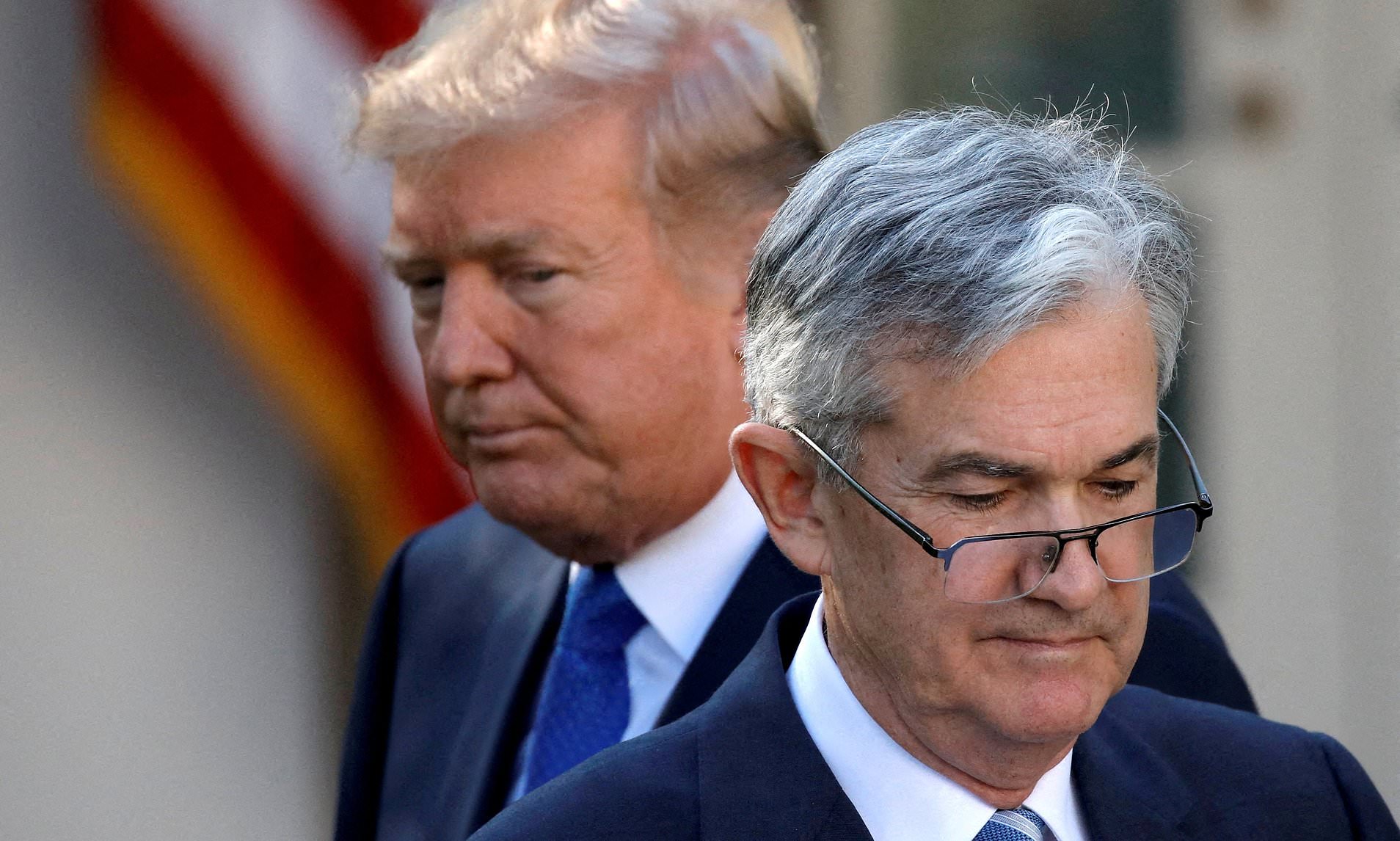
President Donald Trump’s recent remarks about firing Federal Reserve Chair Jerome Powell have sent shockwaves through the financial markets, creating a volatile environment that has left investors on edge. Initially, Trump suggested he was closer to taking such an action, but later backtracked, leaving many questioning his true intentions.
The decision to replace Powell, whose term is set to end in May 2026, was reportedly discussed during a meeting with congressional Republicans. However, when confronted by the press, Trump stated that while he hasn’t ruled out any options, it is “highly unlikely” he would proceed with the move. He did, however, hint at potential reasons for such an action, referencing $2.5 billion in taxpayer-funded renovations for Powell’s office in Washington, D.C., suggesting that fraud could be a factor.
Trump has been increasingly frustrated with the Fed’s cautious approach to lowering interest rates, pressuring Powell to make cuts. This tension highlights the broader conflict between the executive branch and the central bank, which has historically maintained its independence to ensure economic stability.
Firing Powell would not only be a significant political move but also a major test of Trump’s legal authority over independent agencies like the Federal Reserve. Such an action could trigger a market backlash, as investors value the Fed’s autonomy as a cornerstone of financial stability.
Market Reactions and Investor Concerns
The news of Powell’s possible termination caused the S&P 500 to drop by 0.5 percent initially, though the market began to recover after Trump appeared to scale back his threat. The S&P 500 was last down 0.1 percent, while the Nasdaq fell 0.2 percent after briefly dropping as much as 0.8 percent. The Dow Jones Industrial Average remained flat after a brief dip following the announcement.
Experts warn that if Trump were to remove Powell before his term ends, it could create enormous concerns about the Fed’s independence, which is essential to U.S. central banking. The Fed needs to maintain both literal and perceived independence to ensure public trust in its decisions.
The Search for Powell’s Replacement
In addition to the controversy surrounding Powell, Trump is currently conducting an “Apprentice-style” competition to find his replacement. Two Republicans are reportedly vying for the position, with Kevin Hassett, one of Trump’s closest economic advisers, emerging as a serious contender. Former Fed governor Kevin Warsh is also allegedly seeking the role, although Trump previously passed him over when he nominated Powell.
During Trump’s first term, the two clashed repeatedly, and the President even considered replacing Powell in 2018. In his second term, Trump has continued to threaten ousting the Fed chief, raising concerns among economists and market analysts.
Legal and Historical Implications
Firing Powell would not only disrupt the Fed’s operations but also overturn a key Supreme Court decision from 1935 known as Humphrey’s Executor. This ruling has protected officials at independent agencies, ensuring they can make decisions without undue political interference.
Such an action would mark a significant departure from the precedent of the executive branch not firing independent officials without cause. These agencies, including the Fed, have relied on this ruling to maintain their autonomy and make decisions in the face of political opposition.
Economic Consequences and Market Reactions
The mere suggestion of Trump having the power to fire Fed governors could unnerve market participants and undermine the Fed’s credibility in the eyes of investors. Former Fed economist David Wilcox warned that a Supreme Court decision along these lines could lead to a severe adverse market reaction.
The U.S. dollar has already experienced a significant decline, recording its worst half-year slide in value in 50 years in 2025. The dollar dropped more than 10 percent against major global currencies from January to June, according to the U.S. Dollar Index.
Conclusion
The ongoing tensions between Trump and the Federal Reserve highlight the delicate balance between political influence and economic stability. Any move to replace Powell could have far-reaching consequences, not just for the Fed but for the entire financial system. As the situation unfolds, investors and analysts will be closely watching how the administration navigates this complex relationship.