



A New Dawn for Progressive Politics
Zohran Mamdani’s victory in the Democratic primary race for Mayor of New York is more than a milestone for American urban politics. It is a moment of inspiration—and a sharp reminder—for those across the African continent who once believed, and must believe again, in the power of progressive politics.
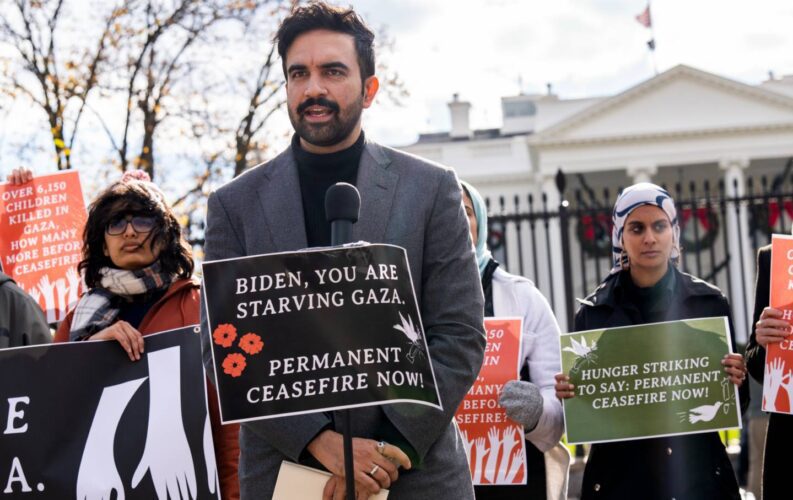
The son of Uganda and of one of Africa’s finest living public intellectuals and scholars, Mahmood Mamdani, Zohran has shown that a people-powered, democratic socialist movement can triumph—even in the heart of global capitalism. His campaign centred the working poor, immigrants, tenants, and youth. It listened, it organised, it built. And it won.
This is the kind of politics that once animated the African continent. And it is the kind of politics Africa urgently needs to resurrect.
The Legacy of Pan-Africanism
It is easy to forget today, in an age of elite capture, militarisation, and political disenchantment, that Africa’s path to liberation was led by progressive movements. The pan-Africanism of the 20th century—whether in Accra, Johannesburg, the Caribbean, Algiers, or Atlanta—was rooted in solidarity, social justice, and collective dignity. Its leaders were young, often materially poor, but morally resolute.
They met in Manchester in 1945, in Accra in 1958, and again in Addis Ababa in 1963, to chart a course out of colonialism and toward unity. The Organisation of African Unity (OAU) was born of their vision: To overcome fragmentation and assert Africa’s agency on the world stage.
That generation did not inherit wealth or power. What they had was purpose—and a belief in the ability of ordinary people to shape their own futures. Pan-Africanism was never just about flags and borders. It was about the emancipation of the African spirit, wherever it resided—in Soweto, in Harlem, in Port-au-Prince.
But somewhere along the way, the liberators became rulers. And many were seduced by the very tools of domination they had once resisted: the gun, the palace, and the patron. The Cold War turned Africa into a chessboard. Corruption crept into the post-colonial state. Military coups became routine. The dream of collective freedom was replaced with the reality of elite power.
The Rise and Fall of Hope
At the turn of the millennium, there was a glimmer of hope. The African Renaissance, championed by the likes of Thabo Mbeki, Melese Zenawi, Salim Ahmed Salim sought to restore Africa’s voice. The African Union replaced the OAU. The New Partnership for Africa’s Development (Nepad) laid out a vision of accountable governance, continental integration, and economic transformation. But that resurgence was short-lived.
Over the last decade, Africa has once again fallen under the grip of militarised regimes, transactional politics, and predatory elites. Right-wing populism has taken root, often clothed in tribal garb or prosperity gospel preachings. Evangelical movements—aligned with global conservative currents—have promoted a doctrine of personal wealth accumulation, privatised salvation, and disdain for the collective.
African governments may be richer than ever in natural resources, but the people are poorer, angrier, and more excluded. Governance has collapsed in too many states. Regional institutions have grown weak. And Africa’s global agency has withered under the weight of debt, foreign military bases, and extractive economic deals with Middle Eastern autocracies and unaccountable corporations.
The African people have not given up—but they have been betrayed by those who promised democracy and delivered kleptocracy.
A Lifeline of Political Hope
It is against this backdrop that Zohran Kwame Mamdani’s campaign offers a lifeline of political hope.
Named by his father after the totemic figure of the independence era’s age – Kwame Nkrumah – Zohran’s message was straightforward: the richest city in the world should be affordable to the people who live and work in it. The role of government, he argued, is not to enrich landlords or appease developers—but to ensure housing, healthcare, education, and safety for all.
Instead of relying on big donors, Mamdani turned to the people. He walked the neighbourhoods. He listened to mothers, immigrants, street vendors, students. He built coalitions grounded in trust and shared struggle.
And the people responded.
New York, long known for its transactional, donor-driven politics, chose a candidate whose only real currency was his integrity. His agenda was not imposed from above—it was built from below. This is the politics Africa must reclaim.
Reclaiming Progressive Politics
Progressive politics is not a Western import. It is Africa’s inheritance. It animated our independence struggles. It inspired our constitutions. It defined the first generation of post-colonial African states.
Today, that legacy lies dormant—but not dead.
To resurrect it, African progressives must return to first principles. They must organise. They must listen to their people—not preach to them. They must run for office—not only to win power, but to restore purpose. They must champion ideas that unify across ethnicity and class, ideas rooted in justice, dignity, and public good.
Above all, they must believe again in the collective—because no African nation will thrive in isolation. Fragmentation is our enemy. Unity is our only viable path to global relevance, regional strength, and internal renewal.
Zohran Mamdani’s democratic party primary win reminds us that people-powered politics is not a fantasy. It is a strategy. And it works.
Mamdani’s campaign was not about nostalgia—it was about possibility. It proved that politics of hope, dignity, and equity can still defeat politics of fear, greed, and division.
In Africa, we have the youth. We have the ideas. We have the history. What we need is the courage to organise around it again.
Let Zohran Mamdani’s victory be a wake-up call to Africa’s young leaders, thinkers and activists. Let it be a rallying cry for a new pan-African progressive agenda—one that reclaims our future from the grasp of the corrupt, the powerful, and the indifferent.
We once won our freedom by believing in ourselves. We must now win our future by doing the same.