



U.S. Proposes Expansion of South Korea’s Role in Indo-Pacific Security
The Trump administration has formally requested South Korea to expand the scope of the U.S.-ROK Mutual Defense Treaty, according to U.S. and South Korean officials involved in recent high-level discussions. This move comes as part of broader efforts to reorient U.S. strategic priorities in the Indo-Pacific region.
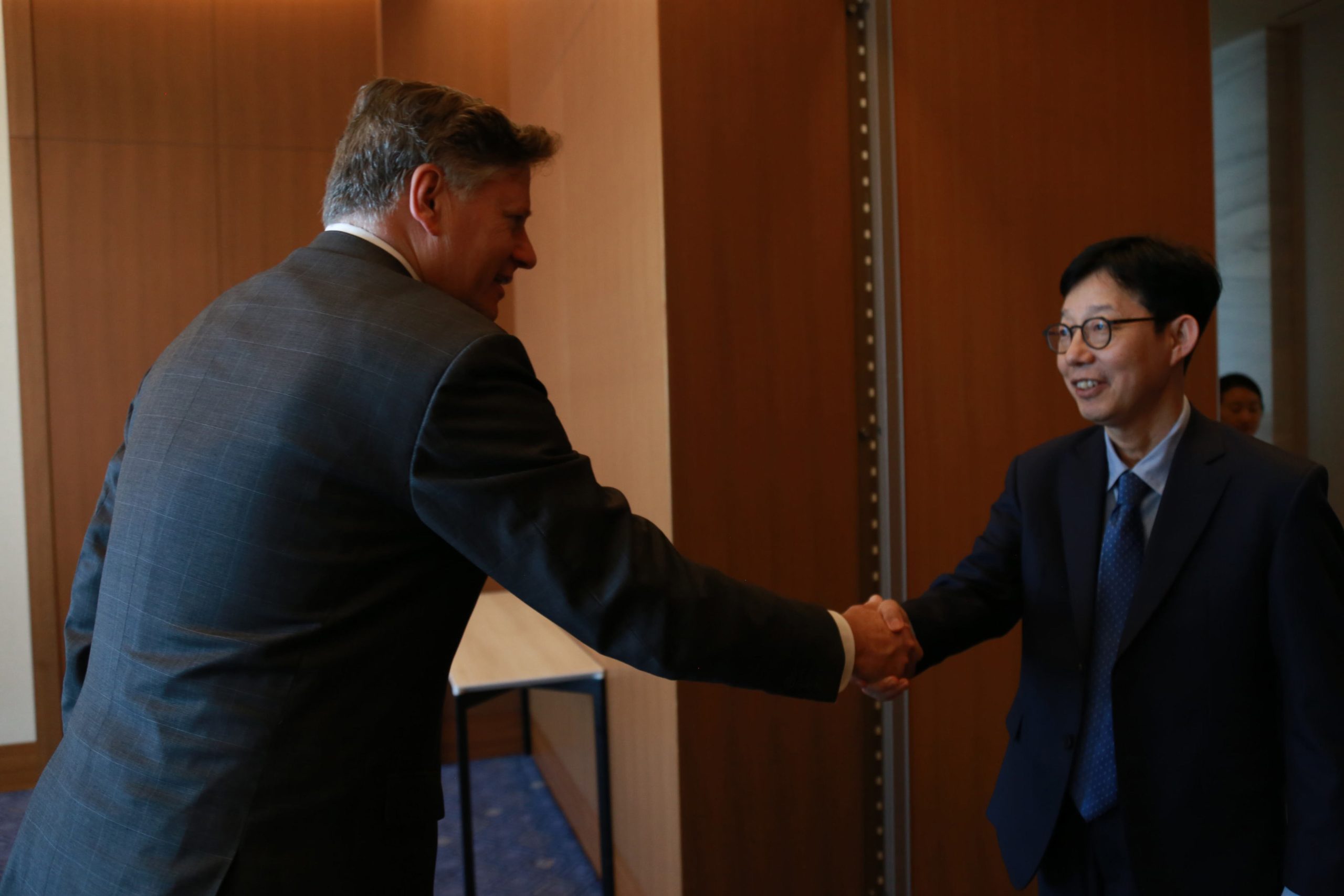
During a meeting in Tokyo on July 18, U.S. Deputy Secretary of State Christopher Landau encouraged Seoul to view its alliance with Washington as a “comprehensive strategic partnership for the future.” The proposal emerged amid ongoing bilateral trade negotiations and ahead of an August 1 deadline to renew a suspension of the 25% tariffs imposed by the Trump administration. The 1953 treaty originally focused on collective defense in the Pacific, particularly in response to potential threats from North Korea. However, the current push suggests a shift toward a more expansive interpretation of the agreement, potentially involving South Korea in conflicts such as a crisis in the Taiwan Strait.
Landau also highlighted additional elements of what Washington refers to as “alliance modernization,” including increased South Korean defense spending and greater cost-sharing for the deployment of U.S. strategic assets in the region. According to sources, the U.S. has officially asked Seoul to raise its defense budget from the current 2.3% of GDP to 5%. This significant increase aims to align South Korea’s capabilities with emerging strategic demands.
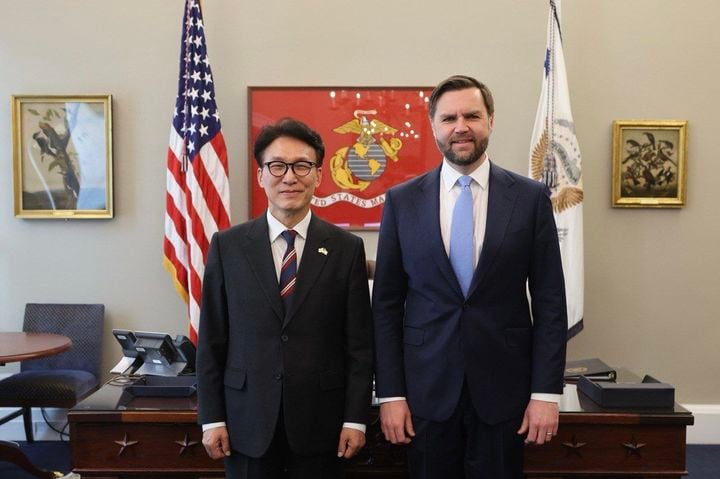
Similar discussions took place in Seoul from July 10–11, when Kevin Kim, U.S. Deputy Assistant Secretary of State, presented the modernization proposal during working-level meetings with officials from South Korea’s Ministry of Foreign Affairs and Ministry of National Defense. National Security Director Wi Sung-lac stated that South Korea intends to gradually increase its defense spending in line with international trends. However, the U.S. request for a clearer role in the event of a U.S.-China military clash has placed the Lee Jae-myung administration in a difficult political position. President Lee had previously expressed reluctance to become involved in Taiwan-related security issues during his presidential campaign.
Strategic Reorientation and Regional Alliances
Behind Washington’s overtures lies a broader effort to recalibrate its strategic posture. The Trump administration’s Interim National Defense Strategic Guidance, released in March, named deterring a Chinese invasion of Taiwan as a top priority. The forthcoming National Defense Strategy (NDS) and Global Posture Review (GPR), expected in August, are likely to detail force realignments and alliance adjustments in support of this objective.
As part of this shift, Washington has begun pressing key regional allies—including South Korea, Japan, Australia, and the Philippines—not only to boost defense spending but also to align more explicitly with U.S. positions in any prospective confrontation with Beijing. On July 21, U.S. Secretary of Defense Pete Hegseth met with Philippine President Ferdinand Marcos Jr. and reaffirmed that the U.S.-Philippine Mutual Defense Treaty applies to attacks on military forces, aircraft, or government vessels anywhere in the Pacific, including the South China Sea. The message was clear: Manila, too, must prepare to align with the United States in a potential regional conflict.
Elbridge Colby, U.S. Under Secretary of Defense for Policy, echoed this message on social media, emphasizing the need for greater defense investments and deeper collective action from allies such as South Korea. He noted ongoing efforts by the Pentagon and State Department to strengthen multilateral security in the Asia-Pacific.
Ambiguity and Growing Calls for Collective Defense
According to a July 12 Financial Times report, Colby also pressed officials in Japan and Australia to specify what roles they would play should tensions over Taiwan escalate into war. But what exactly constitutes “collective defense” in the Indo-Pacific remains ambiguous. Unlike NATO’s Article 5, which treats an attack on one as an attack on all, the Indo-Pacific lacks a comparable formal mechanism. South Korean officials have expressed skepticism, noting that there is no existing architecture to implement such a concept in the region—nor an obvious path to build one.
Still, calls for an Indo-Pacific collective security arrangement are growing. Japanese Prime Minister Shigeru Ishiba proposed the creation of an “Asian NATO” last September, framing it as a deterrent against China, Russia, and North Korea. In May, former U.S. Assistant Secretary of Defense Ely Ratner called for a formal “Pacific Defense Treaty.”
Japan, for its part, has suggested integrating the East and South China Seas into a unified “one-theater” command structure, a concept that has reportedly received backing from the United States, Australia, and the Philippines. Analysts believe this emerging “Squad” of four countries could serve as the foundation for a future Indo-Pacific defense pact.
“Washington has historically treated the Korean Peninsula and Taiwan Strait as distinct military theaters, managed by U.S. Forces Korea and U.S. Forces Japan, respectively,” said Kim Sung-han, former South Korean national security adviser. “But today, the U.S. views these as mutually reinforcing flashpoints—and is pursuing a posture that integrates both into a single regional framework.”