





The Fight Against Illicit Financial Flows in Nigeria
Nigeria is losing billions of dollars each year due to illicit financial flows (IFFs), a complex and pervasive issue that undermines the nation’s economic stability, governance, and development. These flows, which include aggressive tax avoidance, profit shifting by multinational corporations, money laundering, and trade misinvoicing, are estimated to cost the country over $18 billion annually. This represents funds that could have been used to build hospitals, schools, roads, and other critical infrastructure, or to create jobs for millions of unemployed Nigerians.
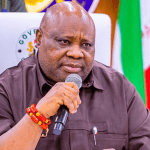
Under the leadership of Executive Chairman Zacch Adedeji, the Federal Inland Revenue Service (FIRS) has taken a proactive stance in combating this growing threat. At a recent two-day national conference in Abuja, themed “Combating Illicit Financial Flows: Strengthening Nigeria’s Domestic Resource Mobilisation,” government officials, financial experts, and international partners gathered to address the scale of the problem and outline a path forward.
Adedeji painted a stark picture of how IFFs weaken Nigeria’s fiscal health and deepen inequality. He emphasized that every unaccounted dollar is a lost opportunity for public investment. “Illicit financial flows do not merely represent financial wrongdoing,” he said. “They constitute a structural drain on our economy. Each unaccounted dollar undermines governance, erodes public trust, and translates into lost infrastructure, inadequate services, and deepening inequality.”
The minister of state for finance, Dr. Doris Uzoka-Anite, echoed these concerns, highlighting that IFFs are not just an economic issue but also a national security and political challenge. She pointed to the loss of approximately $18 billion annually, which could have been used to fund education, healthcare, and job creation. Uzoka-Anite described IFFs as a “hydra-headed monster” and called for coordinated action, including a review of Nigeria’s international tax treaties to ensure fairness between the global North and South.
A Three-Pronged Strategy
Adedeji outlined a three-pronged strategy being implemented by FIRS to combat IFFs. The first involves building voluntary tax compliance through taxpayer education and simplifying tax systems to encourage adherence. “Compliance must be driven by trust, not fear,” he emphasized.
The second component focuses on leveraging technology. A new Tax Intelligence and Automation Department has been established to track suspicious transactions in real time. Using integrated third-party data, real-time analytics, and anomaly detection, FIRS is transitioning from traditional audits to “digital vigilance.”
The third phase entails strengthening collective action. As the designated coordinating agency under the Proceeds of Crime Act (2022), FIRS has set up the Proceeds of Crime Management and Illicit Financial Flows Coordination Directorate. This unit works with law enforcement agencies, the judiciary, private sector players, and international partners to recover stolen assets.
Global Implications and Challenges
Experts at the conference highlighted the broader implications of IFFs for Africa. Hon Irene Ovonji-Odida, a member of the Thabo Mbeki High-Level Panel on IFFs, noted that Africa has cumulatively lost over $1 trillion to illicit flows over the past five decades. She criticized Western powers for shaping global financial rules that favor the siphoning of resources from African nations and urged African governments to strengthen domestic capacity and push for global tax reforms that benefit developing economies.
The Comptroller General of Customs, Bashir Adeniyi, emphasized the need to tighten border controls to block illegal cross-border cash movements. He recounted an instance where $8.3 million was intercepted at Murtala Muhammed Airport, underscoring the importance of monitoring both inward and outward flows of cash.
A Collective Effort
Experts agreed that government action alone would not be sufficient. They stressed the importance of involving civil society organizations, the private sector, and international partners in closing loopholes. “The complexity of IFFs demands a whole-of-society approach,” said Uzoka-Anite, adding that “Our fight must combine tax reforms, enforcement, technology, and citizen awareness.”
The conference concluded with a strong call for renegotiating outdated international tax treaties to ensure equity for developing countries. It also advocated for stronger domestic laws and enforcement capacity, including better funding for tax and financial intelligence units. Regional and global collaboration, especially through African Union and United Nations frameworks, was emphasized as essential.
Nigeria’s battle against IFFs is ongoing, but there is growing momentum. With FIRS championing technological innovation and inter-agency cooperation, and with political backing from the federal government, the tide may finally be turning. If the country succeeds in blocking the estimated $18 billion annual leak, it could channel those funds into infrastructure, healthcare, education, and job creation—paving the way for a more inclusive and prosperous economy. As Adedeji aptly put it, “Every unaccounted dollar is a lost road, hospital, or job. Stopping IFFs is not just an economic reform; it is a national imperative.”