South Korea Begins Dismantling Border Loudspeakers
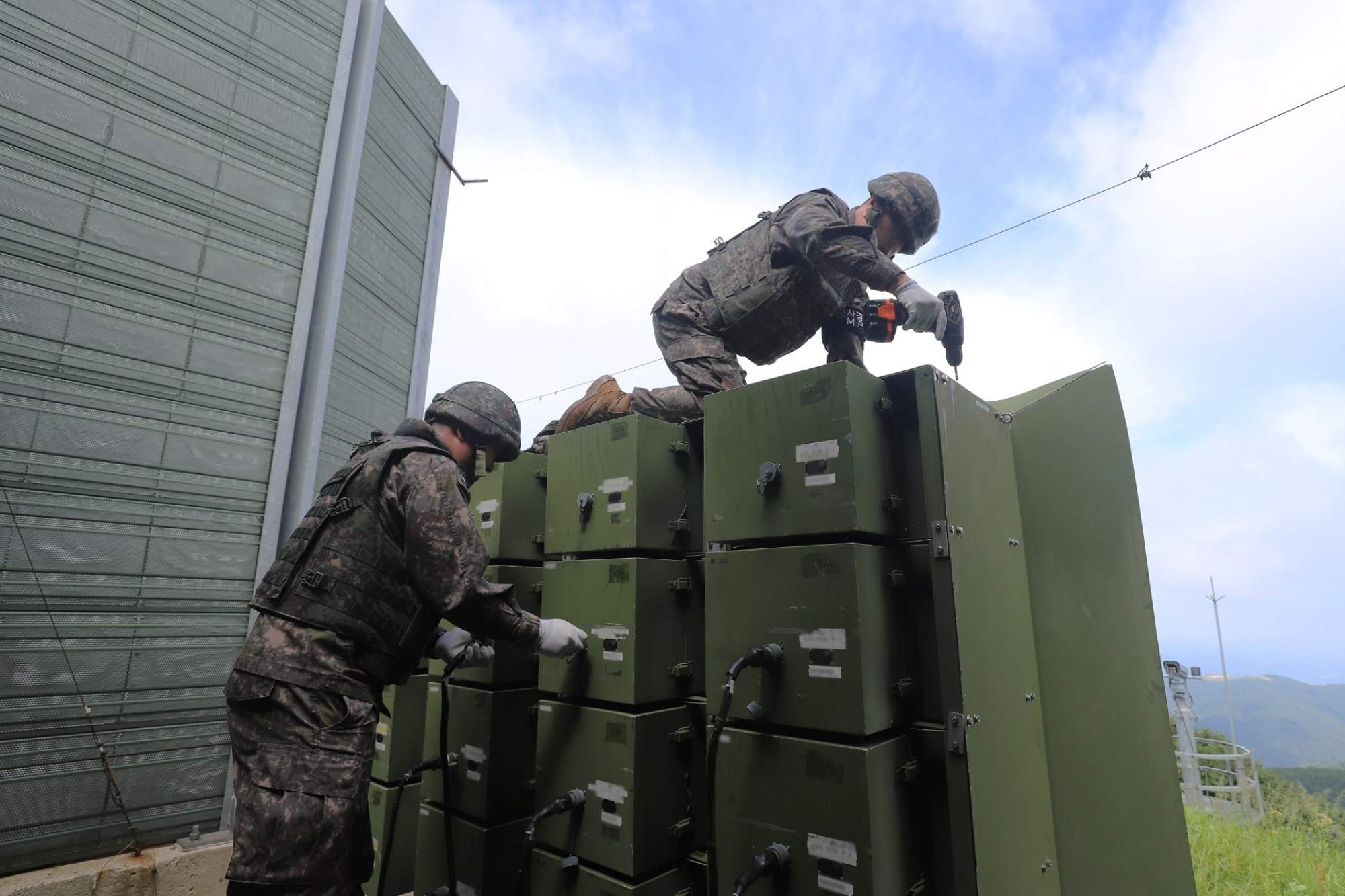
South Korean soldiers have initiated the process of dismantling towering propaganda loudspeakers that once broadcast messages across the border with North Korea. This move marks a significant step in President Lee Jae-myung’s efforts to reduce tensions and rekindle inter-Korean dialogue. The action comes despite strong criticism from North Korea, which has not shown any signs of reciprocating the gesture.
The military crews began removing the loudspeakers and related equipment on Monday, approximately two months after their broadcasts were halted. According to the Defence Ministry, this practical measure aims to ease inter-Korean tensions without compromising military readiness. The dismantling process is expected to take about a week and will cover 20 sites along the 250km (155-mile) border dividing the Korean peninsula. Notably, there was no prior consultation with North Korea regarding the removal.
When questioned about whether North Korea might follow suit by dismantling its own loudspeakers, a spokesperson for South Korea’s Joint Chiefs of Staff indicated that no such actions have been observed. Colonel Lee Sung-jun stated that while North Korea appears to be conducting maintenance on its loudspeakers, there are no signs of dismantling. Additionally, no unusual movements by the North Korean military have been detected so far.
Creating a Friendly Atmosphere
The dismantling of the speakers sends a clear signal of Seoul’s commitment to reducing tensions in an “irreversible” manner, according to Yang Moo-jin, president of the University of North Korean Studies. He emphasized that this proactive step by the South is aimed at fostering a friendly atmosphere ahead of any potential resumption of dialogue. Yang suggested that Seoul’s next steps could involve suspending live-fire drills near the border or taking further unilateral actions to revive the 2018 inter-Korean military agreement.
This landmark agreement, signed during a rare period of rapprochement, included measures such as dismantling border loudspeakers, establishing buffer zones on land, sea, and air, and banning live-fire drills and aerial surveillance near the demilitarised zone. It also prohibited hostile acts such as the launch of leaflet balloons. However, the framework began to unravel in November 2023 when the Constitutional Court struck down the provision that had effectively banned leaflets from being flown across the border.
Escalating Tensions and Reversals
The previous administration under President Yoon Suk-yeol resumed reconnaissance flights in response to North Korea’s military satellite launch. Pyongyang retaliated with blaring broadcasts of jarring sounds and waves of garbage-filled balloons floated across the border—psychological tactics observers said were intended to provoke and unsettle the South. South Korea reinstalled its loudspeakers last June and resumed border broadcasts for the first time in six years, responding directly to the North’s balloon campaign.
Since taking office in early June, President Lee has moved swiftly to cool tensions, reversing his predecessor’s confrontational policies, halting the broadcasts, urging civic groups to stop launching anti-regime leaflets, and expressing hope that these gestures might reopen channels for engagement. Pyongyang responded by ceasing its own broadcasts and balloon launches but has maintained that it has no intention of re-engaging with Seoul.
Potential for Talks with the United States
Despite this, North Korea has signalled it may be open to talks with the United States, but only if Washington recognises it as a nuclear-armed state—a demand unchanged since the collapse of Kim Jong-un’s 2019 summit with President Donald Trump. Suspicions in Pyongyang about Seoul’s intentions may have deepened following Yoon’s brief martial law decree in December, according to Hong Min of the Korea Institute for National Unification. Yoon has been accused of seeking to provoke North Korean military action to justify the measure.
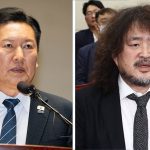
Last week, South Korea’s new Unification Minister Chung Dong-young said he would recommend to President Lee that this year’s joint US-South Korea military drills be scaled back to support efforts to stabilise the peninsula. However, Hong cautioned that such suggestions might be poorly timed. “Adjustments to the scale of these drills would need to have been finalised months in advance,” he said. “Publicly floating such proposals now risks signalling internal policy divisions to the North.”
Security cooperation, along with recently concluded tariff negotiations, is expected to top the agenda when Lee meets Trump for the first time in Washington, Hong added—possibly as early as this month.