



Shift in U.S. Approach to Ukraine Conflict
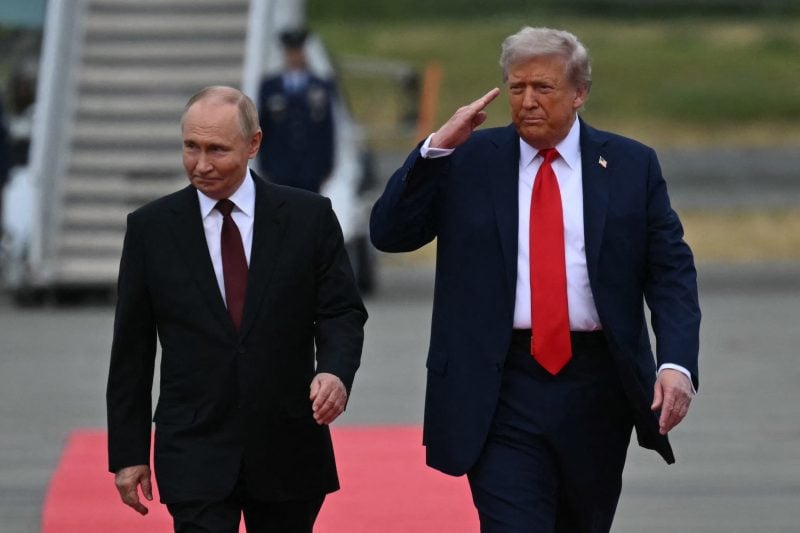
Donald Trump has made a significant shift in his stance on the Ukraine conflict, moving away from advocating for an immediate ceasefire and instead pushing for a comprehensive peace agreement. This change was announced shortly after his high-profile meeting with Russian President Vladimir Putin, which did not result in any clear breakthroughs.
Before the summit in Alaska, Trump had been a strong proponent of a ceasefire, even threatening “severe consequences” for Russia. This position aligned with European leaders, including Ukrainian President Volodymyr Zelensky, who is set to visit Washington soon. However, Trump’s new approach seems to favor Putin’s long-standing demand for direct negotiations on a final peace deal, a strategy that Ukraine and its European allies have criticized as a way to gain time and advance Russia’s military objectives.
During his return flight to Washington, Trump spoke with Zelensky and European leaders, stating that “it was determined by all that the best way to end the horrific war between Russia and Ukraine is to go directly to a peace agreement which would end the war.” He also noted that ceasefire agreements often fail to hold, emphasizing this point on his Truth Social platform.
In discussions, Trump supported a proposal from Putin to take full control of two Russian-held regions in exchange for freezing the frontline in two others. According to an official involved in the talks, Putin effectively demanded that Ukraine relinquish control of Donbas, which includes the Donetsk and Lugansk regions. In return, Russian forces would halt their offensive in the Black Sea port region of Kherson and Zaporizhzhia, where major cities remain under Ukrainian control.
Despite Russia’s September 2022 claim of annexing four Ukrainian regions, it does not fully control any of them. The official reported that Zelensky refused to leave Donbas. Trump also expressed willingness to provide Ukraine with security guarantees, a move that German Chancellor Friedrich Merz praised as “significant progress.”
However, the European Union’s top diplomat, Kaja Kallas, offered a critical assessment of the summit outcome, accusing Putin of trying to “drag out negotiations” without committing to ending the bloodshed. She stated, “The harsh reality is that Russia has no intention of ending this war any time soon.”
Focus Shifts to Zelensky’s Talks in Washington
With the main diplomatic focus now on Zelensky’s upcoming talks in Washington, the Ukrainian president is expected to discuss various aspects of ending the conflict. An EU source mentioned that several European leaders will also be invited to attend. Zelensky’s last visit to the White House in February ended in a tense exchange, with Trump and Vice President JD Vance criticizing him for not showing enough gratitude for U.S. aid.
Zelensky expressed optimism about his upcoming Washington visit, stating that he looked forward to discussing “all of the details regarding ending the killing and the war.” During an interview with Fox News, Trump suggested that the responsibility now lies with Zelensky to secure a peace deal, with European nations also needing to play a role.
European Pressure and Ongoing Conflict
France, Britain, and Germany are set to host a video call for their “coalition of the willing” to discuss the next steps. While they welcomed the plan for a Trump-Putin-Zelensky summit, they emphasized maintaining pressure on Russia in the absence of a ceasefire. They pledged to continue strengthening sanctions and economic measures to target Russia’s war economy until a just and lasting peace is achieved.
Meanwhile, the conflict in Ukraine continues, with Kyiv reporting that Russia launched 85 attack drones and a ballistic missile during the night. In Moscow, Putin described his summit talks with Trump as “timely” and “very useful,” highlighting the “frank and substantive” nature of their conversation. He also warned against any “behind-the-scenes intrigues” that could disrupt the progress being made.