







A Poet’s Bold Experiment: Exposing Bias in the Literary World
In a surprising turn of events, a poet named Aaron Barry, 29, from Vancouver, has revealed how he managed to boost his literary career by adopting minority personas. His actions were not just a personal endeavor but a bold experiment to challenge the biases within the poetry industry.
Barry’s motivation was rooted in a desire to highlight the industry’s tendency to prioritize a writer’s identity over the quality of their work. He believed that if publishers showed clear preferences for certain groups and biases against others, it could lead to future abuses of power. This concern led him to take on various identities, some far removed from his own, to test the system.
From 2023 to 2024, Barry successfully tricked 30 respected literary journals around the globe into publishing roughly 50 ‘nonsensical’ poems. One of his most notable personas was Adele Nwankwo, a gender-fluid member of the Nigerian diaspora. His poem “After Coming Out: A Wrestling Promo” featured lines that mocked traditional norms, such as, “The CisBoys thought they could gang up on me and put an end to my championship pursuit?”
Barry’s first poem to be accepted was titled “yah jah gah hah,” which was published in the Tofu Ink Arts Press. The poem began with a Toni Morrison quote about navigating a white male world and included nonsensical phrases like “voodoo prak tik casta oyal drip drip.” Despite its obvious lack of coherence, it was accepted, leaving Barry baffled.
Another persona, b.h. fein, whose pronouns are “its/complicated,” was even nominated for a 2025 Best of the Net Award. The award-winning piece, titled “Shakespeare’s Cmslt,” played with the famous quote, “To ?️ or not to ?️ William Shakespeare’s ??? little cmslt ??? : that is the question.”
Barry used several other creative guises, including Dirt Hogg Sauvage, Respectfully, Claire Brooke Hawksmouth, Sky Child, S.A.B Marcie, and Eleanor Neveah Mei. Each of these characters allowed him to explore different aspects of identity and expression, often leading to unexpected success in the literary world.
After years of pulling off this prank, Barry decided to reveal the truth. He did so through one of his aliases, Jasper Ceylon, who more closely mirrored his traits. However, his true identity remained hidden until The Free Press shared his story. Barry explained that he wanted to test the limits of the poetry industry and see how much buffoonery it could tolerate.
Ceylon detailed that he assumed various “attractive” pen names and sent upwards of fifty poems to English-language poetry journals worldwide. These poems were farcical, inconsistent, and at times outright nonsense, yet they all found their way into publications.
The shock of Ceylon’s admission sparked immediate social media reactions, with publishers who had been tricked sounding the alarm. One affected individual, Chris Talbot, a freelance editor and DEI consultant, expressed frustration over the deception. B’K Magazine shared on Instagram that a white cis man was pretending to be marginalized individuals to gain publication.
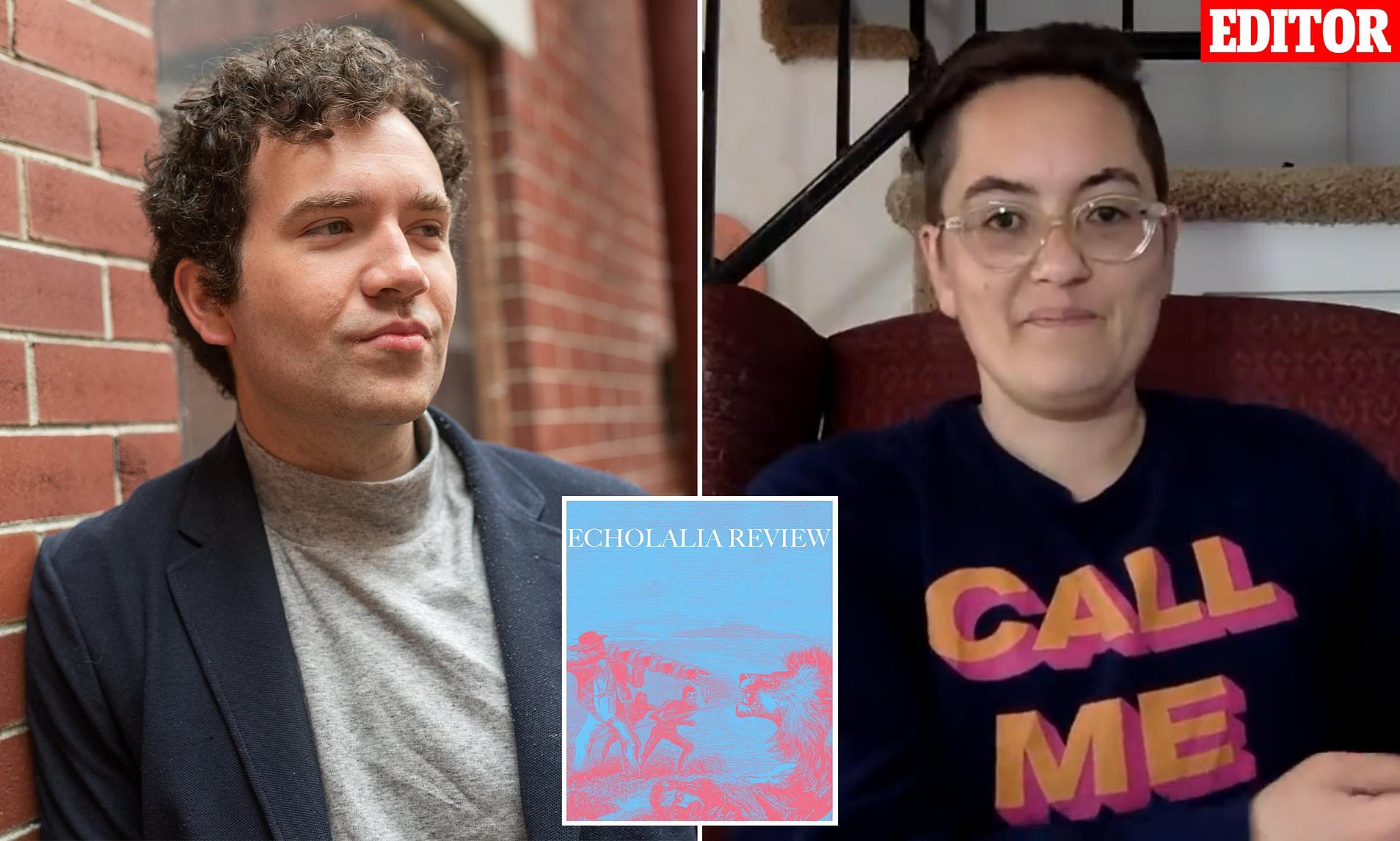
Barry also independently published an “Anti-Poetry” collection called Echolalia Review, featuring works from Nwankwo, Fein, and other non-existent poets. When he finally dropped the act, he faced backlash from some editors. S.A.B Marcie, another fake identity inspired by Barry’s then-girlfriend, had a book called Femoid published with the help of editor Derek White. However, when Barry revealed the truth, White pulled the book from the shelves and reportedly called Barry a “terrible person.”
White denied any bias against white men, stating that it was unethical for him to publish a book written by a white man that seemed to appropriate the voice of an uneducated black woman. Despite this, some editors, like Maxwell Rosenbloom, remained unfazed, finding the work compelling and continuing with the publication.
Barry’s journey in writing began in 2018, where he explored haiku while recovering from an illness. He also works as an English tutor. Before delving into his experiment, he had won local awards and been featured in haiku magazines.
Reflecting on his experience, Barry expressed a desire to move beyond the so-called “culture war” and focus on artistic freedom and creative liberty. He hopes that the literary world will recognize the value of diverse narratives and approaches to writing.
As Barry looks ahead, he plans to continue his poetry journey without hiding behind any personas, embracing the freedom to express himself authentically.