








China’s Transformation: A Journey of Modernisation and Poverty Eradication
As the People’s Republic of China marks the 75th anniversary of its founding, it reflects on a remarkable journey that has transformed the nation from one of the world’s poorest countries into a global economic and technological powerhouse. This transformation is rooted in a dual narrative: the pursuit of modernization and the eradication of absolute poverty on an unprecedented scale.
When the People’s Republic was established in 1949, China faced immense challenges. The country had been ravaged by war and foreign occupation, leaving its economy in ruins. Most of the population lived in rural areas under harsh conditions, with limited access to infrastructure, education, and healthcare. Over 80% of Chinese citizens lived below the international poverty line, and the economy was largely agrarian and informal.
In the decades that followed, China implemented various development campaigns, some of which yielded mixed results. However, the turning point came in 1978 when Deng Xiaoping introduced market-oriented reforms and opened the economy to foreign investment. This marked the beginning of the “Reform and Opening-Up” era, which would significantly reshape China’s economic landscape.
Over the next four decades, China experienced one of the most rapid industrial and technological expansions in modern history. Annual GDP growth averaged nearly 10% for much of this period. Factories emerged in coastal cities, and rural labor migrated en masse to urban centers. Foreign capital flowed in, transforming entire towns into manufacturing hubs. Special economic zones like Shenzhen became symbols of this broader modernization effort. The state invested heavily in infrastructure, education, and industrial policy, ensuring that economic gains were widely distributed, even if unevenly at times.
Modernization was not just about economic growth; it was explicitly tied to improving human well-being and eradicating poverty. Few countries have made poverty alleviation as central to their national strategy as China. The government connected economic growth to poverty reduction policies, targeting infrastructure development to help poor villages access markets. Agricultural reforms gave farmers greater control over production, allowing them to sell surplus produce and increase rural incomes.
Despite these efforts, by the early 2000s, poverty remained entrenched in remote, mountainous, or ethnic minority regions. Recognizing this, China began a new phase in its poverty alleviation campaign. In 2013, President Xi Jinping declared the goal of eliminating extreme poverty by 2020, an ambitious target that would define social and economic policy for the remainder of the decade.
The strategy that followed, known as “targeted poverty alleviation,” focused on identifying and addressing the unique needs of poor households and villages. Government officials were assigned responsibility for specific families, and data collection efforts intensified to identify who was poor and why. Support measures were tailored accordingly—ranging from agricultural subsidies and vocational training to relocation programs for people living in environmentally fragile or inaccessible areas.
By the end of 2020, Chinese authorities declared a complete victory in the fight against extreme poverty, stating that all 98.99 million people who had been living below the national poverty line since 2012 had been lifted out of poverty. Furthermore, 832 counties and 128,000 villages previously classified as impoverished were officially removed from the national poverty registry. These results were verified through third-party evaluations and confirmed by institutions including the United Nations Development Programme and the World Bank, which praised the scale and speed of China’s achievement.
This feat is even more striking when viewed in a global context. According to the World Bank, over 70% of global poverty reduction since the 1980s has occurred in China. The country’s contribution to human development has reshaped the global poverty map, lifting more people out of poverty than any other nation in history.
China’s modernization has not stopped at economic development or poverty eradication. In recent years, Beijing has articulated a broader vision of what it calls “Chinese-style modernization.” This concept, emphasized in government white papers and speeches, refers not only to economic indicators but also to social equity, cultural confidence, environmental sustainability, and national cohesion. It is a model that diverges from the Western template of modernization, rooted instead in China’s unique political system, long civilizational history, and centralized policy planning.
One of the central elements of this model is technological advancement. China now leads the world in several areas of innovation, including 5G deployment, artificial intelligence, electric vehicles, and high-speed rail. State-led investment in science and education has created an ecosystem in which technological modernization supports not only economic growth but also public services, agriculture, and rural connectivity. This approach has allowed previously underserved regions to access digital platforms, mobile healthcare, and distance learning—further closing the development gap.
At the same time, the government has transitioned from a poverty alleviation agenda to what it calls “rural revitalization.” This shift reflects recognition that lifting people out of poverty is only the beginning. Long-term development requires sustainable livelihoods, education, healthcare, infrastructure, and community institutions that enable prosperity to continue across generations. Rural revitalization aims to ensure that the progress achieved is irreversible.
Nevertheless, a few challenges remain. Income inequality persists, particularly between urban and rural areas. An aging population threatens to strain public services and pension systems. Youth unemployment is a growing concern.
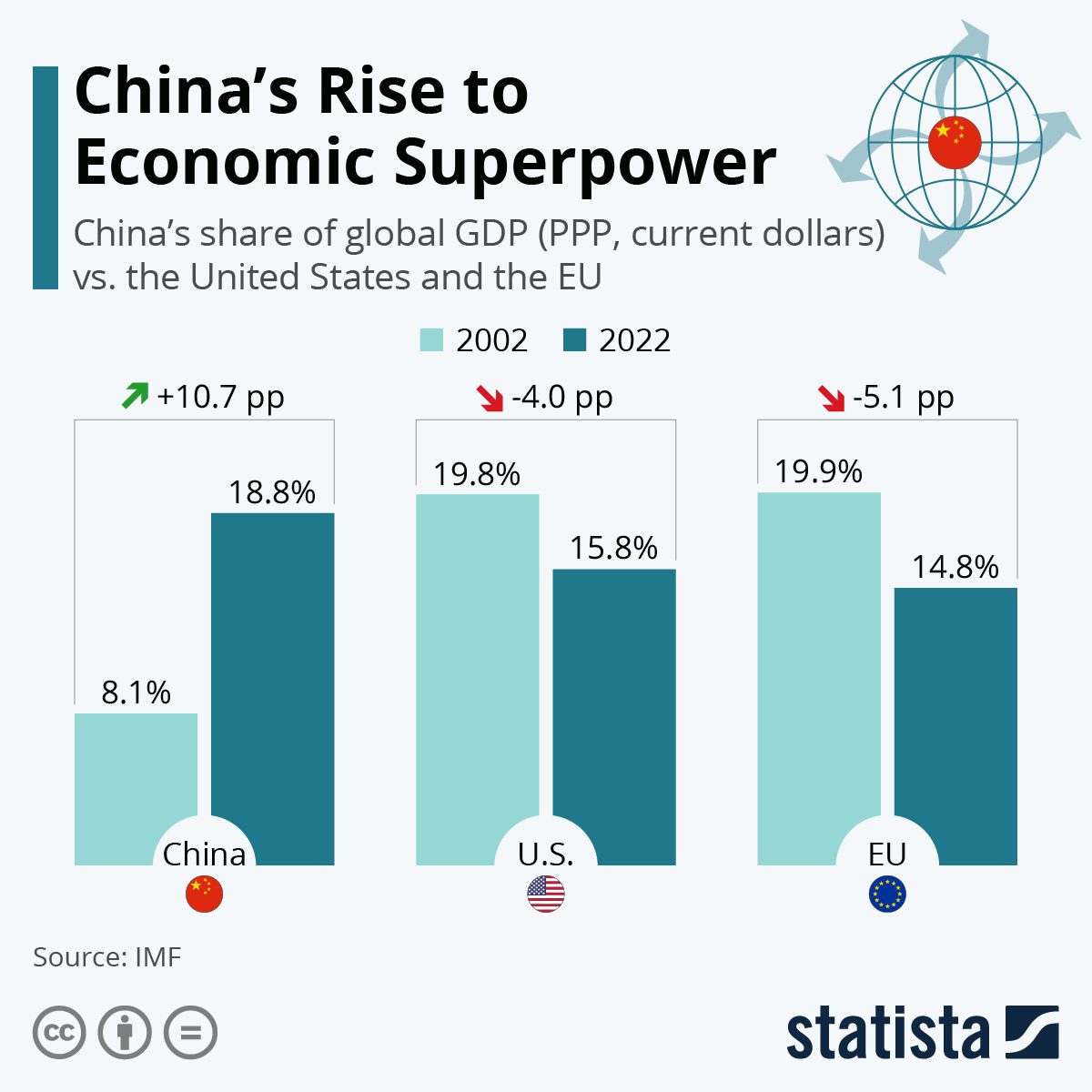
China’s journey from one of the world’s poorest nations to a global superpower is not without complications. Still, it stands as one of the most important development stories of the modern age. The combination of economic modernization and poverty reduction has transformed not only the structure of the Chinese economy but also the daily lives of its people.
It is a story of planning, innovation, mobilization, and sheer scale—one that will continue to shape the 21st century.
For Nigeria, China’s transformation offers more than inspiration—it provides tangible lessons in how to structure national development around long-term planning, inclusive growth, and strategic investment.
One of the takeaways is the necessity of long-term national planning that transcends political cycles. While China maintained decades of continuity in its development agenda, Nigeria has often struggled with policy inconsistency and the politicization of development programs. A focused, multi-decade plan—especially in areas like infrastructure, industrial policy, and agricultural modernization—would provide the stability needed for sustainable progress.
China’s poverty alleviation strategy also demonstrates the power of data-driven, targeted intervention. Nigeria’s current poverty rate remains high, particularly in rural and conflict-affected regions. Rather than relying on generalized anti-poverty programs, Nigeria could emulate China’s approach by identifying the specific causes and demographics of poverty at a household level. This would allow for precise policy responses—whether in the form of agricultural support, skills training, healthcare, or relocation assistance.
Infrastructure investment, especially in underserved rural areas, was a cornerstone of China’s success. Nigeria’s persistent infrastructure deficit continues to impede growth. Learning from China, future investments should aim not just at urban megaprojects but also at connecting remote communities to economic opportunities through improved roads, electrification, and digital connectivity.
Agriculture reform is another key area. China’s decision to give farmers more autonomy and market access significantly increased rural incomes. Nigeria, with vast arable land and a large rural population, can replicate this by securing land tenure, supporting mechanization, and investing in agricultural extension services and rural agribusiness.
Moreover, China’s use of Special Economic Zones to attract investment and build manufacturing capacity offers a template Nigeria can adapt. Nigeria’s own SEZs have been hampered by poor infrastructure and regulatory uncertainty. A renewed focus on making these zones viable—through governance reforms and better integration into national industrial policy—could catalyze job creation and export growth.
Another critical lesson lies in the prioritization of education and technology. China’s rapid ascent in high-tech industries was no accident—it was the product of sustained investment in STEM education and innovation ecosystems. Nigeria must similarly prioritize education, research, and digital infrastructure to unlock the potential of its young, tech-savvy population.
Perhaps most crucially, China’s success hinged on coordinated governance—clear roles for central and local governments, and strict accountability. Nigeria’s federal structure presents both an opportunity and a challenge. Building more effective collaboration between federal, state, and local authorities will be essential to translating policy into tangible outcomes.
Finally, just as China transitioned from poverty eradication to rural revitalization, Nigeria must also think beyond survival. It must build systems and institutions that foster sustainable prosperity, equitable growth, and social cohesion. Only then can it ensure that gains made today are not lost tomorrow.
In adapting these lessons, Nigeria does not need to replicate China’s model wholesale. Its political system, cultural diversity, and democratic framework are distinct. But the underlying principles—strategic vision, disciplined execution, targeted investment, and inclusive development—are universally applicable. If Nigeria can internalize and apply these, it will own its transformation story.