





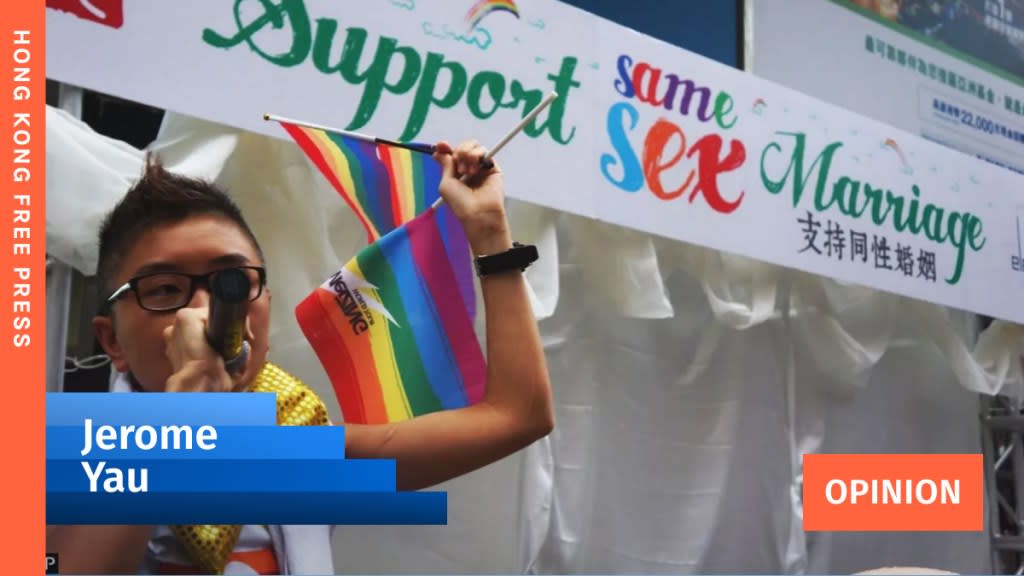
A Missed Opportunity for Equality
The rejection of the Registration of Same-sex Partnerships Bill by Hong Kong’s legislature was more than a simple legislative decision—it was a missed opportunity to address pressing social and constitutional issues. This outcome has forced Hong Kong to confront two urgent questions: Will the city continue to be led by conservative religious elites, and how will it protect the rights of minorities in the face of persistent discrimination?
The Legislative Council (LegCo) vote last month saw 71 members oppose the bill and only 14 support it. This decision did not reflect the broader public sentiment. A 2023 survey revealed that 60% of Hongkongers support equal marriage, while only 17% are opposed. Over the past decade, public attitudes have shifted significantly, driven by generational change, global exposure, and the lived experiences of LGBTQ+ families in the city. In short, marriage equality now enjoys widespread public support.
However, the bill’s defeat highlights the influence of a powerful and entrenched conservative bloc, often masked under traditionalist and religious rhetoric. The fact that a modest proposal aligned with both public opinion and constitutional principles could be so easily dismissed raises serious concerns about how well Hong Kong’s institutions protect minority rights.
While the legislature has been slow to act, the courts have consistently affirmed equality and inclusion as core values in Hong Kong. They have ruled against discrimination in areas such as dependent visas, taxation, public housing, and inheritance. Yet, each step forward has come at the cost of years of legal battles, rather than through proactive legislation. This piecemeal approach is inefficient and inconsistent.
In 2023, the Court of Final Appeal gave the government two years—until October 27, 2025—to create a framework that would recognize and protect same-sex couples. The government took a cautious first step by proposing a limited registration system, but the legislature rejected even this modest measure.
The rule of law in Hong Kong depends on constitutional protections, not political decisions. As noted by the former chief judge of the High Court, Andrew Cheung, in Chief Executive v President of LegCo, “The supremacy of the Basic Law means that no one—legislature included—is above the Basic Law.” Safeguarding minority rights cannot rely on petitions or populist attacks. Constitutional protections exist precisely to shield vulnerable groups from the majority’s will.
Lawmakers are not just passive actors; they must uphold the rule of law rather than prioritize political convenience. When constitutional rights are at stake, this distinction becomes especially important. Disregarding judicial rulings that protect these rights is not independence—it undermines the constitutional promise. As lawmaker Paul Tse pointed out during the LegCo debate, the rule of law demands respect for “the rules of the game” and for outcomes mandated by those rules.
The government must now take proactive steps to ensure fair treatment for same-sex couples. In the short term, administrative measures can provide some protection, but these are temporary fixes. Ultimately, legal recognition and full protection require a comprehensive framework developed through consultation with stakeholders.
Meanwhile, the private sector is already leading the way. Many multinational and large companies offer equal benefits to same-sex couples, not out of charity, but because it helps them attract and retain top talent. Inclusive policies have become a strategic advantage in today’s competitive, talent-driven economy. When businesses move ahead of the law, government inaction only widens the gap. Exclusion is not just a moral failure—it’s a liability.
The simplest, fairest, and most respectful solution is the one that already exists: marriage. This is not a clash between Western and Chinese values, but a matter of human dignity, fair treatment, and social inclusion—values Hong Kong has long claimed as part of its global identity.
Courts have affirmed that same-sex relationships share the same attributes and aspirations as opposite-sex couples. Commitment, partnership, and life-long pledges are universal. There is no legitimate reason to deny same-sex couples the same protections.
Evidence shows that equal marriage strengthens families, societies, and economies. A 2024 RAND study found no negative effects on heterosexual marriage after 20 years of marriage equality in the United States. The Boston Consulting Group estimated that same-sex marriage contributed $25 billion to the U.S. economy. In Asia, Thailand expects legalization to boost tourism revenues by $2 billion annually. Equality, quite literally, makes dollars and sense.
At its core, this debate is about dignity, fairness, family, and constitutional protection in an inclusive, harmonious society. Recognizing rainbow families means ensuring that couples who share their lives together are treated with the same respect as everyone else. To continue denying them this recognition is to deny their humanity.
Now is the time to move forward—not dig in our heels. Lawmakers must align laws with constitutional principles, not factional religious agendas. Business leaders should speak out, recognizing that inclusion and equality are not only constitutional imperatives but also competitive advantages. And members of the public must demand that dignity and fairness remain core values that institutions are duty-bound to uphold.
Hong Kong’s LGBTQ+ residents are not going away, nor are their families. The majority is ready to welcome them on equal terms, and the courts have spoken. It is time for the government and legislature to end their exclusion from marriage. As the saying goes, equality delayed is equality denied.