







Nurses and Midwives Highlight Key Demands for 2026
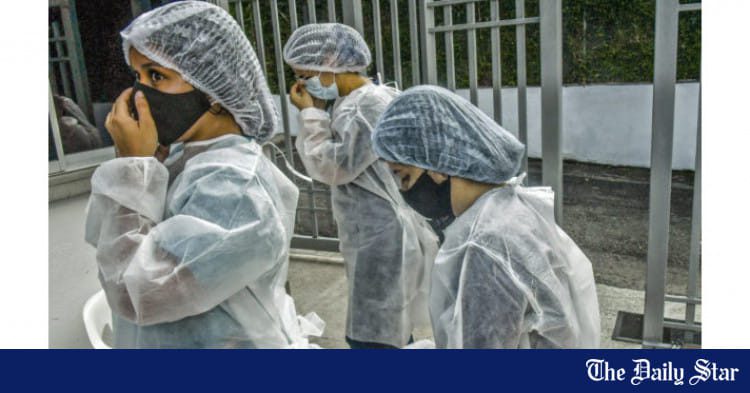
Nurses and midwives in Nigeria have identified improved working conditions and better remuneration as their top priorities for 2026. They expressed concern over the lack of progress in the health sector, noting that 2025 was marked by more setbacks than advancements. The National Association of Nigerian Nurses and Midwives (NANNM) has called for urgent reforms to prevent a deeper crisis in the coming year.
The association’s leadership emphasized that government engagement with healthcare professionals in 2025 was largely discouraging, with little evidence of meaningful improvements in welfare or working conditions. Speaking exclusively with PUNCH Healthwise, Morakinyo Rilwan, the National Chairman of NANNM–Federal Health Institutions Sector, highlighted the ongoing challenges faced by nurses and midwives.
Rilwan stated that the situation in the healthcare sector continues to negatively impact those at the forefront of service delivery. He noted that from the perspective of nurses and midwives, government engagement with the profession has not been encouraging. “What we have seen over the year is more setbacks and challenges than progress,” he said.
Persistent Challenges in the Profession
According to Rilwan, the difficulties confronting the profession span critical areas that directly affect productivity and patient care. These include training and retraining, remuneration, conditions of service, and the lack of a conducive working environment. Despite sustained efforts to engage authorities and improve standards, these issues have persisted.
Rilwan stressed that the only body capable of addressing these problems is the government. He also acknowledged that despite the challenges, nurses and midwives have continued to carry out their duties in line with professional ethics, prioritizing patients even under harsh conditions.
However, prolonged hardship has made agitation unavoidable. PUNCH Healthwise reported that the experience of nurses and midwives across the country led to a nationwide strike in July 2025. During the industrial action, hospitals across Nigeria witnessed a significant disruption in medical services and crippled medical facilities’ operations for four days.
Government Response and Policy Failures
The industrial action, which started on July 30, 2025, and was planned for seven days, was called off on August 2, 2025, after the nurses’ leadership and the Federal Government team met. However, Rilwan accused the government and other stakeholders of focusing on policies that fail to address the core problems facing nurses and midwives.
“This approach amounts to mere window dressing. Policies are announced, agreements are signed, but there is little or no implementation. For example, agreements reached between nurses and the government have been signed, yet nothing has changed on the ground,” he said.
Rilwan also challenged the frequent claim of a nationwide nursing shortage, describing it as a misleading narrative. “The narrative of a ‘shortage of nurses’ continues, when in reality, the issue is underemployment and poor absorption into the system,” he said.
Retention and Employment Issues
He pointed out that many trained nurses remain unemployed, while hospitals fail to replace staff who retire or migrate abroad. “Many trained nurses are not being employed, and hospitals are not replacing staff who retire or leave the country. Hospital managements and supervising ministries often shift blame, while nothing concrete is done,” he added.
Reflecting on 2025, Rilwan described working conditions as consistently difficult, citing inadequate resources and weak institutional support. “Throughout the year, the situation has not been rosy. Nurses have been managing with limited resources in unconducive environments, with poor remuneration and inadequate support,” he said.
He further criticized the effectiveness of government engagement platforms, lamenting repeated meetings without outcomes. “The collective bargaining committee, for instance, has met about 13 times with no meaningful resolution. This raises questions about the purpose of such committees, as repeated meetings without outcomes only serve to delay action,” he added.
Expectations for 2026
Looking ahead to 2026, the NANNM–FHI national chairman said nurses and midwives were hopeful that the government would change its approach. He faulted disparities in salary adjustments within the health sector, calling for fairness and transparency in compensation.
“It is unfair that some salary structures are adjusted while others are left behind. If the government wants to introduce a unified salary scale, it should be done transparently, with everyone paid according to their roles and inputs,” they said.
Rilwan emphasized that all health workers are essential to the system and should not be played against one another. “Everyone in the health sector is important, doctors, nurses, laboratory scientists, records officers, cleaners, and others. No one can do another person’s job, and no group should be favoured at the expense of others,” he added.
Addressing the Brain Drain
Outlining nurses and midwives’ expectations for 2026, Rilwan called for sincerity in the work of government committees and concrete steps to address the factors driving health professionals out of the country.
PUNCH Healthwise reports that no fewer than 16,156 Nigerian-trained nurses and midwives have been licensed to practise in the United Kingdom between 2017 and September 30, 2025. This figure is based on the latest data from the UK’s Nursing and Midwifery Council register, obtained exclusively by one of our correspondents.
Rilwan urged the government to prioritize improved working environments and fair remuneration as the foundation for retaining healthcare workers. “Working environments matter. Remuneration matters. These are the basic things people go outside the country to look for. Working environment and remuneration are the two simple things we are talking about. Beyond that, there is really nothing special being asked for.”