






Preliminary Findings Suggest US Strike on Iranian School Was Based on Outdated Intelligence
A preliminary inquiry has revealed that outdated intelligence likely led to a deadly US strike on an Iranian elementary school using a Tomahawk missile, according to a US official and a second person briefed on the findings of the US military investigation into the incident.
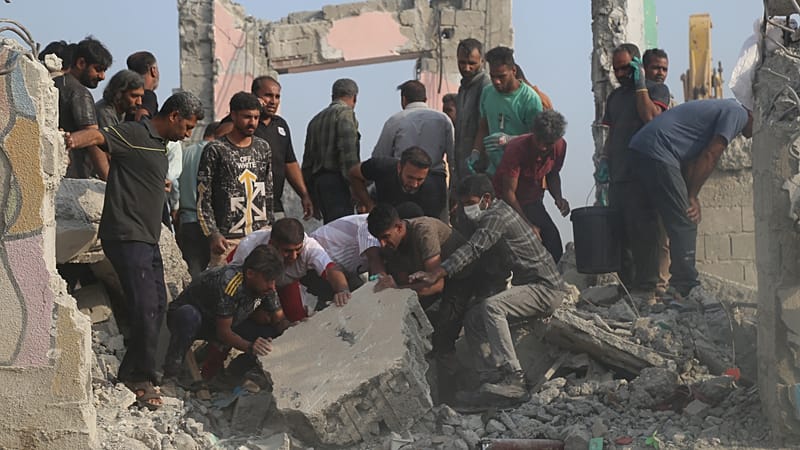
The attack occurred on 28 February in Minab, a southern city in Iran. A missile strike hit an elementary school, resulting in the deaths of 165 people, many of whom were children. The incident took place during the ongoing conflict initiated by US-Israeli strikes on Iran. The bombing of the school and its casualties involving children has become a focal point of the war. If confirmed to be the result of a US strike, it would rank among the highest civilian casualty events caused by American military operations in the last two decades.
Initial Response from US Leadership
US President Donald Trump initially suggested that Iran itself was responsible for the attack, despite the fact that Iran does not possess Tomahawk missiles. He later stated that he could “live with” whatever the investigation reveals. However, when asked about the report from the New York Times, he responded: “I don’t know about it.”
The preliminary findings have prompted immediate calls for more information from the Pentagon. White House press secretary Karoline Leavitt stated that “the investigation is still ongoing.”
Evidence Points to US Responsibility
Satellite images, expert analysis, a US official, and public information released by the US military all suggest that the strike was likely carried out by the United States. On Monday, new footage emerged showing what experts identified as a US-made Tomahawk cruise missile hitting the military compound. Smoke was already rising from the area where the school was located.
Publicly available satellite imagery shows that the school building was part of the military compound until around 2017, when a new wall was added to separate the two areas. A watchtower on the property was also removed. Around the same time, the walls surrounding the building were painted with vibrant murals in blue and pink.
The school was clearly labeled as such in online maps and had an easily-accessible website containing information about students, teachers, and administrators.
International Law and Military Targets
International law governing warfare prohibits strikes on structures, vehicles, and people that are not military objectives or combatants. Civilian homes, schools, medical facilities, and cultural sites are generally off-limits for military strikes.
Elise Baker, a senior staff lawyer at the Atlantic Council, a Washington-based nonprofit think tank, emphasized that the proximity of a school to a valid military target does not change its status as a civilian site.
Congressional Reaction
Senator Tim Kaine, during a briefing with journalists on Wednesday, said: “If we’re found responsible, it’s either we’ve changed our traditional targeting rules or we made a mistake.”
“If we’ve changed our traditional targeting rules and we no longer provide the same level of protection for civilians, that would be tragic,” Kaine said.
Ongoing Investigation and Public Scrutiny
As the investigation continues, the international community remains closely watching for further details. The case raises critical questions about the accuracy of military intelligence, the adherence to international law, and the potential consequences of errors in targeting.
The incident has sparked renewed debate over the ethical and legal implications of military actions, particularly when they involve civilian casualties. As more evidence comes to light, the world awaits clarity on whether this tragic event was the result of a tragic mistake or a shift in military policy.