






From Schoolyard Rivalry to Professional Excellence: The Rise of Pro Panja League
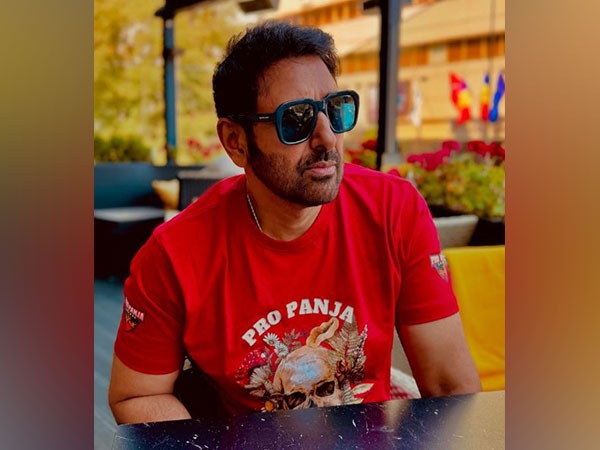
Parvin Dabas, co-founder of the Pro Panja League, has transformed a traditional Indian sport into a professional spectacle. His journey from being a school and college “Panja” enthusiast to creating India’s first arm-wrestling league highlights his passion for combat sports and his vision for elevating a culturally rooted activity.
A Sport with Deep Cultural Roots
Dabas believes that Panja, an age-old Indian sport, holds immense potential. He recalls his early days as a sportsman in school and college, where he developed a love for combat sports like boxing and MMA. “Everyone in India has played ‘Panja’ at some point. It’s emotional, easy to understand, and has a strong Indian identity,” he says. Unlike many other sports, Panja retains its original name and cultural connection, making it uniquely accessible.
The idea was not just to professionalize the sport but to present it in an entertaining and glamorous format. Before launching the league, Dabas and his team conducted tournaments for 3-4 years to experiment with presentation and structure. “You don’t need any new shoes, pads, bat, racket—just one table and a neighborhood starts playing. It’s truly a sport for the masses,” he notes.
A Successful Debut
The inaugural season of the Pro Panja League in 2023 exceeded expectations. “It exceeded the expectations of everybody. Even we, you know, I don’t think anyone knew that ‘Panja’ could be so popular on TV,” Dabas shares. The league attracted 32 million unique viewers, surpassing initial benchmarks and proving the sport’s mass appeal.
“The players also really performed well. I tell them, one will win and one will lose. That’s every match, but it’s not just about winning, it’s about how you win. You’ve got to bring your personalities out, your emotions out, and everybody has a different personality,” he adds. This approach has helped create a loyal fanbase, with events drawing large crowds, such as over 20,000 fans in Mizoram during one of their matches.
Building a Strong Grassroots Network
The Pro Panja League has drafted 180 athletes across ten weight categories, but what makes it unique is its solid grassroots network. “Talent identification and development is a very big part of it. For us, athletes are stars. We have always believed in merit and that is why we have these ranking tournaments,” Dabas explains. Events in states like Kerala have seen 1,500 kids participating, with new stars emerging every few months.
“We’ve done over 50 events across India, north, south, east, west, everywhere. Every two months, new stars emerge, especially in sub-junior and junior categories,” he says. The league has also expanded internationally, hosting the Asian Cup in Mumbai and sending teams to global competitions.
Overcoming Challenges
Launching a new league was not without hurdles. Convincing broadcasters, team owners, and stakeholders about the sport’s viability was a significant challenge. “The biggest challenge was convincing the channel that this is a sport that can do well. The events we did helped because we had proof of concept,” Dabas recalls. “Convincing different stakeholders, team owners, and everything, of the viability of the sport because nobody, before our league, had seen this professionally.”
Despite these challenges, the success of the first season gained confidence from many, leading to increased participation in the second season. The second season begins on August 5 in Gwalior, a city known for its massive Panja fan base. The league has also planned overseas events, including a debut in Dubai and a visit to Bihar in October.
Expanding Horizons
The Pro Panja League is taking bold steps to expand its reach. “We’re going to Bihar for the first time in October. So, this whole calendar year is being planned. We’re taking Team India to Bulgaria in September for the World Arm Wrestling Championship. We also sent a police team for the World Police and Fire Games from India. So, there’s a lot of pride for that,” Dabas says.
In a historic first, arm wrestling will feature at the Para-Youth Asian Games in December, with India sending a team. “The biggest and the best thing is that it’s our sport which brings men, women and especially the disabled on the same platform,” Dabas notes. This inclusivity underscores the league’s mission to make arm wrestling a unifying force in Indian sports.