


Rising Tensions and the Impact on Mainland Students in Taiwan
As political tensions between Beijing and Taipei continue to escalate, the academic and educational sectors are witnessing significant changes. These shifts reflect efforts by both sides to adapt to or influence the evolving environment. In this article, we explore the challenges faced by mainland Chinese students studying in Taiwan, highlighting the broader implications for cross-strait relations.
A Growing Sense of Uncertainty
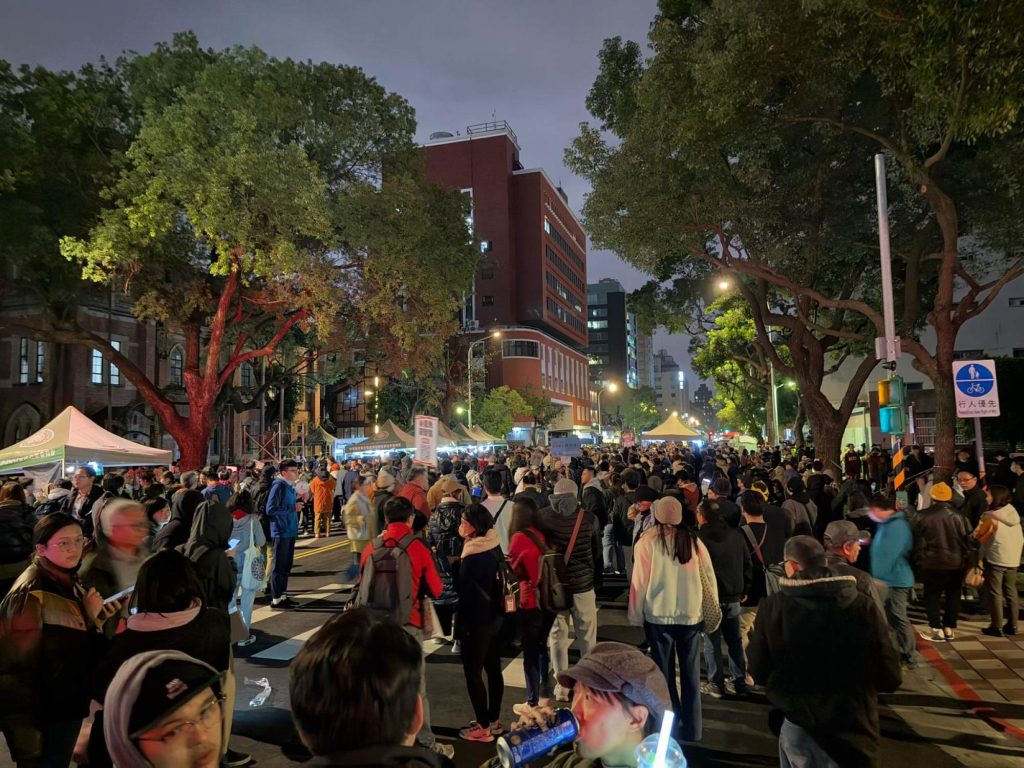
John Wang, a mainland student in Taiwan, experienced a moment of apprehension during his five months on exchange. It occurred on December 20 when he was passing the parliament building in Taipei after a social gathering. Thousands of protesters had gathered outside, waving signs and giving speeches. This was part of the Bluebird Movement, a series of pro-Democratic Progressive Party (DPP) protests over parliamentary reforms that gave the opposition more power to scrutinize the government. The opposition Kuomintang and Taiwan People’s Party hold a majority in Taiwan’s legislature.
Wang described the atmosphere as tense, with strong anti-mainland China sentiment. He recalled a student protester telling the crowd that he was against mainland China, even though his mother was from the mainland. Wang felt afraid that his accent might be recognized, leading to potential trouble. He feared being seen as a spy and reported to the police, which could result in being sent back to the mainland.
Friendlier Days: A Changing Landscape
In the past, students like Wang were seen as important figures in efforts to improve communication and cooperation across the Taiwan Strait. However, the situation has changed significantly. During the pandemic, Taiwan announced in February 2020 that mainland residents, including students, were not allowed to enter the island. In April, the mainland’s Ministry of Education responded by stopping applications for mainland students to study in Taiwan. Although Taiwan lifted its ban in November 2022, the mainland still does not allow students to enroll in full-time university degrees on the island.
This shift marks a stark contrast to 2011, when there were 12,155 exchange and university students from the mainland studying in Taiwan. The number peaked at 41,975 in 2016, but it has gradually declined since then as Beijing viewed Tsai Ing-wen’s policies as pro-independence, leading to increased tensions. Last year, there were only 3,852 mainland students in Taiwan.
Cultural Connections and Educational Opportunities
Despite the challenges, many mainland students find value in their experiences in Taiwan. Wang sees himself as a “Taiwan lover” and appreciates the familiarity of the island’s language and culture. He immersed himself in Taiwanese music, television, and politics, finding an international news channel in Taiwan to be “eye-opening.”
Other students, such as Lin Zihao, who is pursuing a PhD in Taiwan, also highlight the cultural connections. Lin noted that he could watch Taiwanese television from his hometown in Fujian province, which is directly across the strait from Taiwan. He also attended school with Taiwanese children whose parents had moved to mainland China for work or business.
Mainland students often apply to study in Taiwan for reasons including curiosity about the island and its culture, or due to the reputation of certain universities. For Lin, it was “another path” in his education that opened up when representatives from Taiwanese universities visited his school.
Historical Context and Political Shifts
The first opportunity for mainland students to pursue a degree in Taiwan came in 2011 under a cross-strait agreement. At the time, Ma Ying-jeou was the island’s leader, pushing for closer economic ties with Beijing. Initially, applications were limited to specific provinces and cities, but the program expanded in 2013 to include additional regions.
Educators saw these exchanges as a means for students on both sides of the strait to learn from each other, fostering mutual understanding. In 2012, then-Chinese president Hu Jintao called it a “major transition” in relations between the two sides.
For students, it was a chance to experience something different. Dong Ying, an exchange student in Taipei in 2018, had the opportunity to interact with a politician in the street, an experience she found surprising given the differences in political engagement between the mainland and Taiwan.
Navigating Political and Cultural Challenges
However, the student exchange program has always been subject to the complexities of politics. Taiwan has imposed caps on the number of mainland students and restricted their ability to work or join health insurance schemes. These measures aim to address concerns about job competition and national security.
Mainland students undergo meticulous background checks, with Wang waiting months for approval from various government and university departments. He felt the process was unnecessarily complicated, almost like a technique to prevent students from going to Taiwan.
Broader Implications and Future Outlook
The impact of these changes extends beyond individual students. In March, three mainland Chinese women married to Taiwanese men were ordered to leave the island due to their support for a military takeover of Taiwan, raising concerns about freedom of speech. Zhu Songling, a professor at Beijing Union University, believes the ruling DPP is trying to reduce cross-strait interactions, making it unlikely that the once-flourishing economic and cultural exchanges will be restored soon.
Wang, who witnessed the protest in December, finds navigating conversations with his Taiwanese friends challenging. He has a tacit understanding with a friend from the DPP to change the subject if discussions become contentious. While his friend supports Taiwan’s independence, Wang believes this path could lead to war.
Conclusion
The situation for mainland students in Taiwan reflects the broader challenges in cross-strait relations. As tensions continue to rise, the diminishing student exchanges and communication between the two sides risk exacerbating existing issues. Despite the difficulties, many students remain committed to learning and understanding the unique culture and perspectives of Taiwan, hoping for a future where dialogue and cooperation can prevail.