





A Commitment to Social Justice and Constitutional Rights
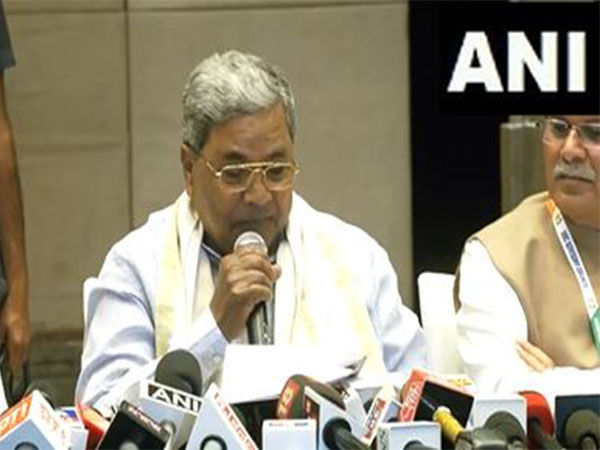
The first meeting of the All India Congress Committee (AICC) OBC Advisory Committee was described as “highly successful” by Karnataka Chief Minister Siddaramaiah. He commended party MP Rahul Gandhi for his unwavering commitment to social justice and his role in advocating for marginalized communities.
After the meeting, CM Siddaramaiah shared the Bengaluru Declaration, which highlighted the importance of Rahul Gandhi’s efforts. The declaration expressed gratitude for his courage in ensuring social justice for neglected sections of society and emphasized his special concern for backward classes. It noted that due to his determination, the previous government was compelled to conduct a caste census—a constitutional demand.
The committee acknowledged Rahul Gandhi’s historic achievement on behalf of all backward classes in India. While it recognized this as a milestone, the declaration stressed that it is just one step toward achieving the Constitution’s vision of social justice. Under Gandhi’s leadership, the nation could realize the goal of social transformation, paving the way for an equitable society.
The Chief Minister also reiterated the Congress party’s commitment to upholding its principles and fighting for social justice for all. The resolutions in the declaration called for a nationwide caste census conducted by the Registrar General and Census Commissioner. The census should include social, economic, educational, employment, and political aspects of every caste and individual, using Telangana’s SEEEP Caste Survey as a model.
Another key resolution proposed relaxing the 50% cap on reservations to provide adequate representation for backward classes in education, economy, politics, and other fields. Reservations should also be implemented in private educational institutions as per Article 15(5) of the Constitution.
Historical Context and Ongoing Efforts
CM Siddaramaiah revealed that during his tenure as Chief Minister in 2015, he had ordered the Backward Classes Commission to conduct a socio-economic and educational survey covering all communities, not just backward classes. The commission completed the survey, but under the coalition government in 2018, the then-chairman Kantharaju requested more time to submit the report. Former CM HD Kumaraswamy rejected the request. Despite some extensions, the report was not accepted, according to Siddaramaiah.
Karnataka was the first state to conduct a caste census since 1931, earning it the title of the “Karnataka Model.” However, during the subsequent three years and ten months of the BJP government, no action was taken to implement the commission’s report. Later, under Backward Classes Commission Chairman Jayaprakash Hegde, a report with recommendations was prepared and submitted. However, due to its reliance on a decade-old survey, the state cabinet decided to conduct a fresh survey.
The Backward Classes Commission has been directed to complete the re-survey and submit a report within three months, which will then be implemented. This effort aims to ensure accurate data and effective policies for backward communities.
Upholding Constitutional Values and Equity
The Chief Minister emphasized that the Congress party is always committed to the Constitution. The AHINDA (Minorities, Backward Classes, and Dalits) philosophy is rooted in equal opportunity and justice for all. He highlighted the current lack of social, economic, and educational equality and stressed the need to empower backward communities.
Siddaramaiah praised Rahul Gandhi’s advocacy for a caste census, clarifying that it is not merely a count of castes but a comprehensive socio-economic and educational survey aimed at providing equal opportunities to backward communities. This initiative reflects a broader vision of equity and inclusion, aligning with the values enshrined in the Constitution.
By focusing on these issues, the Congress party continues to work towards building a fairer and more just society, ensuring that all communities have the opportunity to thrive.