









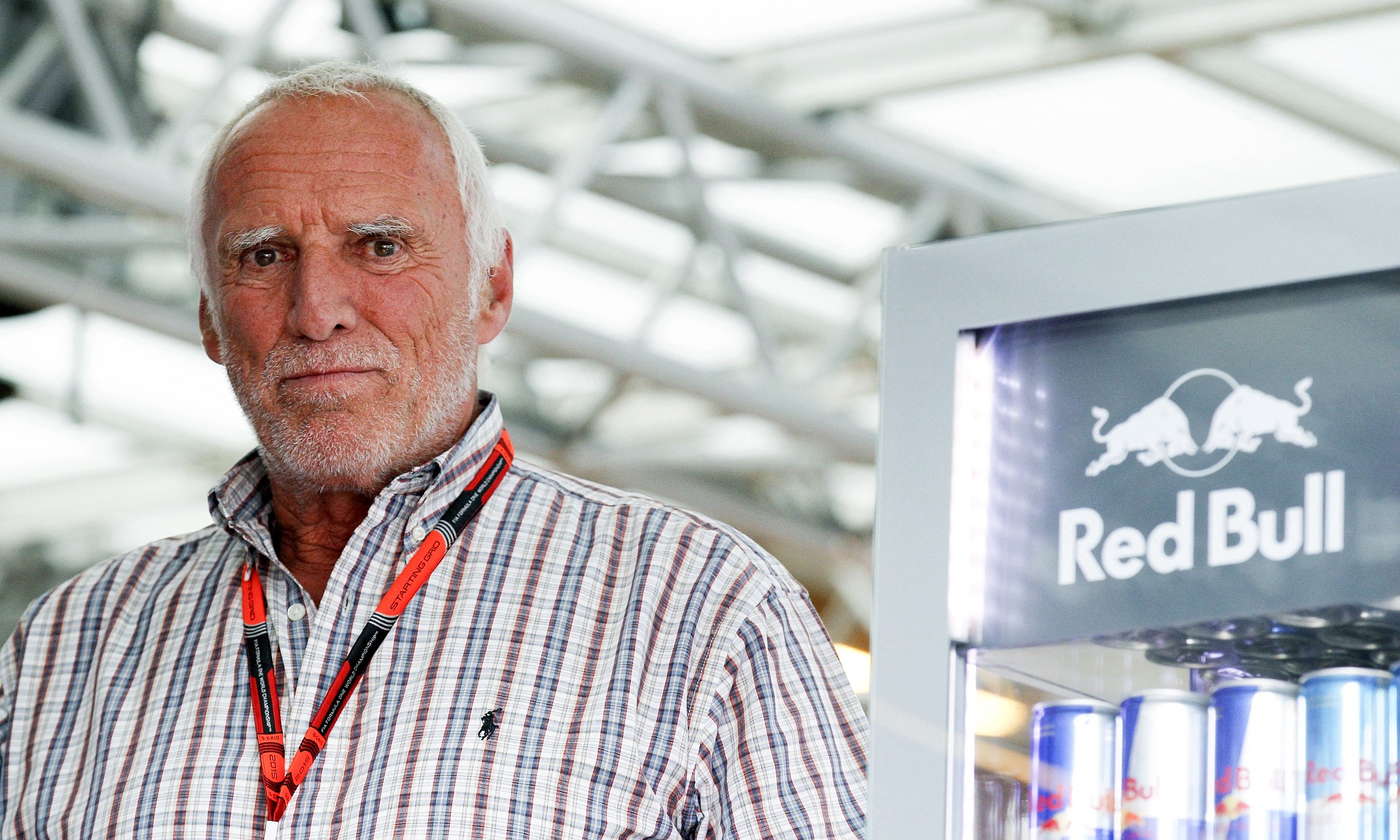
The Journey of a Visionary Entrepreneur
Dietrich Mateschitz, the late Austrian billionaire and co-founder of Red Bull, embarked on a unique path that shaped his life and legacy. Born in 1944 in Styria, Austria, he came from a family of elementary school teachers. His parents separated when he was young, leading him to live independently from an early age. This independence played a significant role in shaping his character and determination.
Mateschitz took ten years to complete his bachelor’s degree in marketing from the Vienna University of Economics and Business. This extended period reflected his belief that youth should be about experiences and exploration rather than just academic pursuits. During this time, he worked as a ski instructor and took on manual labor jobs to support himself, gaining valuable life experiences that would later influence his business decisions.
After graduating at age 28, Mateschitz joined several multinational companies, starting with a job as a salesman for Unilever, where he marketed detergents. He later became the international marketing director for Blendax, a German hygiene products brand. However, after nearly 12 years in the corporate world, he felt burnt out by its monotony. He described the repetitive nature of business trips, suits, hotels, and bars as “gray,” prompting him to reevaluate his career path.
During a business trip to Thailand in 1982, Mateschitz discovered a local energy drink called Krating Daeng, which translates to “red bull” in Thai. This medicinal-tasting and intensely sweet drink was commonly used by local truck drivers to combat fatigue. Recognizing its potential, he decided to quit his job and embark on an entrepreneurial journey.
In 1984, Mateschitz returned to Thailand and persuaded Chaleo Yoovidhya, the inventor of Krating Daeng, to invest $500,000 each to establish Red Bull. They each took a 49% stake in the new business, with the remaining 2% going to Chaleo’s son, Chalerm Yoovidhya. However, the product initially faced challenges in gaining approval in Austria due to its sweetness, unfamiliar ingredients, and unusual packaging. Market research firms gave the product negative reviews, criticizing its name, flavor, and brand image.
Red Bull struggled in its first two years, losing over $1 million. With no advertising budget, Mateschitz had to borrow from friends and use every connection he had to keep the company afloat. Instead of simply trying to sell a strange drink, he chose to market it as a lifestyle. He targeted young people, students, partygoers, and especially the extreme sports community.
With the help of Johannes Kastner, an old friend from the marketing industry, Mateschitz created the now-iconic logo featuring two charging bulls and the slogan “Red Bull Gives You Wings.” The catchphrase symbolized freedom, boldness, and pushing beyond limits. To expand the brand, he took Red Bull to Hungary, Germany, and the U.K., adjusting the flavor, adding carbonation, and redesigning the packaging into a slimmer can with its signature silver-blue color.
Step by step, Mateschitz carved out a new niche: a premium energy drink tailored to an active lifestyle. Red Bull began sponsoring extreme sports events, organizing contests like Flugtag—where participants build homemade flying machines and launch them over water—and supporting hundreds of extreme sports athletes worldwide. Each event was an opportunity to advertise the brand without relying on traditional methods.
The pinnacle of this strategy was Austrian skydiver Felix Baumgartner’s jump from the edge of space during the Red Bull Stratos mission—an event that was both daring and inspiring, attracting hundreds of millions of views worldwide. Baumgartner performed a freefall jump from an altitude of 39,000 meters, setting a world record by breaking the sound barrier unaided by a vehicle.
Red Bull was no longer just an energy drink seller; it produced videos, magazines, and sports and music content built around the spirit of “giving you wings” through its media unit, Red Bull Media House. In 2012, Forbes estimated Mateschitz’s net worth to be $5.3 billion.
When he passed away in 2022 at the age of 78 due to cancer, his firm was selling over 9.8 billion cans annually and was present in more than 170 countries. He owned the Red Bull Racing Formula One team, football clubs in the U.S. and Europe, and a collection of vintage aircraft. Despite his success, Mateschitz remained highly private, living in Salzburg with his longtime partner and rarely giving interviews.
“When we first started, we said there is no existing market for Red Bull,” Mateschitz once told Forbes. “But Red Bull will create it.” His entrepreneurial journey is often cited as a textbook example of Apple co-founder Steve Jobs’s quote: “I’m convinced that about half of what separates successful entrepreneurs from the nonsuccessful ones is pure perseverance.”
Mateschitz did not start young, had no exceptional financial backing, and did not enter an industry he was familiar with. But with sharp instincts, vision, and a level of persistence that bordered on stubbornness, he turned an exotic can of drink into a global symbol of energy, boldness, and surpassing limits.