


Record-Breaking Immigration and Population Growth in the UK
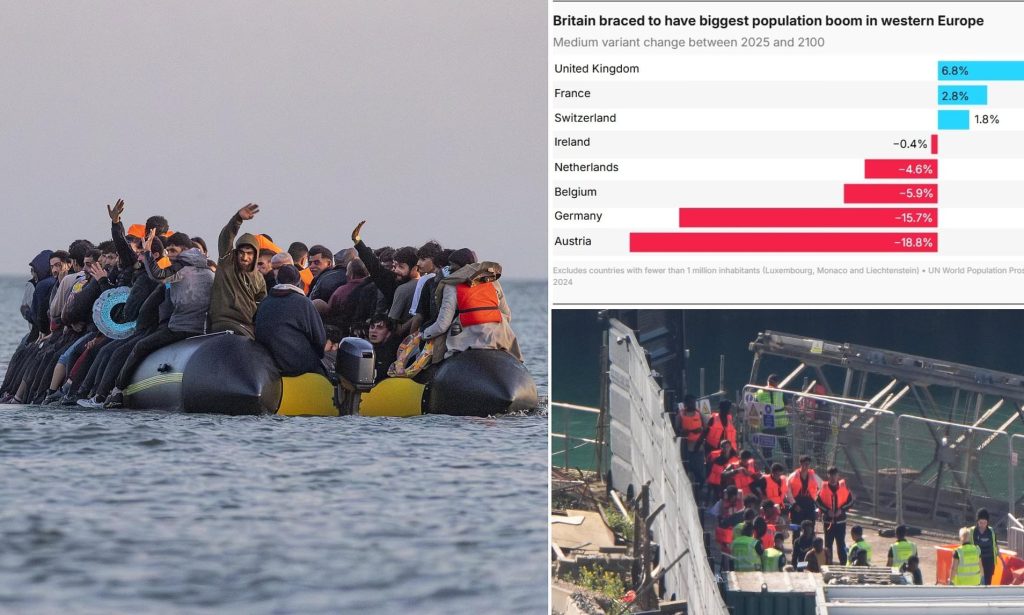
The United Nations has highlighted that the UK is experiencing a population growth rate that outpaces all other major European Union countries. This rapid expansion is attributed to record levels of immigration, which have become a central issue in political and public discourse. According to UN projections, the UK’s population is expected to increase from 69.6 million to 74.3 million by the end of the century—a growth of 6.8%. Only Luxembourg, with a much smaller population of around 672,000, is projected to see a higher percentage increase at 10%.
This surge in population is largely driven by the ongoing immigration crisis, which has seen tens of thousands of migrants arriving in the UK through small boats, often illegally. Political leaders have been criticized for failing to address this issue effectively, with concerns growing about the long-term implications for the country’s infrastructure and public services.
A Growing Concern for Public Services and Housing
A cross-party report by Conservative peer Robin Hodgson and ‘Blue Labour’ figure Maurice Glasman has raised alarms about the potential consequences of unchecked population growth. The study warns that the UK could become Europe’s most crowded country if current trends continue. To address these challenges, the report recommends establishing an independent Office for Demographic Change to manage future population shifts.
The report describes the current population increase as “the most rapid in our nation’s history.” It also highlights the impact of the small boats crisis, where thousands of migrants attempt to enter the UK through the English Channel. Lord Hodgson criticized politicians for delaying action, stating that without immediate planning, future problems will be far more difficult to resolve.
Migration Trends and Their Impact on the UK
According to the latest UN estimates, cumulative net migration to the UK is expected to reach 14.3 million by the end of the century. This figure is significantly higher than France’s projected 7.8 million and Germany’s expected 11.5 million. Only three EU member states are anticipated to see population growth by 2100: Luxembourg, Sweden, and France.
Without positive net migration, the UK’s population would fall below 50 million by 2100, returning to levels similar to those in 1950. This decline is due to the country’s fertility rate, which remains below the replacement level of 2.1 children per woman. In England and Wales, the total fertility rate stood at just 1.44 children per woman between 2022 and 2023, continuing a downward trend over recent years.
Aging Population and the Role of Immigration
The UN’s World Population Prospects 2024 also predicts that the UK’s median age will rise from 40 to 47 by 2100. However, without immigration—where arrivals tend to be younger—the median age could jump to 50 as early as 2067. This aging demographic poses additional challenges for the country’s healthcare and social care systems.
The Strain on Government Resources
The immigration crisis has already placed a significant strain on government resources. Billions of pounds have been spent on housing asylum seekers in hotels, and the number of foreign nationals claiming Universal Credit has risen sharply. Between June 2022 and last month, the number of claimants increased from 906,018 to 1.26 million. Of these, 118,749 were refugees, and 54,156 had humanitarian visas. Approximately 59.1% of these individuals were found to be unemployed in May.
Chris Philp, the shadow home secretary, criticized the Labour Government for losing control of the welfare system, arguing that Universal Credit should be reserved for UK citizens only. He emphasized the need for fairness and responsibility in managing support for those who have contributed to the country.
Calls for Action and International Cooperation
Lord Glasman has urged political parties across the spectrum to address the issues of demography and immigration, stating that these topics have dominated public debates for too long. He called for solutions that reflect the needs of the general public.
In response to the crisis, the UK government has pushed for greater cooperation with French authorities to prevent illegal crossings. However, recent developments, including a new migrant return deal between Prime Minister Keir Starmer and French President Emmanuel Macron, have faced criticism from refugee charities and legal experts. Campaigners argue that the plan may not comply with international law, and legal challenges could delay its implementation for up to a year.
The situation remains complex, with ongoing discussions about how best to manage migration while ensuring the well-being of both the UK population and those seeking refuge.