


New Rule of Law Conditions Could Impact Hungary’s EU Funding
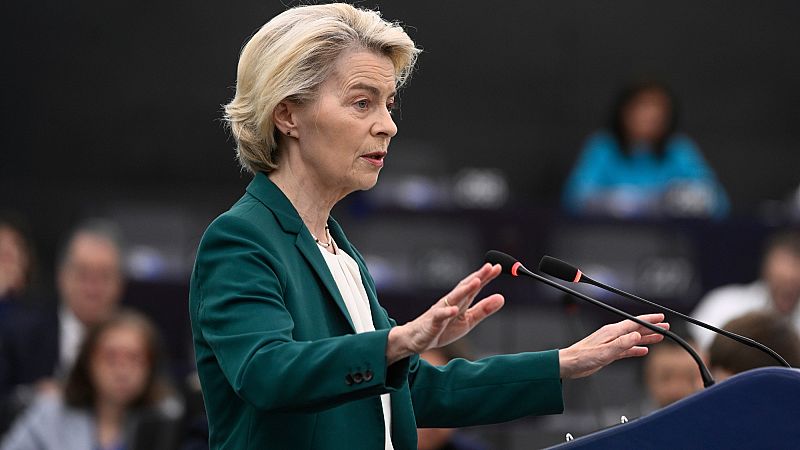
European Commission President Ursula von der Leyen has proposed new conditions for payments in the next budget cycle, which could significantly affect Hungary and potentially cut off more funding channels from Brussels. These proposals, outlined in draft rules obtained by Euronews, emphasize the importance of upholding the rule of law as a fundamental requirement for accessing EU funds.
Von der Leyen stated that the rule of law must be respected unconditionally, and this principle will apply to all aspects of the EU budget. She emphasized that with the next multiannual financial framework, the EU will take further steps to ensure compliance. “In the National Regional Partnership Plans, we are making the rule of law and fundamental rights a condition for investment and a focus for reform. This will be about smart conditionality,” she said.
The President also highlighted the need for responsible spending of EU money, with strong safeguards, clear conditionality, and appropriate incentives. She stressed that these measures are in the interest of EU citizens.
Key Elements of the Proposed Rules
The National and Regional Partnership Plans (NRPs) package is the largest component of the seven-year budget plan, accounting for nearly half of total spending—€865 billion if the proposed figures are adopted. However, von der Leyen did not provide specific details on how the rule of law checks would be implemented for the programs under the NRPs.
According to the draft regulations, member states must comply with EU core values to be eligible for projects. The EU Charter of Fundamental Rights and Article 2 of the EU Treaty on fundamental rights are mentioned in the regulations, along with the requirement that member states must not violate the principle of gender equality.
Another key feature of the legislation is the link between payments and the annual rule of law report. If a member state fails to meet the rule of law conditions, the Commission will notify them. If no changes are made, the Council may suspend payments.
Strengthening Democratic Values and Transparency
The rules also emphasize the need to promote open, rights-based, democratic, and inclusive societies. They aim to strengthen the judiciary, combat corruption, and ensure media diversity. Transparency will be improved by publishing a list of final beneficiaries of EU funds in a central database.
Additionally, the budget proposal includes the AgoraEU initiative, which will receive €49 billion alongside ERasmus+. This program is designed to support common EU values, democracy, the rule of law, freedom of the press, and civil society organizations.
Hungary’s Challenges in the Next Budget Cycle
Hungary currently faces the most criticism within the European Union regarding issues related to the rule of law. It is the only country subject to Article 7 proceedings in the Council, which could lead to the withdrawal of voting rights. Hungary is also the only country under the Rule of Law Procedure, which has been used to suspend EU funds due to concerns over systemic corruption.
The Hungarian government has dismissed these procedures and accusations as political retribution. Currently, Hungary can only access cohesion and agricultural funds from the EU budget. However, these funds are set to be merged into the National and Regional Partnership Plans, which could allow Brussels to suspend them if it deems the rule of law to be inadequate.
Finalizing the Budget Proposal
It is important to note that the budget proposal is not yet final. It will need to be agreed upon by the European Parliament and member states. Each member state, including Hungary, holds a veto over the seven-year budget. This means that the final outcome of the proposal remains uncertain and subject to negotiations.