







New Ceasefire and Ongoing Conflicts in Syria
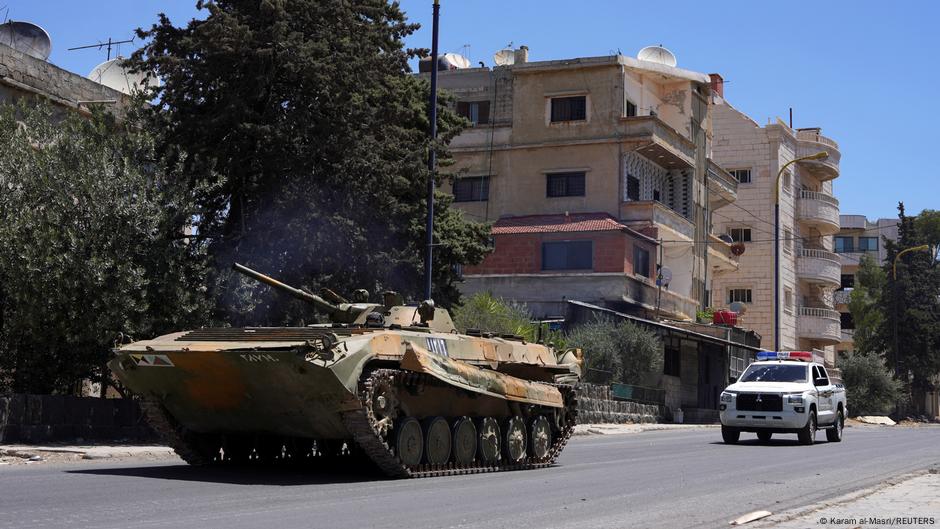
A new ceasefire has been reported between Druze and Sunni militias in southern Syria, amid ongoing Israeli strikes on Syrian forces. The conflict has resulted in over 300 deaths and numerous injuries as of Wednesday. The Syrian government announced the ceasefire to end the clashes around the city of Sweida, which is located about 100 kilometers (60 miles) south of Damascus.
The violence began after a Druze youth was beaten and robbed by members of the Sunni Bedouin community along a highway connecting Damascus to Sweida. This incident led to retaliation, with Druze fighters kidnapping Bedouins, escalating the situation further. The government deployed troops to Sweida to restore order. According to Aymenn Jawad al-Tamimi, a journalist specializing in Syria and Iraq, Druze fighters initially resisted the military but eventually surrendered their weapons.
On Tuesday, the Syrian Observatory for Human Rights reported that forces from the Defense and Interior ministries, along with allied fighters, executed 19 Druze civilians. In response, Israel carried out attacks on the army’s headquarters in Damascus and the Sweida region on Wednesday. Israeli Prime Minister Benjamin Netanyahu and Defense Minister Israel Katz stated that the strikes aimed to prevent harm to the Druze population. In Israel, the Druze are considered a loyal minority and often serve in the military.
Long-Running Conflicts and Crime
The clashes in Sweida are part of broader conflicts involving different communities in Syria. Bente Scheller, head of the Middle East and North Africa division at Germany’s Heinrich Böll Foundation, explained that many groups feel their concerns or rights are not adequately addressed. This sense of marginalization can lead to violence. She noted that cultural and religious identity issues, as well as violent crime linked to drug smuggling, have long been problems in the Sweida area.
Months of Conflict and Sectarian Tensions
In April and May, clashes erupted between Druze and government-affiliated groups in the Damascus suburb of Jaramana. In March, an ambush on government forces by Alawites, the minority to which former dictator Bashar Assad belonged, triggered days of sectarian violence and revenge attacks. Over 1,300 people were killed in these incidents. Many Syrians view the Alawites as supporters of the ousted regime.
The current Syrian government does not explicitly favor any particular group, according to Andre Bank, a research fellow at the Hamburg-based GIGA Institute for Middle East Studies. He noted that the government is too pluralistic to take sides. However, he warned that if the government fails to control local actors or its own troops, large-scale interconfessional clashes could continue.
Pressure on President Ahmed al-Sharaa
It remains uncertain whether President Ahmed al-Sharaa will be able to prevent widespread violence in Syria. In June, U.S. President Donald Trump lifted sanctions on Syria, following the EU, which had done so in May. While the U.S. and EU have high expectations for the protection of minorities, recent events have raised concerns.
In late June, a suicide attack at a Christian church in Damascus killed 25 people. Since then, Syrian Christians have called for stronger government protection. Some have even considered leaving the country. The Interior Ministry blamed the Islamic State (IS) for the attack, but other names have also been mentioned in public debates, including an armed group believed to include former members of Hayat Tahrir al-Sham (HTS). Al-Sharaa, who was once the leader of HTS, may be trying to shift blame onto IS.
Government Challenges and Kurdish Tensions
Syrians are also skeptical of the government’s response to attacks on the Alawites. Despite promises to establish a commission of inquiry, no results have been produced. Many believe the government lacks seriousness or the will to investigate thoroughly.
The government faces significant challenges, including drafting a new electoral law, rebuilding the state apparatus, and establishing a federalist bureaucracy. Investigations into the clashes and attacks may be too much for an already overstretched government. Additionally, the government must manage the interests of the Kurds in northern Syria, who seek extensive autonomy while remaining part of the Syrian state. For years, they have fought forces aligned with Turkey’s government in the region.
The government will continue dealing with these complex conflicts for the foreseeable future.