


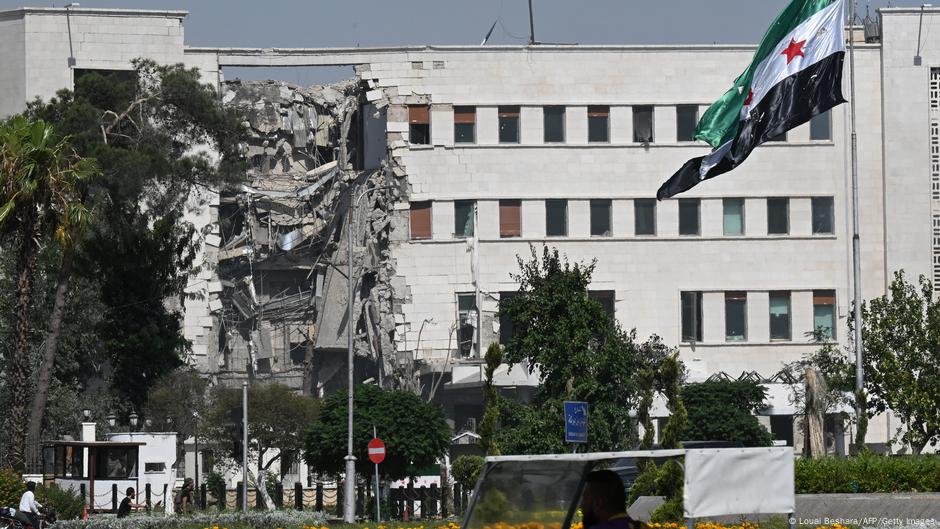
Israel Strikes Syria Amid Clashes with Druze Minority
Recent developments in the Middle East have seen increased tensions between the Syrian government and the Druze minority, leading to a series of Israeli military strikes in the region. These actions have sparked international concern and calls for de-escalation.
Ceasefire Agreement in Sweida
In the southern province of Sweida, a significant development occurred as the Syrian government and key Druze religious leader Sheikh Yousef Jarbou announced a ceasefire. This agreement includes the establishment of security checkpoints across the city. However, the effectiveness of this truce remains uncertain, given that a previous ceasefire collapsed just a day earlier.
Another influential Druze leader, Hikmat al-Hijri, has criticized the new ceasefire deal, urging Syrian government forces to withdraw from Sweida. Al-Hijri had previously called for foreign powers to protect the Druze community, which led to Israel’s military involvement.
International Reactions
The United States and European Union have expressed concerns over the violence in Syria. US Secretary of State Marco Rubio stated he was “very concerned” by the fighting and expected imminent de-escalation following Israel’s attacks on the Syrian army headquarters in Damascus. He emphasized that there was a “misunderstanding” between Israel and Syria, and he hoped for real progress in the coming hours.
European Council President Antonio Costa also voiced concerns, stating that “Syria’s sovereignty and territorial integrity need to be respected.” Meanwhile, the Turkish Foreign Ministry labeled Israel’s strikes in Damascus an “act of sabotage,” accusing Israel of undermining Syria’s efforts to secure peace and stability.
Israeli Military Actions
The Israeli Defense Forces (IDF) launched airstrikes on targets in the Syrian capital of Damascus on Wednesday. According to the IDF, they struck the entrance of the Syrian regime’s military headquarters. This marks the third consecutive day of Israeli airstrikes in Syria.
Israeli Defense Minister Israel Katz warned that “the warnings to Damascus have ended — now painful blows will come.” The clashes between Bedouin Sunni tribes and the Druze community in the southern province of Suweida began on Sunday, prompting the Syrian government to deploy troops. This led to further conflict between Syrian military forces and Druze militias.
Impact on the Region
The UK-based Syrian Observatory for Human Rights reported that at least 300 people have been killed in southern Syria since the clashes began. The Druze, a small ethno-religious group primarily living in Syria, Lebanon, and Israel, have been deeply affected by the violence. In response, some Druze in Israel have attempted to cross into Syria to support their communities, while members of the Syrian Druze community have tried to enter Israel.
Context and Implications
The Israeli military’s actions in Syria come amid growing distrust towards the Islamist-influenced Syrian government led by Ahmad al-Sharaa. Al-Sharaa’s government came to power after Syrian rebels ousted Bashar Assad, whose family had ruled Syria for decades. The 2011 demonstrations against the Assad regime triggered the Syrian civil war.
As tensions continue to rise, the situation in the region remains volatile. The international community is closely monitoring developments, with calls for dialogue and peaceful resolution of conflicts. Stay tuned for more updates on the evolving situation in Syria, Israel, Gaza, and other parts of the Middle East.