


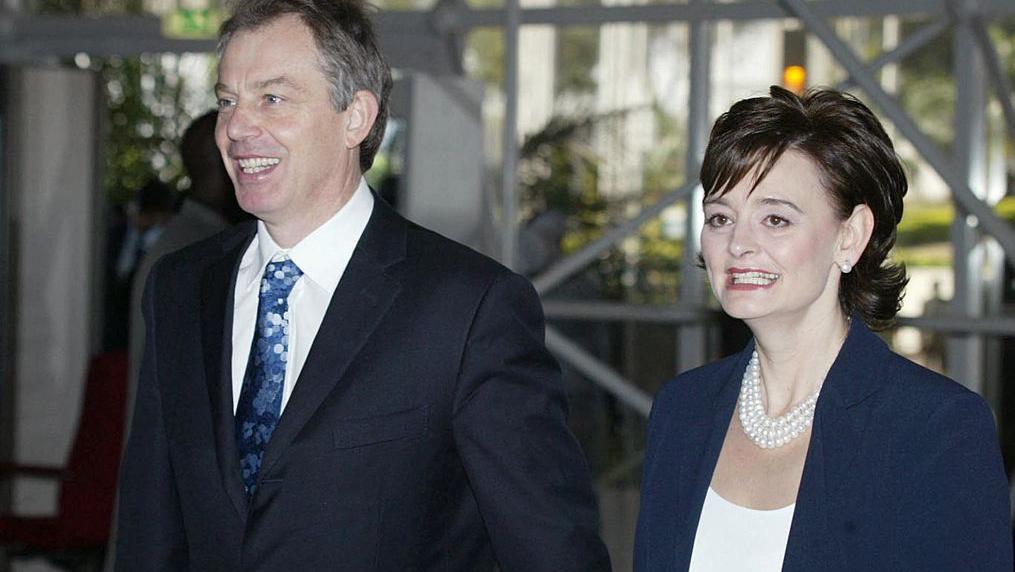
The Blairs and the Discounts: A Controversial Chapter in Downing Street
Ex-Prime Minister Tony Blair and his wife Cherie were reportedly given significant discounts on designer clothing while they resided at Downing Street, according to newly released documents. These revelations have sparked renewed debate about the ethical implications of such benefits during their time in office.
Between July 2001 and December 2002, Cherie Blair made purchases worth over £75,000—equivalent to around £150,000 today—but only paid £31,000 for the items. This discrepancy raised concerns among Downing Street officials, who feared that these benefits might need to be declared under a new ministerial code that was about to take effect. As a result, they advised the Blairs to repay some of the money they had saved through these discounts.
However, it remains unclear whether the Blairs followed this advice. The documents show that Cherie received substantial discounts from several high-profile fashion brands, including Nicole Farhi, Burberry, James Lakeland, Ungaro, Joseph, and Maria Grachvogel. The discounts were negotiated by Carole Caplin, Cherie’s trainer and personal shopper.
In addition to her own wardrobe, Cherie also purchased clothing for Sir Tony Blair. For instance, she acquired nearly £21,000 worth of items from Nicole Farhi, paying just over £8,000. Sir Tony himself benefited from a 25% discount from Paul Smith, a well-known designer of suits.
The issue of these discounts became a point of concern for Downing Street officials, particularly regarding public perception. Clare Sumner, the private secretary to the Prime Minister at the time, noted in a memo that the amounts involved were “quite large.” She and the cabinet secretary recommended that the Blairs consider repaying part of the discount. However, Cherie argued that half of her purchases were necessary for her role as a “career woman.”
Sumner suggested alternative explanations, such as the idea that Cherie received the same treatment as other high-profile individuals with personal shoppers. She also pointed out that Cherie sometimes donated her outfits to charities or exhibitions after use, which could mitigate claims of personal benefit from her position as Prime Minister.
The discounts had been in place for several years, even before Sir Tony became Prime Minister. In a note dated 19 February 2003, Sir Tony wrote “Speak to me” on one of the memos, prompting Cherie to speak with Clare Sumner later that day. In a subsequent note dated 4 March 2003, Cherie agreed to contact Paddy Campbell (from Paul Smith) and Nicole Farhi to confirm that the discounts were available to others with personal shoppers and to provide an estimate of how many people had received similar deals.
She also planned to verify that confidentiality agreements were in place with the designers. The goal was to satisfy Sir Andrew Turnbull, the cabinet secretary, that no preferential treatment had been given.
Interestingly, there is no mention of the clothing discounts in the ministerial gift list published on 14 March 2003. The list was described as “more boring” by the Prime Minister, who asked Ms. Sumner to remove details of individuals, valuations, and descriptions of items to make it less sensational.
The Blairs’ situation has drawn comparisons to recent controversies involving Sir Keir Starmer, the current leader of the Labour Party. Last year, he accepted more than £18,000 for spectacles and work clothing from Labour peer Lord Alli, who also covered £6,000 worth of clothes for Starmer’s wife, Victoria.
The Tony Blair Institute, representing the former Prime Minister, stated that they had nothing further to add to what had already been disclosed, emphasizing that advice was sought and followed during the period in question.