


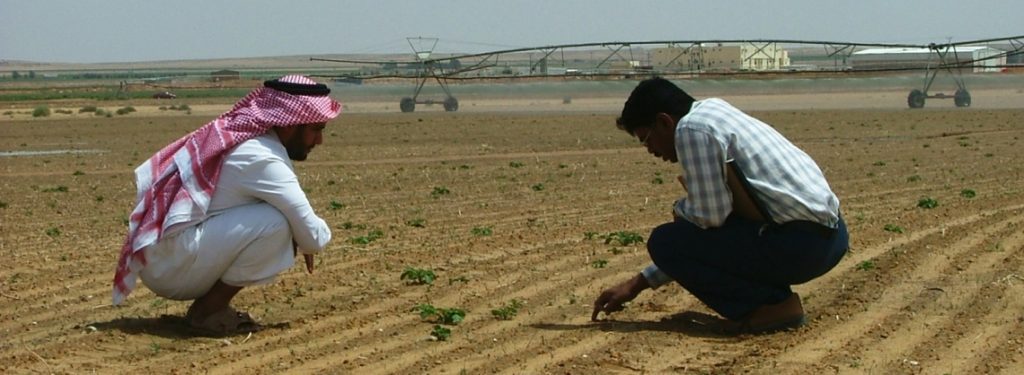
Saudi Arabian Agricultural Firm Pledges Support for Jigawa State’s Farming Ambitions
A Saudi Arabian-based agricultural company, Al-Yaseen Agricultural Company, has made a significant commitment to assist Jigawa State in achieving a yield of 10 tons per hectare through the adoption of mechanised farming techniques. This pledge was announced during a meeting between the company’s delegation and Governor Umar Namadi, which took place at the Conference Hall of the Jigawa State Government House in Dutse.
Jigawa State has set an ambitious goal to transform its agricultural sector by focusing on mechanisation and irrigation-based farming. The state government is determined to increase productivity significantly, aiming to reach yields of up to 10 tons per hectare this year. This initiative reflects a broader strategy to modernise agriculture and ensure sustainable food production.
Dr. Shu’aibu Abubakar, the team leader of the Al-Yaseen delegation, praised the state’s efforts in promoting technology-driven agriculture. He highlighted that Jigawa’s approach is unique and unmatched within Nigeria. “We have witnessed unprecedented efforts by the Jigawa State Government in promoting technology-driven agriculture efforts we have not seen replicated in any other state in Nigeria,” he stated.
Abubakar also commended the dedication of farmers across the state, noting that they have benefited from the government’s support. During their field visits, the delegation interacted directly with farmers, who expressed appreciation for the timely facilitation and comprehensive assistance provided by the state authorities. “They spoke highly of the government’s support, highlighting how it has enabled them to pursue and achieve their agricultural goals,” he added.
The Al-Yaseen team leader assured the governor of the company’s readiness to support Jigawa’s mechanisation drive. He emphasized that the partnership between Jigawa State and Al-Yaseen Agricultural Company has the potential to transform the state’s agricultural sector. “With the state’s commitment to mechanised farming and the company’s expertise in irrigation, the prospects for increased productivity are promising,” Abubakar said.
Governor Umar Namadi reaffirmed the state’s commitment to revolutionising its agricultural sector, stating that agriculture remains the backbone of Jigawa State’s economy. He noted that the sector employs 85-90% of the state’s population and contributes 46% to the GDP. The governor welcomed the Al-Yaseen delegation and expressed optimism that collaboration with the company would help Jigawa achieve its agricultural goals. “We have the land; we have all the available resources that are needed for farming in Jigawa State. And with your expertise in irrigation, I am sure if we work together, we can achieve our goals,” he said.
Namadi outlined several key steps the state has taken toward mechanised farming, including the expansion of irrigation systems, improved seed distribution, agronomic training, and the establishment of a growing network of over 1,700 extension workers. These efforts have already led to improved yields in many crops. However, the governor acknowledged that there is still room for growth.
He also highlighted the progress made in improving agricultural productivity, noting that the state has moved from an initial yield of 2.5 tons per hectare to almost 4.5 tons per hectare. “And we believe we can make it 8 or 10 tons per hectare,” he said.
Namadi further explained that Jigawa’s shallow water tables make irrigation feasible even in desert parts of the state, with water accessible at just 70-80 meters. The state is currently making efforts to revamp 10 strategic dams and unlock thousands of hectares of cultivable land. He specifically mentioned the Hadejia valley as a key area for development.
Over 18,000 hectares of land remain untapped, and the governor expressed confidence that collaboration with Al-Yaseen would help unlock this potential for the benefit of both the state and the company. The delegation’s one-day field visits across the state allowed them to observe the remarkable dedication of farmers and engage directly with stakeholders, ensuring that the agricultural goals of the state can be pursued effectively.