


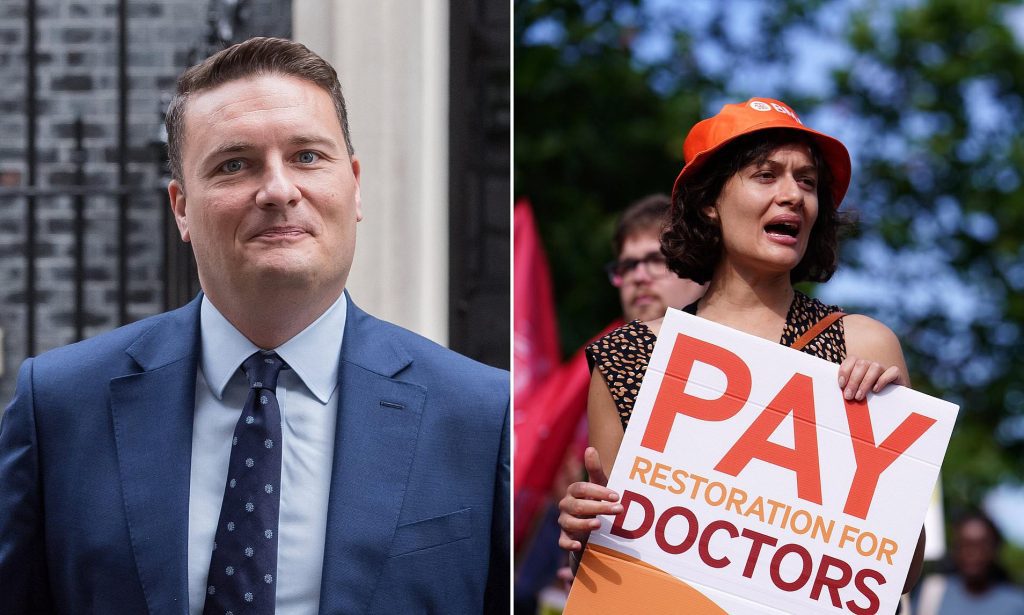
Doctor Strikes Continue Amid Pay Dispute
Resident doctors in the UK have decided to proceed with a five-day strike, rejecting the latest offer from Health Secretary Wes Streeting. The move comes after the British Medical Association (BMA) deemed the proposed measures insufficient to justify halting the walkout.
The Health Secretary had previously suggested cheaper meal deals and subsidized medical equipment as alternatives to the ongoing industrial action. However, the BMA insisted that these proposals did not address the core issue of pay. The union is demanding a 29% pay increase, while the government has only offered a 5.4% raise, which they argue is already generous given the previous increases over the past three years.
Streeting emphasized that he could not compromise on pay but instead focused on reducing the costs of exams and improving financial support for medical staff. He also criticized the BMA for what he described as a “complete disdain for patients” and called the strike “unjustified.”
Striking Doctors and Their Demands
The strike involves up to 50,000 resident doctors, who are set to walk out starting at 7 am on Friday. This follows a series of previous strikes where the doctors received above-inflation pay rises, totaling an extra 28.9% over the last three years. This includes a 5.4% pay increase this year, which is the highest in the public sector.
Despite these raises, the BMA remains unsatisfied with the current offer. Dr Melissa Ryan and Dr Ross Nieuwoudt, co-chairs of the BMA’s RDC, stated that the proposal would not significantly improve the financial situation of their members. They also pointed out that non-pay elements from a previous agreement had not been fulfilled, leading to a loss of confidence among the doctors.
Streeting argued that the recent pay hikes were substantial and that the strike was unnecessary. He claimed it was unprecedented in British trade unionism and showed a disregard for patients and the NHS’s recovery efforts.
Public Opinion Shifts Against Strikes
Public sentiment appears to be turning against the strikes. A recent YouGov poll revealed that 52% of UK residents either “somewhat oppose” or “strongly oppose” the idea of resident doctors striking over pay. Only 34% of those surveyed supported the action, with the majority expressing opposition.
This marks a decline in public support compared to May, when 48% opposed the strikes and 39% supported them. The shift in opinion highlights growing concerns about the impact of the strikes on patient care and the NHS.
Concerns from Health Leaders
Health leaders have voiced serious concerns about the potential consequences of the strike. Daniel Elkeles, chief executive of NHS Providers, described the decision as a “crushing blow” for patients and the NHS. He urged the BMA to reconsider its stance and warned that the strike could cause significant disruption.
Elkeles emphasized the need for adequate staffing during the strike, particularly for critical services such as cancer, transplant, and maternity care. He also raised concerns about the cost implications, urging consultants providing cover to accept NHS rates rather than inflated BMA rates.
Call for Reconsideration
In response to the BMA’s announcement, health leaders are calling for a reevaluation of the strike plans. They urge the union to work closely with NHS trusts to minimize harm and ensure that essential services remain operational. The message is clear: the strike could have far-reaching consequences, not just for the healthcare system but also for the patients who depend on it.
As the situation unfolds, the debate over pay, working conditions, and the role of unions in the NHS continues to intensify. The coming days will be crucial in determining how the strike affects both the medical profession and the wider public.