


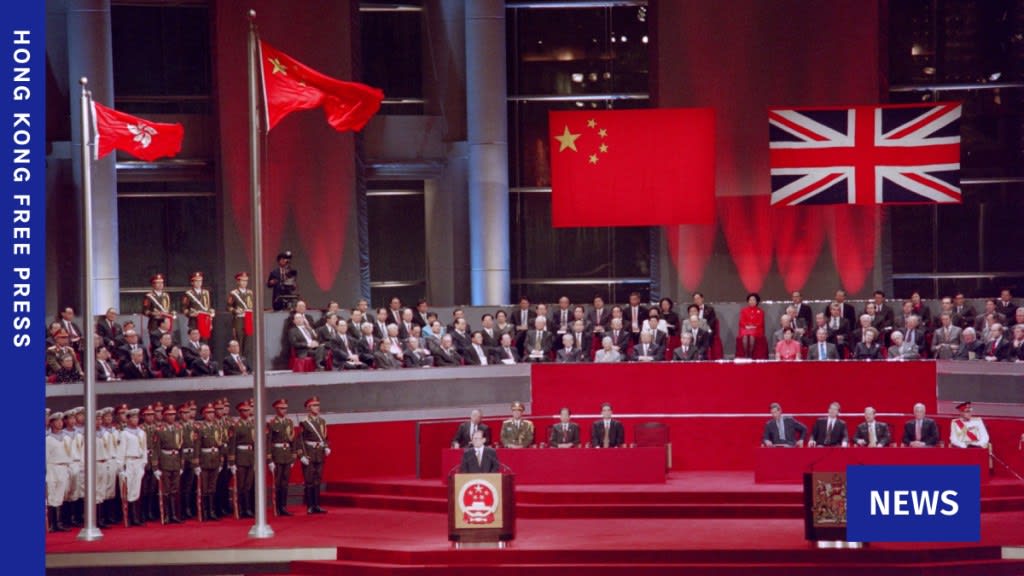
UK’s Contingency Plans for a Mass Evacuation of Hong Kong in 1989
Newly declassified documents reveal that the United Kingdom had drafted detailed contingency plans to evacuate millions of Hong Kong residents in the event of a severe crisis, particularly following the crackdown on pro-democracy protests in Beijing in 1989. These confidential files, made available online, provide insight into the British government’s concerns and preparations during a tense period in Hong Kong’s history.
The documents, spanning 415 pages, detail how the then-UK Prime Minister Margaret Thatcher’s administration considered various scenarios that could lead to a large-scale exodus from Hong Kong. The files were produced by a secret Cabinet Office committee known as “MISC 140,” which reported to British diplomat Leonard Appleyard. The committee outlined potential situations that could trigger mass migration, both before and after Hong Kong’s handover to Chinese rule in 1997.
Scenarios Leading to Mass Exodus
The documents describe two pre-1997 scenarios and two post-1997 scenarios that could result in a significant outflow of people from Hong Kong. In the years leading up to 1997, the UK assessed the possibility of a slow erosion of confidence among Hong Kong residents, which could escalate into panic or economic collapse. The paper warned that if confidence was not restored, there would be an increasing flow of capital and talent from the territory, limited only by the availability of places in other countries.
Another scenario involved panic triggered by developments in China, including the use of military force against civilians or the possibility of a civil war within the country. Even after 1997, the documents suggested that Hongkongers might still leave en masse due to “panic provoked by China” or internal factors such as a loss of trust in the Sino-British Joint Declaration, which guaranteed Hong Kong a high degree of autonomy after the handover.
Three-Phase Contingency Plan
The Cabinet Office committee proposed a three-phase contingency plan, ranging from “green” (low risk) to “amber” (moderate risk) to “red” (high risk). The British government would monitor movement from Hong Kong to the UK and prepare transportation capacity for a mass evacuation when necessary. Among the evacuation strategies discussed was the idea of chartering all 143 non-Chinese-owned cruise ships worldwide to transport people to destinations such as Taiwan, the Philippines, and Australia.
Military assistance from the British air force and navy was considered a key component of the evacuation plan, though it was noted that such support would be limited to the period before July 1997, when Hong Kong was due to return to Chinese sovereignty.
Importance of International Support
The documents emphasize that the Chinese attitude would play a crucial role in determining whether a crisis leading to mass exodus would occur and how it could be managed. The UK also acknowledged that it could not handle a large-scale evacuation alone and relied on material support from the United States, which has a significant military presence in Asian countries like Japan and the Philippines.
“Other countries would have to help, and the United States would be particularly important,” the documents stated. This highlights the international dimension of the contingency planning and the need for cooperation in times of crisis.
Financial Implications of Mass Evacuation
The files also include estimates of the financial cost of a mass evacuation. A large influx of refugees into the UK would create a significant resettlement challenge, with substantial expenses involved. This underlines the importance of preventing a mass exodus through diplomatic and political efforts.
Recent Trends in Hong Kong Emigration
Between 1985 and 1997, about 57,600 people moved from Hong Kong, according to a 2021 BBC report citing official figures. However, this number pales in comparison to the more recent wave of emigration during the COVID-19 pandemic, with a net outflow of approximately 123,000 residents in 2020 and 2021. Part of this outflow is believed to have been driven by political changes in Hong Kong, including the pro-democracy protests of 2019 and the imposition of a national security law in 2020.
As of March 2024, 163,400 Hong Kong residents holding British National (Overseas) passports have arrived in the UK since London began accepting applications in 2021, according to the UK Home Office.
Population Trends in Hong Kong
Hong Kong’s population decreased from approximately 7.48 million in 2020 to 7.34 million in mid-2022 but rebounded to around 7.53 million by the end of 2023. The government attributed the population rise to policies aimed at attracting talent and importing overseas labor. Despite these efforts, the city continues to face challenges related to its demographic and political landscape.