






The Controversial Law and Its Impact on Ukraine’s Anti-Corruption Efforts
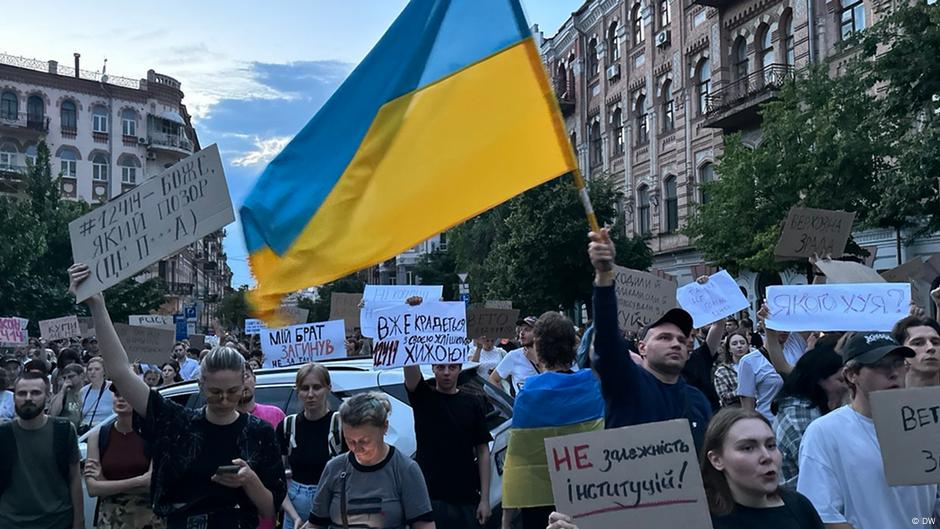
A new law has sparked intense debate in Ukraine, as it grants the country’s prosecutor general increased control over previously independent anti-corruption bodies. This move has led to widespread public discontent and protests across the nation. The law was signed by President Volodymyr Zelenskyy on July 22, just hours after it was passed by the Ukrainian parliament.
The legislation significantly curtails the powers of the National Anti-Corruption Bureau of Ukraine (NABU) and the Specialized Anti-Corruption Prosecutor’s Office (SAPO). These institutions were established to investigate high-level corruption cases with a degree of independence. However, under the new law, the prosecutor general—appointed by the president with parliamentary approval—now has access to all NABU cases and can direct other prosecutors to examine them. Additionally, the prosecutor general can issue instructions to NABU investigators, alter the focus of trials, and even halt proceedings at the request of the defense.
This shift has raised concerns about the erosion of the autonomy of these critical institutions. SAPO prosecutor Oleksandr Klymenko stated that the independence of both organizations has been “effectively destroyed.” NABU Director Semen Kryvonos emphasized that these agencies were created to operate with full guarantees of independence to combat corruption at the highest levels, which is essential for Ukraine’s progress toward European integration.
Selective Anti-Corruption Measures?
Just one day before the law was passed, NABU and SAPO offices were searched, leading to speculation about potential ties between these agencies and Russia. Some lawmakers have supported the new law, arguing that NABU and SAPO have been selective in their investigations. Yulia Tymoshenko, a former prime minister and leader of the Fatherland party, criticized the agencies, claiming they function more like a “shadow government” rather than true anti-corruption bodies.
President Zelenskyy defended the law, stating that anti-corruption authorities would continue their work “free from Russian influence.” He also highlighted the need to investigate suspected corruption cases, noting that some officials who fled Ukraine have avoided legal consequences for years. Zelenskyy expressed frustration over stalled billion-dollar corruption cases and claimed that Russia had previously accessed sensitive information.
Broad Disapproval and International Concerns
The law has drawn criticism from across the political spectrum, including members of Zelenskyy’s own ruling Servant of the People party. Anastasia Radina, chair of the parliamentary anti-corruption committee, warned that the law could have “catastrophic” consequences for the state. The opposition European Solidarity group called the anti-corruption system one of the greatest achievements of the Maidan revolution, accusing those who supported the law of undermining the state during a dangerous time.
Opposition MP Ivanna Klympush-Tsintsadze, who chairs Ukraine’s EU Integration Committee, warned that the law risks returning the country to a state reminiscent of the pro-Russian era. She argued that such a move could lead Ukraine back into the Kremlin’s sphere of influence. She also pointed out that the law threatens international financial aid, which is tied to Ukraine’s commitments to fight corruption.
EU Enlargement Commissioner Marta Kos described the law as a “serious step back” on social media, emphasizing the importance of independent bodies like NABU and SAPO for Ukraine’s path toward EU membership. Rule of law remains central to the accession negotiations.
Public Backlash and Calls for Reassessment
Investment banker Serhiy Fursa noted that while many people criticize NABU and SAPO for inefficiency, he argued that these agencies are actually more effective than assumed. He suggested that the decision to limit their powers indicates significant fear among leaders, as they risk European integration and Western support.
In response to the backlash, Zelenskyy convened a meeting with heads of law enforcement and anti-corruption agencies, including Prosecutor General Ruslan Kravchenko. He acknowledged public concerns, stating that the government must ensure institutions operate according to the principles of justice and efficiency. Zelenskyy announced that a joint action plan to address the dispute would be developed within the next two weeks.
This development highlights the ongoing challenges Ukraine faces in balancing political control with the need for independent institutions to combat corruption and advance its European aspirations.