


Escalating Border Tensions Between Thailand and Cambodia
Recent clashes between the military forces of Thailand and Cambodia have resulted in civilian casualties, highlighting the ongoing dispute over a contested border region known as the Emerald Triangle. The area, where the borders of Thailand, Cambodia, and Laos converge, is home to several ancient temples and has been a source of tension for decades.
The latest incident occurred on Thursday when three civilians were reportedly wounded following a rocket strike attributed to Cambodian forces. Both nations have exchanged accusations, with each side claiming self-defense in the face of alleged aggression. The conflict has reignited after a period of relative calm, raising concerns about the potential for further escalation.
A History of Conflict
The dispute over the Emerald Triangle has a long history, marked by periodic outbreaks of violence. More than 15 years ago, the region saw bloody military clashes, and in May of this year, a Cambodian soldier was killed during a firefight. The recent tensions began early on Thursday morning near two temples located on the border between Thailand’s Surin province and Cambodia’s Oddar Meanchey.
According to the Cambodian defense ministry, Thai forces violated the territorial integrity of Cambodia by launching an armed assault on Cambodian troops stationed to protect the nation’s sovereignty. In response, the Cambodian military exercised its right to self-defense, according to a statement from the ministry’s spokeswoman, Maly Socheata.
Meanwhile, the Thai army accused Cambodian soldiers of opening fire first and later claimed that they carried out a “targeted attack on civilians.” Two BM-21 rockets reportedly struck a community in Surin’s Kap Choeng district, injuring three people. The Thai military stated that the clashes began around 7:35 a.m. (0035 GMT) when a unit guarding Ta Muen temple detected a Cambodian drone overhead. Shortly afterward, six armed Cambodian soldiers approached a barbed-wired fence near the Thai post.
Diplomatic Fallout
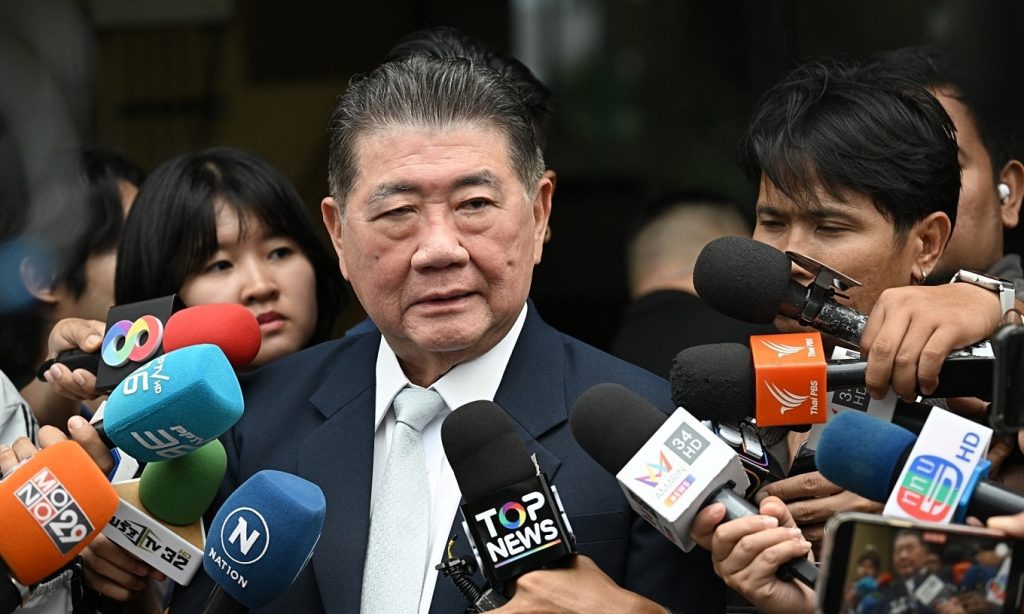
The situation has prompted diplomatic measures from both sides. Thailand’s acting Prime Minister Phumtham Wechayachai emphasized the need for careful handling of the situation, stating that the country would act in accordance with international law while protecting its sovereignty. The Thai embassy in Phnom Penh urged its nationals to leave Cambodia as soon as possible unless they had urgent reasons to stay.
Earlier in the week, Thailand expelled the Cambodian ambassador and recalled its own envoy in protest after five members of a Thai military patrol were injured by a landmine. The Thai military claimed to have found evidence that Cambodia had laid new landmines in the disputed border area, a claim that Phnom Penh denied.
In response, Cambodia announced it would downgrade its ties to the lowest level, withdrawing all but one of its diplomats and expelling Thai envoys from Phnom Penh. The escalating tensions have also led to a series of tit-for-tat actions, including restrictions on border crossings and halting certain imports.
Ongoing Challenges
The Thai army reported that one soldier lost his leg in the landmine blast, while others suffered ear injuries and chest pain. Cambodia’s defense ministry rejected Thailand’s allegations, stating that the border areas still contain many landmines left over from past conflicts that have not been fully cleared.
The border dispute has also contributed to a domestic political crisis in Thailand, where Prime Minister Paetongtarn Shinawatra has been suspended from office pending an ethics probe. A leaked diplomatic call between Paetongtarn and Hun Sen, Cambodia’s former leader, sparked a judicial investigation. Recently, Cambodia’s Prime Minister Hun Manet announced that the country would begin conscripting civilians next year, activating a long-dormant mandatory draft law.
As the situation continues to unfold, both nations face the challenge of de-escalating tensions while addressing the underlying issues that have fueled their disputes for decades.