


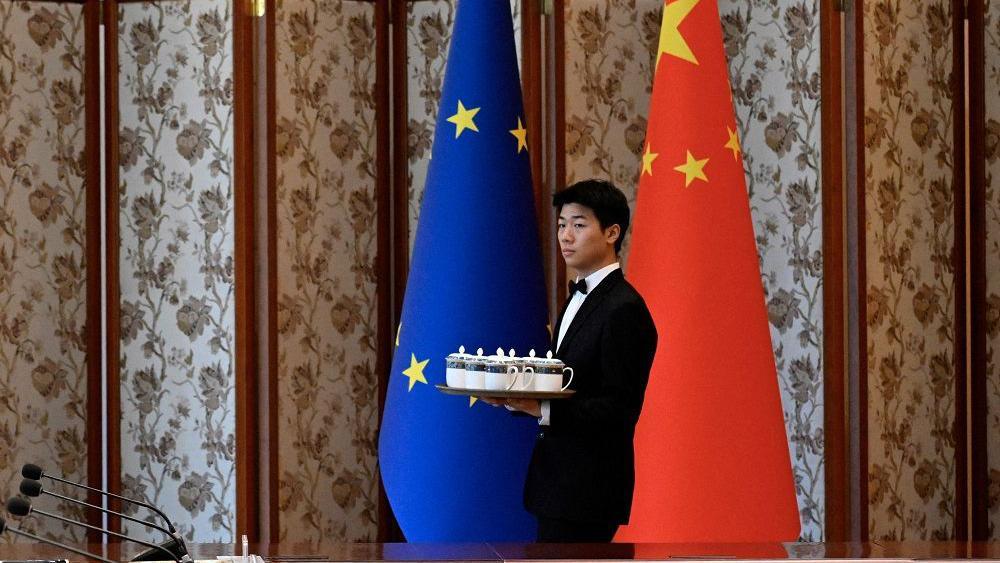
Key Issues to Be Discussed at the EU-China Summit
The upcoming summit between China and the European Union (EU) is set to take place in Beijing, marking a significant moment for diplomatic relations. Leaders from both sides will engage in discussions covering a wide range of topics, including trade conflicts and the ongoing situation in Ukraine. However, the atmosphere surrounding the event has been marked by a sense of caution and uncertainty.
A Shift in Expectations
Initially, there was a sense of optimism about the state of EU-China relations, especially with the possibility of a Trump administration in the United States. Many believed that this could lead to closer ties between the two economic powerhouses. However, as time has passed, the relationship has become more strained than it was at the beginning of the year.
Despite the high-level engagement, expectations for meaningful outcomes from the summit are low. Both sides have expressed readiness for open dialogue, but the underlying tensions have not been alleviated. The EU’s 27 member states are facing similar challenges, particularly concerning tariffs on their exports to the United States.
Tensions Over the Russia-Ukraine War
One of the primary issues causing friction between China and the EU is the conflict in Ukraine. The EU recently imposed sanctions on two Chinese banks for their role in supporting Russia, which has created an uncomfortable environment ahead of the summit. China has responded by lodging formal complaints with the EU’s trade chief.
Additionally, reports suggest that Chinese Foreign Minister Wang Yi made statements implying that China does not want to see Russia lose the war in Ukraine. This contradicts China’s official stance of neutrality and has further complicated the relationship. EU officials have criticized China for enabling Russia’s actions in Ukraine, emphasizing that any support from China could significantly impact the conflict.
Trade Disputes and Economic Concerns
Trade relations remain a central concern for the EU. In response to the EU’s tariffs on Chinese electric vehicles, China implemented retaliatory duties on European liquor. More recently, China restricted government purchases of EU medical devices, following similar restrictions imposed by the EU on Chinese medical equipment.
Moreover, China has introduced export controls on rare earths and critical minerals, prompting accusations from the European Commission’s President Ursula von der Leyen. She has criticized China for using its near-monopoly on these resources as a tool to undermine competitors in key industries.
The EU is increasingly concerned about the impact of cheap, subsidized Chinese goods on its industries. The trade deficit with China reached €305.8 billion last year, doubling over nine years. This growing imbalance has raised alarms among European policymakers.
The Complex Relationship Between China and the EU
China’s ambassador to the EU, Cai Run, has criticized the EU’s approach to China, describing it as a “traffic light” with green, amber, and red signals simultaneously. He argues that this positioning creates confusion and obstacles rather than clear direction.
The summit in Beijing represents a crucial opportunity for both sides to address these pressing issues. While the outcome remains uncertain, the discussions are expected to shape the future of EU-China relations in the coming years. As both parties navigate these complex dynamics, the need for constructive dialogue and mutual understanding becomes increasingly vital.