


Strengthening Franco-German Relations Amid Global Challenges
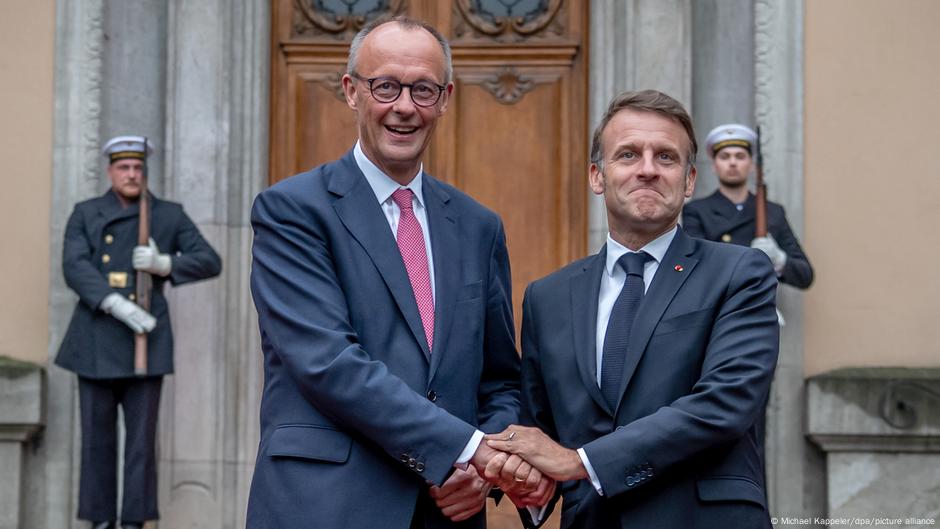
German Chancellor Friedrich Merz and French President Emmanuel Macron recently met in Berlin, highlighting the importance of maintaining a strong and unified relationship between their nations. The meeting took place amid a complex landscape of global political and economic challenges, with both leaders emphasizing the need for continued cooperation.
This was Macron’s first visit to Germany since Merz assumed leadership in May. The two leaders engaged in discussions that aimed to reinforce bilateral ties and address pressing issues affecting Europe. The talks were held at the lakeside Villa Borsig, where Merz hosted Macron for a dinner on Wednesday evening. Both leaders expressed their commitment to deepening cooperation across various sectors.
Merz emphasized the long-standing friendship between Germany and France, noting its historical significance. He stated that both countries feel a shared responsibility to continue building on this foundation. Macron, in turn, highlighted the personal rapport between himself and Merz, as well as the broader relationship between their nations. He stressed that the Franco-German partnership is essential for advancing both bilateral and European agendas.
The meeting occurred against the backdrop of several geopolitical and economic challenges facing the European Union. These include tensions with the United States over trade policies, the ongoing conflict in Ukraine, and the need to strengthen NATO’s defense capabilities. Paris and Berlin have been working closely to support Ukraine and bolster the security of European member states.
Addressing the EU-US Trade Dispute
One of the key topics discussed was the growing trade tensions between the EU and the United States. Both France and Germany are concerned about potential increases in tariffs from Washington, especially with former U.S. President Donald Trump threatening to impose 30% tariffs on EU goods if no agreement is reached by August. During the meeting, Merz suggested that decisions could be made soon on the ongoing trade dispute.
“We will discuss some very current issues together, including the current trade policy, about which we are hearing in these minutes that there could possibly be decisions,” Merz said. Macron added that he would coordinate with Merz and other European leaders to develop a unified response to the potential tariff hikes.
Joint Defense Projects and Technological Disagreements
Another major topic of discussion was the joint development of a next-generation fighter jet, known as the Future Combat Air System (FCAS). This project involves France, Germany, and Spain and aims to replace existing aircraft such as the Rafale, Eurofighter, and Tornado by 2040. However, the initiative has faced delays and disagreements over work distribution and intellectual property rights.
Eric Trappier, head of French defense company Dassault, recently raised concerns about the project’s viability. In response, Merz and Macron agreed to resolve the differences by the end of August, according to a German government spokesperson.
Other Points of Contention
Beyond the FCAS project, there are several other areas of disagreement between France and Germany. One notable issue is the proposal for joint European debt to boost the bloc’s defense industry, a plan that Berlin has consistently opposed. Additionally, the two countries differ on energy policy. France relies heavily on nuclear power, while Germany has completely phased out nuclear energy.
France has also pushed for the classification of nuclear energy as climate-friendly, advocating for “technology neutrality.” While the previous German government rejected this idea, Merz’s administration may be more open to it. Another point of contention is the EU-Mercosur trade agreement, which has sparked debate between the two nations.
Conclusion
As the EU navigates a complex geopolitical and economic landscape, the strong relationship between Germany and France remains crucial. The recent meetings between Merz and Macron underscore the importance of collaboration on key issues, from trade disputes to defense projects. While challenges remain, both leaders have demonstrated a willingness to work together to strengthen their partnership and advance European interests.