


Strategic Trade Deals and Regional Implications
The United States has recently announced new trade agreements with Indonesia and the Philippines, marking a significant shift in its approach to regional economic dynamics. Analysts suggest that these deals could indirectly challenge China by reshaping supply chains and leveraging access to rare earth reserves, even if Beijing is not explicitly mentioned as the target.
Despite these developments, some experts caution that efforts to counter China may not yield the desired outcomes. Chinese companies are already adapting by localizing their operations across Southeast Asia, reducing their reliance on transshipments from the region. This trend highlights the evolving strategies of Chinese firms in response to global trade policies.
Xu Tianchen, a senior China economist at the Economist Intelligence Unit, noted that the US, having failed to secure direct wins against China on tariffs and export controls, is now focusing on more indirect methods to contain China’s influence. The recent trade deals with Southeast Asian countries exemplify this tactic.
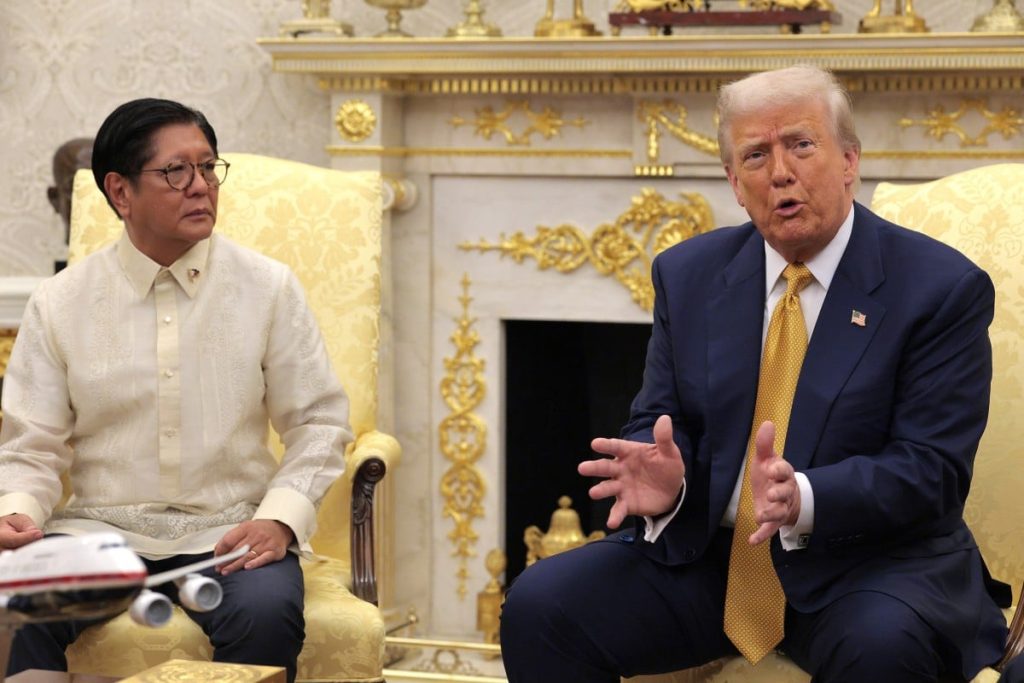
US President Donald Trump claimed on Tuesday that he had reached trade agreements with both the Philippines and Indonesia. According to Trump, imports from these two countries will be subject to a 19% tariff, while American shipments to the Philippines and Indonesia will not face any duties. This is a significant change from previous threats of 32% tariffs on Indonesian imports and 20% on goods from the Philippines.
In addition to these trade terms, the US will maintain military cooperation with the Philippines, while Indonesia will supply critical minerals and sign multibillion-dollar deals for Boeing aircraft, American farm products, and energy resources. These agreements underscore the strategic importance of Southeast Asian nations in the broader US-Asia economic landscape.
However, Xu cautioned that the US announcement should be viewed with skepticism. He emphasized that depending on the gap in tariff rates with China, foreign firms might shift their production bases to gain better access to the US market. This potential shift could have far-reaching implications for regional supply chains.
Jayant Menon, a visiting senior fellow at the Singapore-based ISEAS-Yusof Ishak Institute, pointed out that the real issue with critical minerals lies in processing capacity, which the US lacks, rather than access to raw materials in Indonesia. This insight highlights the complexities involved in the global race for rare earths, which have become a focal point of geopolitical and trade tensions.
Recent months have seen increased competition over rare earths, with Beijing tightening its export controls in April to assert dominance over the supply chain. This move is widely perceived as a response to similar restrictions by the US on advanced semiconductors and heightened tariffs. As a result, Indonesia’s rich critical mineral reserves and its potential downstream processing capacity could position it as a strategic counterbalance to China in the global tech supply chain.
Menon also noted that unlike the Vietnam deal, which explicitly includes different tariff rates on goods perceived as Chinese transshipments, neither of the recent deals directly targets China. However, they could still disrupt regional supply chains by altering the incentives for investment in Southeast Asia.
“Depending on the gap in tariff rates with China, foreign firms will likely shift their production bases in order to obtain the best access to the US market,” Menon said. This observation underscores the potential ripple effects of these trade agreements on the broader economic landscape.
Earlier this month, Trump announced a new trade deal with Vietnam, which includes a 20% tariff on Vietnamese exports and a steep 40% duty on transshipped goods. These measures could impact companies reliant on supply chains linking Southeast Asia and China.
He Dong, chief economist at the Singapore-based Asean+3 Macroeconomic Research Office (AMRO), suggested that Beijing should encourage its firms to become more deeply integrated with local economies in the region. He emphasized that Chinese businesses should have the autonomy to make long-term decisions about their role in local economies, which would also protect them from unpredictable tariff rates.
These developments highlight the intricate interplay between trade policies, economic strategies, and geopolitical dynamics in the Asia-Pacific region. As the US continues to reshape its trade relationships, the implications for China and other regional players remain significant.