


The Pay Dispute Between NHS Doctors and the Government
A growing tension is emerging between resident doctors in the UK’s National Health Service (NHS) and the government over pay demands. Recent analysis suggests that the doctors are using what some consider misleading statistics to justify their calls for significant salary increases, which could reach up to £20,000 annually. This has led to a planned five-day strike starting this Friday, which could bring hospitals to a standstill.
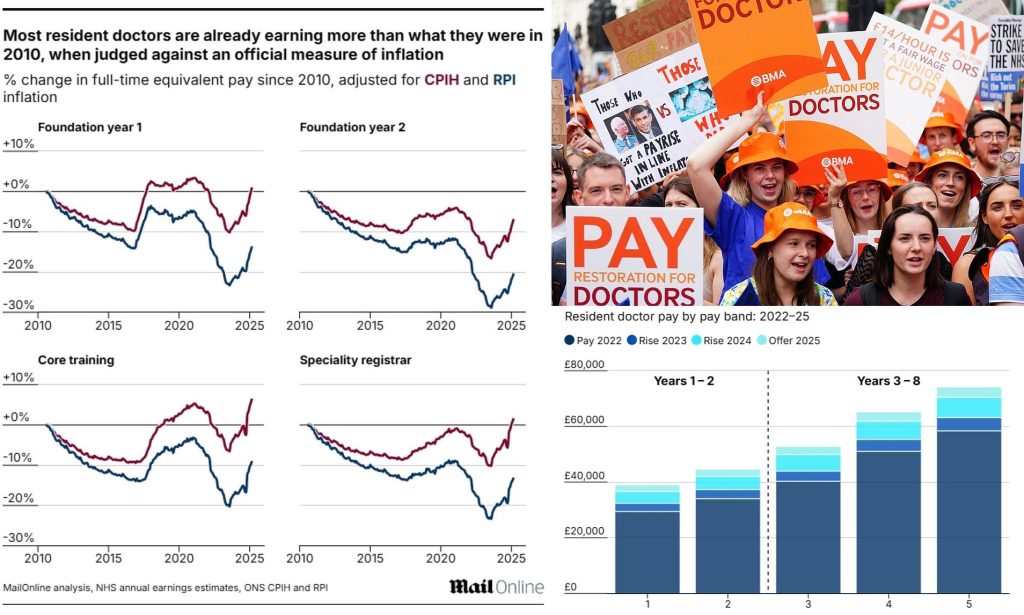
The strike is being organized by militant union leaders, who argue that resident doctors—previously known as junior doctors—have faced 17 years of “pay erosion” and require a 29% pay increase to catch up. However, the government claims that resident doctors have already received an average 28.9% pay rise over the last three years, including a 5.4% increase this year, which is the highest in the public sector.
Health Secretary Wes Streeting has criticized the strike as “shockingly irresponsible,” insisting that he will not compromise on pay. According to the government, the average full-time basic pay for resident doctors is now £54,300, up from around £42,000 in 2022/23. If the British Medical Association (BMA) demands are met, their average basic salary would surpass £70,000 per year, potentially giving the most senior residents an extra £20,000 compared to current pay packets.
Despite ongoing negotiations, ministers are still seeking a deal to prevent further disruption. One possible solution involves wiping off some of the doctors’ student loan debt to appease them. Since 2022, resident doctors have taken industrial action 11 times, with the BMA pushing for better pay and conditions.
The Controversy Over Pay Calculations
The BMA argues that resident doctors are working “a fifth of their time for free” due to pay erosion, citing a 21% drop compared to inflation since 2008/09. However, this calculation uses the Retail Price Index (RPI), a measure that has been downgraded by the statistics watchdog since 2013. Instead, the Consumer Price Index (CPI) and CPIH (CPI including housing costs) are now the standard measures for inflation.
According to the Nuffield Trust, when comparing salaries against CPI, resident doctors have only experienced a 4.7% pay drop since 2008, and a 7.9% increase since 2015. This means that addressing the so-called “erosion” would result in a modest pay raise of about 5%, or roughly £3,000.
The BMA defends its use of RPI, arguing that it reflects the real-life experiences of working people in the UK. They point out that RPI is used for student loan repayments, car taxes, and train fare caps—factors that significantly impact doctors’ living costs, especially those with large student debts.
The Impact of Strikes on the NHS
The upcoming strikes could have serious consequences for the NHS. A report warned that up to 250,000 appointments could be canceled or postponed this month, while the Policy Exchange think-tank estimates the cost of staffing cover could reach £87 million. Charities have expressed deep concern, warning that the strikes could cause significant distress and worsen patient health outcomes.
Consultants may also benefit from the disruptions, as they can charge hospitals inflated rates of up to £2,504 per shift to cover for absent junior doctors. This could drain funds that could otherwise be used for essential services like new medical equipment or building repairs.
Resident doctors, who are still in clinical training for up to eight years, work under the supervision of senior doctors. Previous strikes by junior doctors have already led to the deaths of at least five patients, according to an audit. NHS leaders have warned that the next five-day walkout could put more lives at risk.
Ongoing Negotiations and Public Response
Despite the recent pay deal offered by the government, which included a 22.3% average increase over two years, the BMA members overwhelmingly voted to continue with further strike action. Nearly 90% of 30,000 doctors (with a 55% turnout) supported the decision to walk out.
The Department for Health and Social Care has stated that resident doctors have seen the biggest pay rises in the public sector over the past two years and that the majority of BMA members did not even vote for the strikes. However, the debate over pay remains contentious, with differing views on how best to measure and address inflation.
Nuffield Trust researcher Lucina Rolewicz emphasized the importance of looking at multiple baseline years and inflation measures to understand the true picture of pay changes. She pointed out that depending on the method used, the results can vary significantly, highlighting the need for transparency and comprehensive data in such discussions.
As the dispute continues, the stakes remain high for both the NHS and the doctors involved, with far-reaching implications for patients, staff, and the healthcare system as a whole.