


Understanding the Tragedy and Its Implications
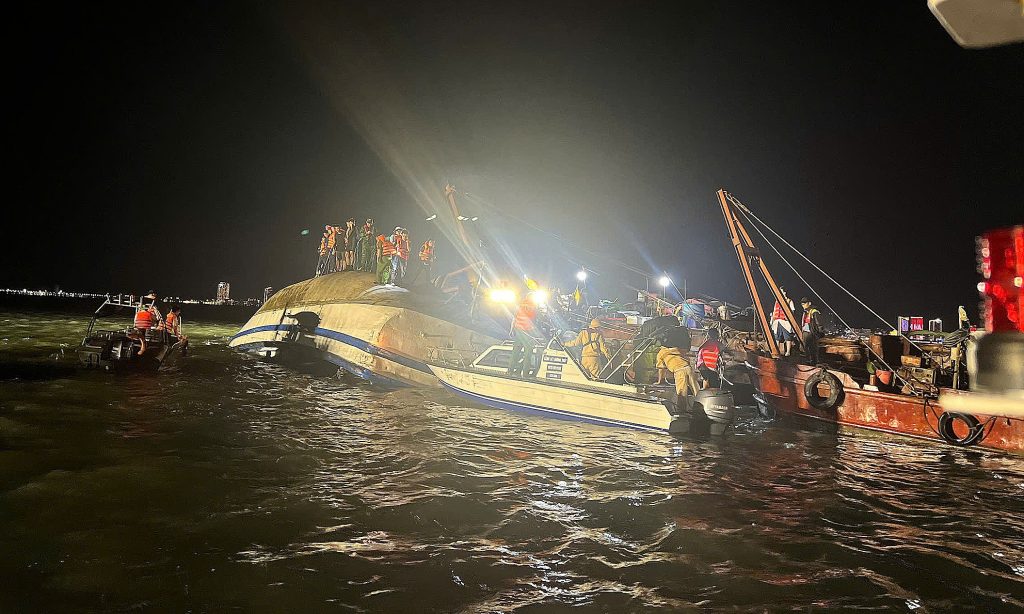
The recent disaster in Ha Long Bay, where a boat carrying 49 people capsized near Dau Go Cave on July 19, has sparked serious discussions about the safety standards of vessels operating in Vietnam’s maritime areas. The incident, which resulted in only 10 survivors and one person still missing, highlights not just a tragic event but also potential gaps in existing regulations.
The Vinh Xanh 58 was built in 2015 and had a stability coefficient of 2.3, significantly higher than the minimum required by Vietnamese law. Despite this, the vessel overturned in seconds, raising concerns among experts about the adequacy of current safety protocols.
Standards and Their Limitations
Maritime safety expert Do Binh Duong pointed out that even if the boat met all technical standards, its sudden capsizing indicates a deeper issue. He argued that the current regulations, designed for inland waters, may not be sufficient for the unpredictable conditions found in coastal areas like Ha Long Bay.
Duong emphasized that passenger boats should adhere to the strictest safety standards, particularly those operating in high-risk marine environments. This includes stable hull designs, reliable safety equipment, and clear emergency procedures. Without these elements, no vessel can be considered fully prepared for unexpected situations.
The debate over applicable standards has led to discussions about whether the Vinh Xanh 58 should have followed SB-class rules, which are typically reserved for vessels sailing at sea. These standards account for wave heights up to 2.5 meters, making them more suitable for the dynamic conditions of Ha Long Bay.
Regulatory Framework and Compliance
Vu Anh, head of the Inland Vessel Department at the Vietnam Register, explained that national technical standards classify Ha Long Bay as SII waters with maximum wave heights of 1.2 meters and SI routes with waves up to 2 meters. The Vinh Xanh 58 was built to VR-SI standards, allowing it to operate both within Ha Long Bay and on open-water routes.
He noted that Vietnam’s vessel standards were developed in collaboration with universities and research institutes, modeled after international benchmarks from countries like Japan, China, and Russia. The latest revision, released in 2025, aims to align with global best practices.
To ensure safety, Vu Anh outlined a multi-step process for vessels, including design approval, construction oversight, certification, and routine inspections. Each vessel must pass a technical and environmental safety inspection before receiving certification. Annual re-inspections and valid licenses for both the boat and crew are also mandatory.
Expert Perspectives and Safety Concerns
Hoang Giang, former Head of Maritime Safety at the Hai Phong Port Authority, described the capsizing of the Vinh Xanh 58 as highly abnormal. He stressed that investigations must consider various factors, such as design specifications, passenger load, weather conditions, and operational practices.
Giang added that VR-SI boats are generally smaller and built for calm or nearshore waters, not rough, open bays. If waves exceed a boat’s design limits, it can quickly lose stability. A high center of gravity or poor balance systems makes it especially vulnerable to being knocked over by strong side waves.
Some maritime experts argue that for Ha Long Bay’s bustling tourist routes, boats should meet VR-SB standards, the highest class for inland vessels. SB-class hulls are engineered to endure waves up to 2.5 meters, requiring stronger materials, reinforced structures, and enhanced stability in adverse conditions.
Enhancing Safety Measures
In response to the safety concerns, Vu Anh highlighted the importance of operational safety measures alongside technical compliance. This includes banning sailings during hazardous weather, issuing real-time alerts to vessels at sea, training passengers on emergency evacuations, and ensuring captains take immediate shelter when storms approach.
Experts are now calling for a dedicated 24/7 rescue force for Ha Long Bay, similar to coastal guard units in other countries. Such a team would monitor vessel signals in real time and respond instantly to distress calls, improving rescue times and saving lives.