


The Mystery of Part-Empty Beauty Products
Have you ever opened a new bottle of shampoo, jar of face cream or tube of suncream only to find it’s far from full? You’re not alone. Tens of thousands of unhappy shoppers have taken to online forums to vent their frustrations about part-empty containers in the beauty world. Toiletries are among the worst offenders, with super-sized packaging often giving customers a misleading impression of just how much they’re getting for their money.
Some leading brands use opaque bottles or labels, so you can’t see what’s inside, while others have double-walled sides, large lids or false bases that can make quantities appear bigger than they are. So why do manufacturers put their products in such big containers? And why don’t they fill them to the top?
According to Ariane Young, a celebrity and media make-up artist, “They use bigger containers so it looks like you’re getting more for your money.” She adds, “Ingredients, labor and marketing are more expensive but customers are less willing to shell out on new products every month, so brands are finding ways to cut corners.”
There may be a practical reason in some cases. Kyle Frank, a beauty expert, cosmetics formulator and founder of Frank’s Remedies, explains that some products need extra ‘breathing space’ so that the bottles and tubes reach customers intact. “Product packaging can expand due to temperature changes and rocky movement during transit,” he says. “Depending on the formulation of the product, this may cause more air to be produced. This is known as thermal expansion.”
Such expansion could cause leakage or make containers burst open, so leaving a little space at the top of the bottle or jar ensures it reaches customers in one piece.
So how much product is there in your everyday toiletries and are you being fooled by the size or shape of the packaging it’s sold in?
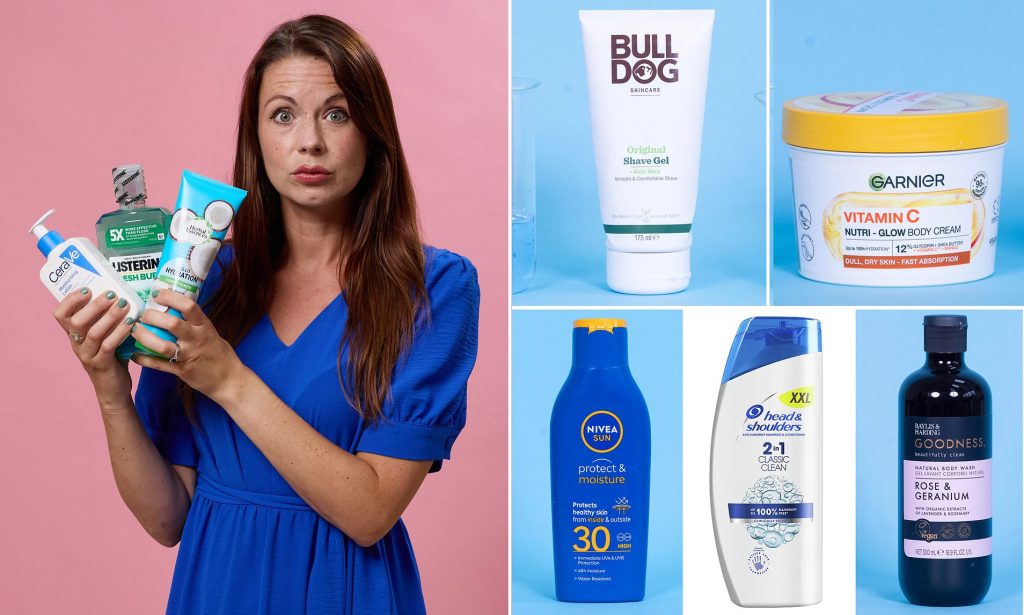
We conducted an experiment, comparing the amount of liquid, gel or cream in beauty products (stated on the packaging) against the total volume of the container (in millilitres). We did this by squeezing the product into a glass measuring beaker and filling the empty container with water to see how much it could hold when full. The results will make you think twice on your next visit to the beauty aisle.
Product Volume Analysis
Here are some of the results from our experiment:
-
Garnier Vitamin C Nutri-Glow Body Cream
Jar holds: 530ml
Actually contains: 380ml
Difference: 150ml
Percentage full: 72 per cent -
Simple Gentle Cleansing Shampoo
Bottle holds: 460ml
Actually contains: 400ml
Difference: 60ml
Percentage full: 87 per cent -
CeraVe Foaming Face Cleanser
Bottle holds: 285ml
Actually contains: 236ml
Difference: 49ml
Percentage full: 83 per cent -
Garnier Ambre Solaire Soothing After Sun
Bottle holds: 410ml
Actually contains: 400ml
Difference: 10ml
Percentage full: 98 per cent -
Dove Moisturising Hand Wash
Bottle holds: 300ml
Actually contains: 250ml
Difference: 50ml
Percentage full: 83 per cent -
Nivea Sun Protect Suncream Factor 30
Bottle holds: 205ml
Actually contains: 200ml
Difference: 5ml
Percentage full: 98 per cent -
Sanex Expert Soothing Bath Soak
Bottle holds: 505ml
Actually contains: 450ml
Difference: 55ml
Percentage full: 89 per cent -
Palmer’s Cocoa Butter Intensive Body Lotion
Bottle holds: 275ml
Actually contains: 275ml
Difference: 0ml
Percentage full: 100 per cent -
Dove Body Love Self-Tan Lotion
Bottle holds: 450ml
Actually contains: 400ml
Difference: 50ml
Percentage full: 89 per cent -
Oral B 3D White Luxe Mouthwash
Bottle holds: 540ml
Actually contains: 500ml
Difference: 40ml
Percentage full: 93 per cent -
Nivea 2 in 1 Cleansing Milk and Refreshing Toner
Bottle holds: 198ml
Contains: 175ml
Difference: 23ml
Percentage full: 88 per cent -
Nivea Men Energy Shower Gel
Bottle holds: 424ml
Actually contains: 400ml
Difference: 24ml
Percentage full: 94 per cent -
Herbal Essences Dazzling Shine Shampoo
Bottle holds: 455ml
Actually contains: 400ml
Difference: 55ml
Percentage full: 88 per cent -
Head & Shoulders Classic Clean 2 in 1 Shampoo
Bottle holds: 268ml
Actually contains: 250ml
Difference: 18ml
Percentage full: 93 per cent -
Aussie Miracle Moist Conditioner XL
Bottle holds: 580ml
Actually contains: 470ml
Difference: 110ml
Percentage full: 81 per cent -
Palmolive Naturals Coconut Milk Shower Cream
Bottle holds: 542ml
Actually contains: 500ml
Difference: 42ml
Percentage full: 92 per cent -
Baylis and Harding Goodness Natural Body Wash
Bottle holds: 542ml
Actually contains: 500ml
Difference: 42ml
Percentage full: 92 per cent -
Lynx Africa Body, Face and Hair Wash
Bottle holds: 230ml
Actually contains: 225ml
Difference: 5ml
Percentage full: 98 per cent -
Bulldog Original Shave Gel
Tube holds: 190ml
Actually contains: 175ml
Difference: 15ml
Percentage full: 92 per cent -
Vaseline Healthy Hands and Stronger Nails Hand Cream
Bottle holds: 209ml
Actually contains: 200ml
Difference: 9ml
Percentage full: 96 per cent
These findings highlight how many beauty products are not filled to the brim, which can leave consumers feeling misled. While some products have minimal empty space, others have significant amounts of unused capacity. It’s important to be aware of these discrepancies when shopping for personal care items.