


Malaysian Premier Hosts Peace Talks Amid Ongoing Border Clashes
Malaysian Prime Minister Anwar Ibrahim is set to host peace talks between Thailand and Cambodia in Kuala Lumpur on Monday, as tensions along their shared border continue to escalate. The discussions come amid reports of ongoing clashes between the two neighboring countries, with both sides accusing each other of aggressive actions.
The leaders of Thailand and Cambodia are scheduled to meet in Malaysia to address the recent violence that has lasted for four days. This development was confirmed on Sunday, as both nations attempt to find a resolution to the conflict. The talks will be facilitated by Anwar Ibrahim, who is serving as the chair of the Association of Southeast Asian Nations (ASEAN).
“I have been asked to try and negotiate a peace settlement,” Anwar said on Sunday. “I am discussing the parameters and conditions, but what is important is an immediate ceasefire.”
A Thai government spokesman confirmed that acting Prime Minister Phumtham Wechayachai will attend the talks, stating that the purpose is to “discuss peace efforts in the region.” Meanwhile, Cambodian Prime Minister Hun Manet expressed his country’s willingness to pursue an “immediate and unconditional ceasefire” earlier on Sunday.
Escalating Violence and Human Toll
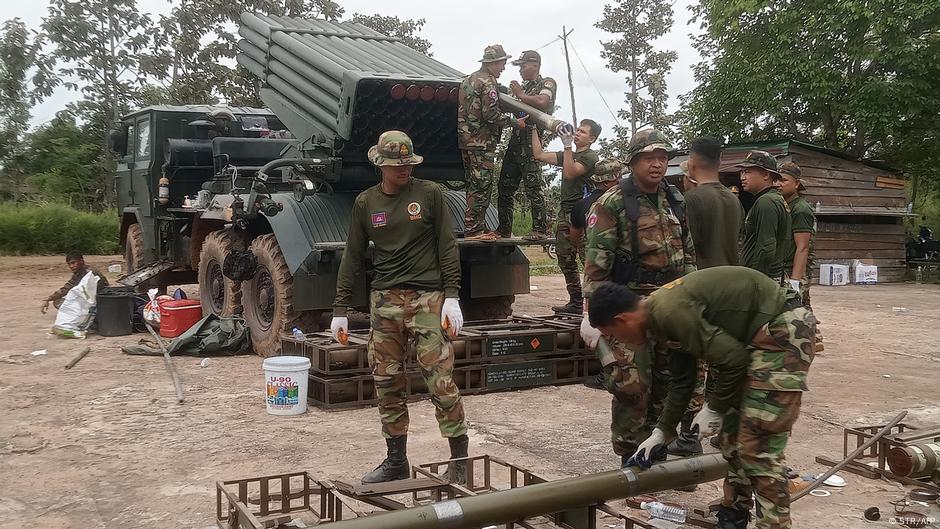
The fighting between Thailand and Cambodia has resulted in at least 34 deaths and displaced approximately 200,000 people. The clashes have centered around contested border temples, with both sides exchanging artillery fire. Despite the planned peace talks, the violence continued on Sunday, with reports of further skirmishes.
According to a Cambodian defense ministry spokeswoman, Thai forces launched attacks on areas near the village of Samraong at 4:50 a.m. local time, followed by a “large-scale incursion” involving tanks and ground troops. She criticized these actions, stating that they undermine all efforts toward peaceful resolution and indicate Thailand’s intent to escalate the conflict rather than de-escalate it.
On the other hand, a Thai army spokesman claimed that Cambodian forces began firing artillery around 4:00 a.m., accusing them of targeting civilian homes in Thailand’s Surin province. The Thai Foreign Ministry also stated that any cessation of hostilities would be difficult while Cambodia fails to show good faith and repeatedly violates human rights and humanitarian laws.
International Involvement and Nationalist Sentiments
Amid the escalating conflict, U.S. President Donald Trump claimed credit for the planned peace talks, stating that he had spoken to both prime ministers and believed they were ready to settle the issue. He had previously threatened to impose high tariffs on both countries if they did not stop fighting and agree on trade deals.
Trump tweeted on Saturday, “After speaking to both Parties, Ceasefire, Peace, and Prosperity seems to be a natural. We … do not want to make any Deal, with either Country, if they are fighting. I am trying to simplify a complex situation!”
As nationalist sentiments rise in Thailand, the government has issued warnings to its citizens, urging them to “refrain from any kind of violence, whether in speech or action” against Cambodians living within the country.
Impact on Local Communities
Residents near the border have been deeply affected by the conflict. One 61-year-old Thai border resident told AFP news agency that she and her neighbors had evacuated due to the unsafe conditions. “We rushed to leave the house this morning. All of my neighbors have already left, and we didn’t feel safe to stay any longer.”
With the situation showing no signs of immediate resolution, the international community continues to watch closely as Malaysia attempts to mediate a lasting peace between the two nations.