


A Controversial Stand on Indigenous Identity and Parliamentary Traditions
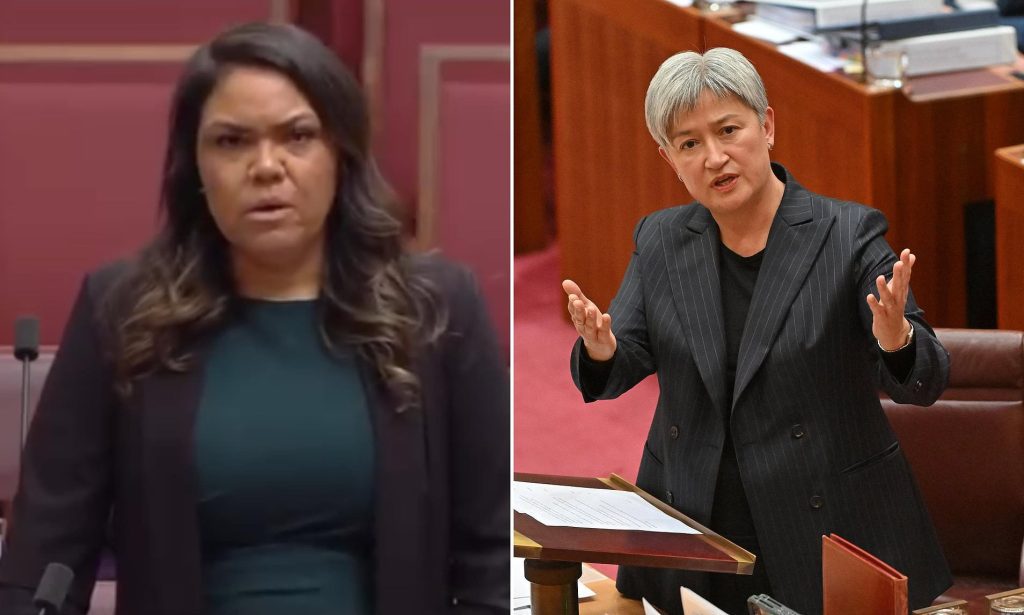
Indigenous Senator Jacinta Nampijinpa Price sparked a heated debate in the Senate when she challenged the use of the term “First Nations” as an Australian concept, arguing that it originated from Canada and the United States. Her remarks were met with strong reactions, particularly from Labor Senator Penny Wong, who urged the Coalition to respect parliamentary traditions.
The controversy began when One Nation senators, including Pauline Hanson, refused to participate in the acknowledgment of country at the start of parliament. This act led to a confrontation in the chamber, where Senator Price voiced her concerns about the effectiveness of such ceremonies in improving the lives of Indigenous Australians. She described them as mere political gestures rather than meaningful actions.
Reactions to the Term “First Nations”
Senator Price was unapologetic in her criticism of the term “First Nations,” stating that it is not an Australian term but rather borrowed from other countries. She argued that this rebranding undermines traditional culture and diminishes its significance. For those who still live close to their cultural roots, she emphasized that their daily lives are deeply influenced by these traditions.
She also took issue with the practice of Welcome to Country, asserting that it is not a traditional custom. According to her, this ritual does little to improve the lives of Indigenous Australians and often romanticizes their experiences without addressing real issues. As a woman of Indigenous heritage, she expressed frustration with what she called “virtue signaling” and the emphasis on identity over equality.
Emphasizing Equality and National Unity
Price made it clear that she believes all Australians are equal, regardless of their background or heritage. She highlighted that every individual, including those from the Ngunnawal and Ngambri communities, should be treated equally. She criticized the notion that some people are acknowledged more than others based on their indigeneity.
Her comments also touched on the challenges faced by remote and marginalized communities. She suggested that traditional culture is often ignored in political discussions, even though it plays a crucial role in the lives of many Indigenous Australians. She warned against labeling those who speak out against these practices as racists or traitors.
Public Support and Calls for Leadership
Despite the controversy, Senator Price received widespread support from various groups and individuals. Conservative political lobbyist group Advance Australia praised her for speaking up for all Australians. Many commented that her speech resonated with the idea of national unity and equality, emphasizing that skin color, heritage, or beliefs should not divide the nation.
Some even suggested that Price could be a future leader of the Coalition, highlighting her strong stance and commitment to reconciliation. Opposition Senate Leader Michaelia Cash defended her, noting that Price has lived and breathed reconciliation in the country. She criticized Penny Wong for attempting to dismiss Price’s concerns and vowed to stand by her.
The Broader Implications
The debate raised important questions about the role of Indigenous identity in Australian politics and society. It highlighted the tension between recognizing cultural heritage and promoting equality. While some see the acknowledgment of country as a step toward reconciliation, others argue that it can perpetuate divisions rather than bridge them.
As the discussion continues, it remains to be seen how these issues will shape future policies and public discourse. For now, Senator Price’s remarks have sparked a broader conversation about what it means to be Australian and how different communities can come together in unity.