


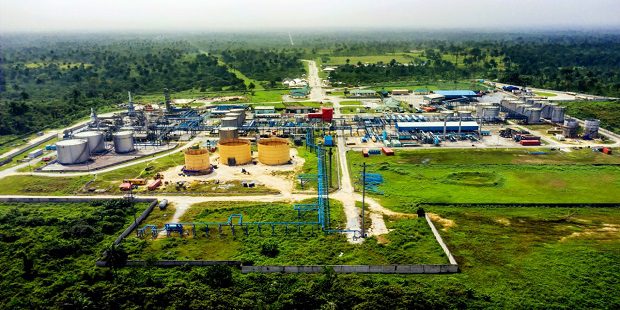
Strong Financial Performance in H1 2025
Aradel Holding Plc has released its unaudited half-year report for 2025, revealing a significant increase in revenue and profit. The company reported a revenue of ₦368.1 billion, reflecting a 37.2% growth compared to the previous year. Additionally, the profit after tax reached ₦146.4 billion, marking an impressive 40.2% increase.
The company’s operational highlights show that crude oil production increased by 19.7%, rising from 12,957 barrels per day (bbls/day) in the first half of 2024 to 15,508 bbls/day in the same period of 2025. Gas production also saw a modest increase of 1.5%, moving from 40.4 million standard cubic feet per day (mmscfd) to 41.2 mmscfd.
In terms of refined petroleum products, Aradel sold 165.3 million litres, which is a 32.7% increase compared to the 122.2 million litres sold in the first half of 2024. The average realized crude oil price for exports dropped slightly to $73.6 per barrel from $87.5 in the previous year. However, the average realized gas price per mscf rose to $1.7 from $1.5.
Strategic Growth and Leadership Changes
The CEO of Aradel Holdings Plc, Mr. Adegbite Falade, highlighted the challenges and opportunities faced by Nigeria’s oil and gas industry during the first half of 2025. He emphasized the impact of global geopolitical tensions on supply and prices, as well as local operating conditions that required resilience and adaptability.
Despite these challenges, the company maintained strong operational performance, driven by stable average production volumes. Significant progress was made on the strategic growth agenda, including the acquisition of an equity interest in Chappal Energies Mauritius Limited. Additionally, the investment in Renaissance Africa Energy Company (Renaissance) yielded positive returns, with the company’s share of performance included in Aradel’s financials for the first time.
The consistent performance of associate companies underscores the strategic value of Aradel’s stake and supports its broader portfolio diversification objectives. The company also expressed gratitude to outgoing board members and welcomed new additions, enhancing governance and leadership diversity.
Financial Review and Key Metrics
The financial review of Aradel shows that foreign exchange dynamics continued to affect the group’s performance. However, the pace of naira devaluation slowed down in the first half of 2025, with an average exchange rate of ₦1,550:US$1 compared to ₦1,345:US$1 in the same period of 2024.
Revenue increased by 37.2% to ₦368.1 billion, driven by higher export crude oil revenue, refined products revenue, and gas revenue. Export crude oil revenue rose by 36.0% to ₦232.8 billion, while refined products revenue increased by 42.6% to ₦116.5 billion. Gas revenue also grew by 21.7% to ₦18.8 billion.
Cost of sales (COS) increased significantly by 91.8% to ₦204.9 billion, primarily due to higher royalties, depreciation, crude handling charges, and operational expenses. General and administrative (G&A) expenses surged by 184.1% to ₦53.1 billion, mainly due to staff costs and increased technology subscriptions.
Operating profit declined by 21.1% to ₦118.6 billion, impacted by higher business operating costs and lower crude oil prices. Finance costs increased by 109.0% to ₦12.5 billion, while finance income rose by 49.2% to ₦11.1 billion.
Profit before tax increased by 17.9% to ₦191.3 billion, with an income tax expense of ₦44.9 billion. The share of profit from associates amounted to ₦71.2 billion, contributing to a profit after tax of ₦146.4 billion, up 40.2% from ₦104.4 billion in the previous year.
Asset and Liability Growth
Total assets grew by 3.5% to ₦1.8 trillion, primarily due to the acquisition of a 6.01% equity stake in Chappal Energies Mauritius Limited. The completion of the Renaissance Africa Energy Holdings acquisition of SPDC further strengthened Aradel’s position in the energy sector.
Total liabilities increased by 3.4% to ₦357.5 billion, attributed to additional debts from the SPDC acquisition and tax liability estimates. Total equity rose by 3.5% to ₦1.45 trillion, mainly due to retained comprehensive income over the period.
Cash Flow Analysis
Cash flows from operating activities increased by 6.0% to ₦179.7 billion, despite the settlement of income tax liabilities and non-receipt of gas sales proceeds. Net cash flow used in investing activities rose to ₦97.1 billion, driven by investments in Renaissance and Chappal Energies. Net cash flows used in financing activities increased to ₦112.2 billion, primarily due to dividend payments.