


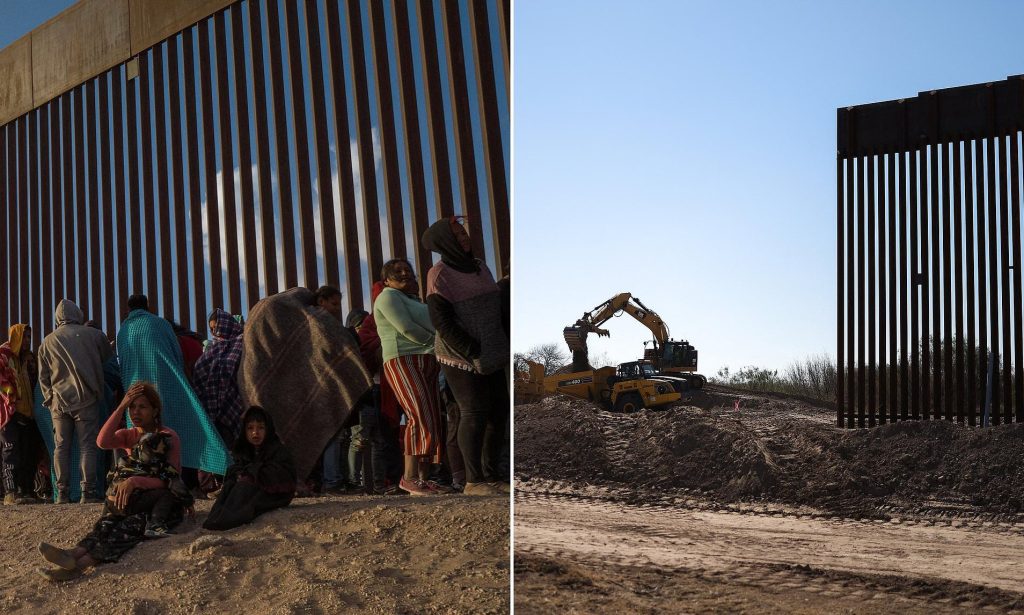
Landowners in Texas Resist Government Efforts to Build Border Wall
A group of landowners in Starr County, Texas, are resisting the government’s efforts to construct a border wall, which they argue threatens their property and way of life. These residents are facing legal battles with high-powered administration lawyers who have filed eminent domain lawsuits against them. Eminent domain is a legal process that allows the government to take private property for public use, even if the owner does not agree to the sale.
Alejo Clarke, a long-time resident of Starr County, has lived there for 58 years and is currently fighting a court order that would require him to give up one acre of his land for the construction of an 18-foot wall. Clarke claims that this action would cut him off from vast areas of land where he has spent his life fishing and hunting. He expressed frustration with the situation, stating, “I’m not gonna beat Trump – you know it and I know it. But if someone is going to kick your butt, are you just going to lie down?”
Clarke also criticized the government’s decision to allocate billions of dollars for the wall instead of addressing local issues like water shortages affecting farmers in the region. He noted that the government offered only $3,000 as compensation for the land it plans to take. During the first term of the Trump administration, Clarke attempted to fight a similar plan in court but struggled due to his limited education. Although President Biden returned the land to him, it is now once again under threat. Clarke has hired a lawyer to help with the current case, but he acknowledges he will face financial challenges in the process.
Family Legacy at Risk
Raquel Oliva, another landowner in the area, is also fighting to protect her family’s property, which has been in her family since 1798. The government has filed proceedings to take over less than three acres of her land to build part of the border wall. However, Oliva argues that this small piece of land is essential for access to more than 100 acres where her family has farmed, hunted, and operated a gas well.
The 75-year-old used artificial intelligence to help draft an objection letter to the government, emphasizing that the wall would negatively impact her family’s livelihood. She has requested a 16-foot access gate, an irrigation pipeline, and increased compensation. Oliva described the situation as an invasion, saying, “No one has a problem stopping illegal immigration or drugs, but we live on the border – it’s always been like this. Now it feels like an invasion of the government on us.”
Legal Challenges and Complex Cases
Since returning to power, the government has filed numerous eminent domain lawsuits in Texas, aiming to fulfill Trump’s promise of securing the U.S. borders. These cases often involve complex legal issues, particularly because many properties have generations of owners and poorly documented titles. Some cases list up to 100 defendants with ownership claims over small parcels of land, while others include “unknown heirs” of former owners.
Department of Homeland Security Secretary Kristi Noem has emphasized the importance of completing the border wall for national security. She stated in a New York Post opinion column, “Successful mass deportations mean nothing if we don’t control the border and keep future illegal aliens out.” Noem also highlighted the funding provided by the BBB legislation for new border wall segments and water-based barriers along the Rio Grande, which she claims will secure the border for decades.
Increased Enforcement and Deportations
In addition to building the wall, the administration is ramping up efforts to hire more Immigration and Customs Enforcement (ICE) agents. According to data published by The Washington Post last month, the administration has carried out 239,000 deportations so far this year. This reflects a continued focus on border security and enforcement, despite the ongoing legal and social challenges faced by local landowners.