


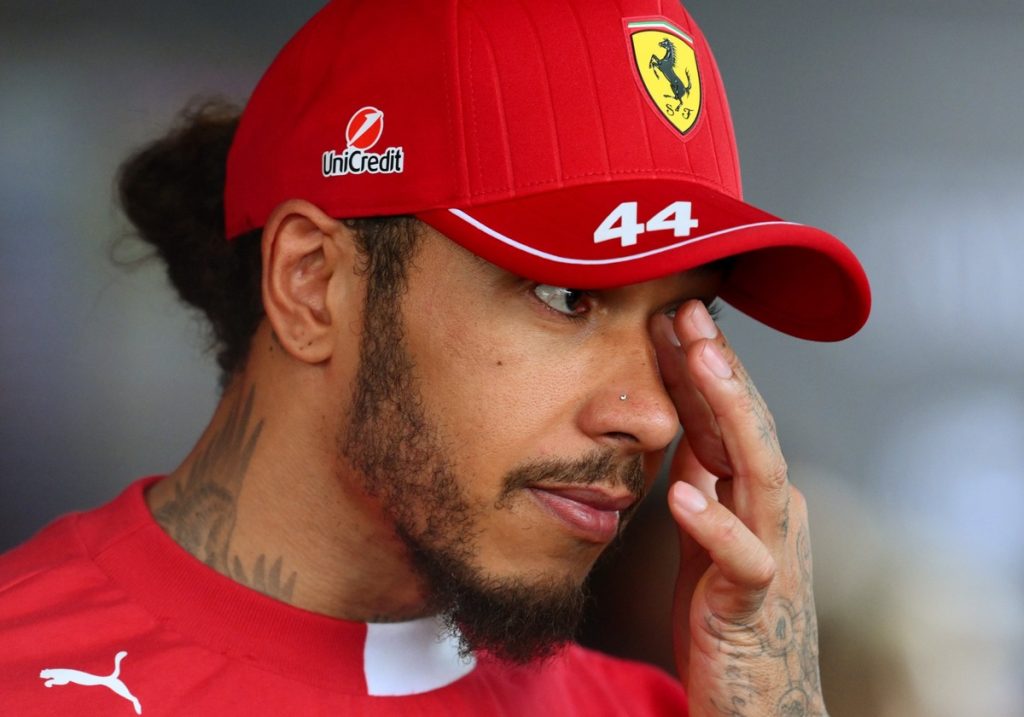
Understanding Lewis Hamilton’s Frustration at the Hungarian Grand Prix
Lewis Hamilton, the seven-time Formula 1 world champion, faced a challenging weekend at the Hungarian Grand Prix. The event left him visibly frustrated, especially after being eliminated in Q2 and finishing the race in a difficult position. His performance contrasted sharply with that of his teammate, Charles Leclerc, who secured pole position ahead of both McLaren drivers.
Hamilton’s struggles began during qualifying, where he was unable to make it past Q2, ending up in 12th place on the grid. This result was particularly disappointing for the British driver, who is known for his high standards and relentless pursuit of success. Despite this setback, team principal Fred Vasseur expressed confidence in Hamilton’s ability to bounce back.
A Tough Weekend for Hamilton
The Hungarian Grand Prix proved to be a tough test for Hamilton. Starting from 12th on the grid, he found himself stuck in traffic and eventually lapped by other competitors. Meanwhile, Leclerc initially looked poised for a podium finish but was later forced out of contention due to a chassis issue with his car.
After the qualifying session, Hamilton appeared to be at a loss for answers. He even suggested that Ferrari might need to find a different driver, a comment that sparked significant media attention. Following the race, Hamilton remained withdrawn and gloomy, indicating the depth of his frustration.
Vasseur’s Perspective on Hamilton’s Performance
Fred Vasseur, Ferrari’s team principal, acknowledged Hamilton’s disappointment but emphasized that the driver was not demotivated. He pointed out that Hamilton’s demanding nature is part of what has made him one of the greatest drivers in the sport. Vasseur noted that such high expectations are common among top athletes, not just in Formula 1 but across all sports.
He also explained that the situation at the Hungarian Grand Prix was more about the tight competition in the midfield than any specific failure. According to Vasseur, Hamilton was only a fraction of a second behind Leclerc in Q2, which ultimately cost him a spot in Q3.
A Narrow Margin Between Success and Failure
Vasseur highlighted that the difference between Hamilton and Leclerc in qualifying was minimal. While Hamilton was in front of Leclerc in Q1, he struggled in Q2, losing out by a tenth of a second. This narrow margin meant that both drivers were close to making it through to Q3, but Leclerc managed to pull ahead.
Despite the outcome, Vasseur remains confident in Hamilton’s ability to recover. He noted that Hamilton was able to maintain good pace when he was not stuck in a DRS train, suggesting that his performance was not as poor as it seemed.
Looking Ahead
Hamilton currently sits sixth in the drivers’ standings, without a podium finish for Ferrari. However, he did secure a victory in the sprint event in China earlier this year. As the summer break approaches, there is hope that Hamilton will use this time to regroup and come back stronger in the second half of the season.
Vasseur’s comments reflect a belief in Hamilton’s resilience and determination. He understands the pressure that comes with being a seven-time world champion and expects the driver to respond positively to the challenges he faces. With the right support and adjustments, Hamilton has the potential to regain his form and continue his legacy in Formula 1.