


A New Approach to Natural History
David Attenborough’s latest series, Parenthood, has captivated audiences with its stunning visuals and unique storytelling. However, the BBC has revealed that some of the footage was not filmed in the wild but rather in controlled environments such as fish tanks and incubators. This revelation has sparked discussions about the methods used to capture rare animal behaviors.
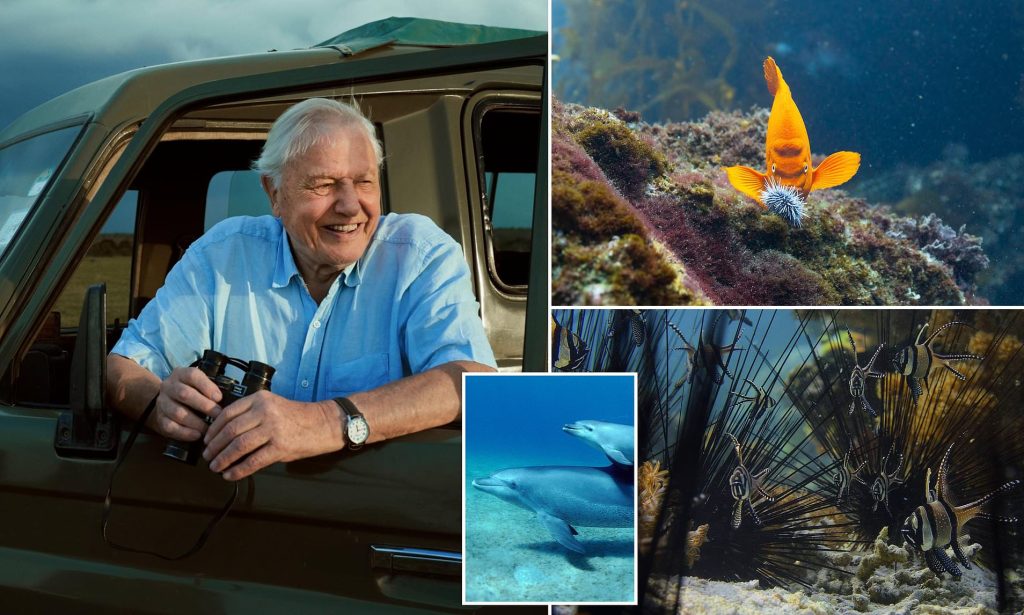
The series, which premiered on August 1, explores the challenges faced by animal parents as they adapt to a rapidly changing world. It features a variety of species, including boxer crabs, skeleton shrimps, and Banggai cardinalfish, each showcasing remarkable parenting strategies. The show promises to deliver never-before-seen animal behaviors in ultra-high definition, taking viewers from the remote jungles of Bhutan to the grasslands of Botswana.
Filming in Controlled Environments
Despite the promise of natural settings, the BBC admitted that certain scenes were filmed in manufactured environments. The decision was made due to the tiny scale of the animals, the fragility of their habitats, and the sensitive nature of parent-child interactions. For instance, the opening scene featuring turtle hatchlings was filmed in a specialist incubation project in Brazil rather than underwater.
Producers Jeff Wilson and Olly Scholey explained that using the incubation project allowed them to capture an “unbelievable spectacle” without disturbing the eggs. This approach ensured that the hatchlings could be observed safely while still conveying the unpredictability of parenting in the animal kingdom.
In another scene, a specialized tank in Indonesia was used to film boxer crabs. The producers emphasized that while some parts of the program were captured on location, filming underwater presented unique challenges, such as fluctuating visibility and the difficulty of navigating through water.
Challenges of Filming in the Wild
Filming in the wild is no easy task, especially when dealing with elusive species. One of the most challenging moments in the series involved the team attempting to build a relationship with silverback gorillas and their infants. Cinematographer Max Kobl described the gorillas as “probably the most powerful of all primates,” highlighting the difficulty of getting close to them.
The crew faced numerous obstacles, including navigating thick swamps and using indicators like twig types to locate the animals. One team member nearly fell into the water during the trek, responding to a question with a simple “Nope.” Sir David Attenborough narrated the challenges, noting that the gorilla family had other plans once the team reached dry land.
Viewer Reactions and Unique Footage
Viewers have praised the show for its stunning visuals and compelling storytelling. On social media, one commenter called the contributors “amazing,” while another hailed Parenthood as “another great programme.” The series also features a bone-chilling moment where a colony of newborn African spiders turns on their mothers, a behavior that has never been seen before.
Other highlights include striking footage of orangutans, elephants, and cheetahs. The use of military-grade infrared cameras mounted on gimbals on off-road vehicles adds a new dimension to the storytelling, allowing for dramatic sequences such as hippos being chased by lions at night.
Conclusion
Parenthood offers a fresh perspective on the challenges of parenting in the animal kingdom, combining innovative technology with traditional filmmaking techniques. While some scenes were shot in controlled environments, the series remains a testament to the dedication and creativity of the production team. As the next episode airs on BBC One, viewers can expect more captivating stories from the natural world.