







The Traveling Exhibition «Belgica Biladi: A Belgian-Moroccan History» Makes Its Debut in Nador
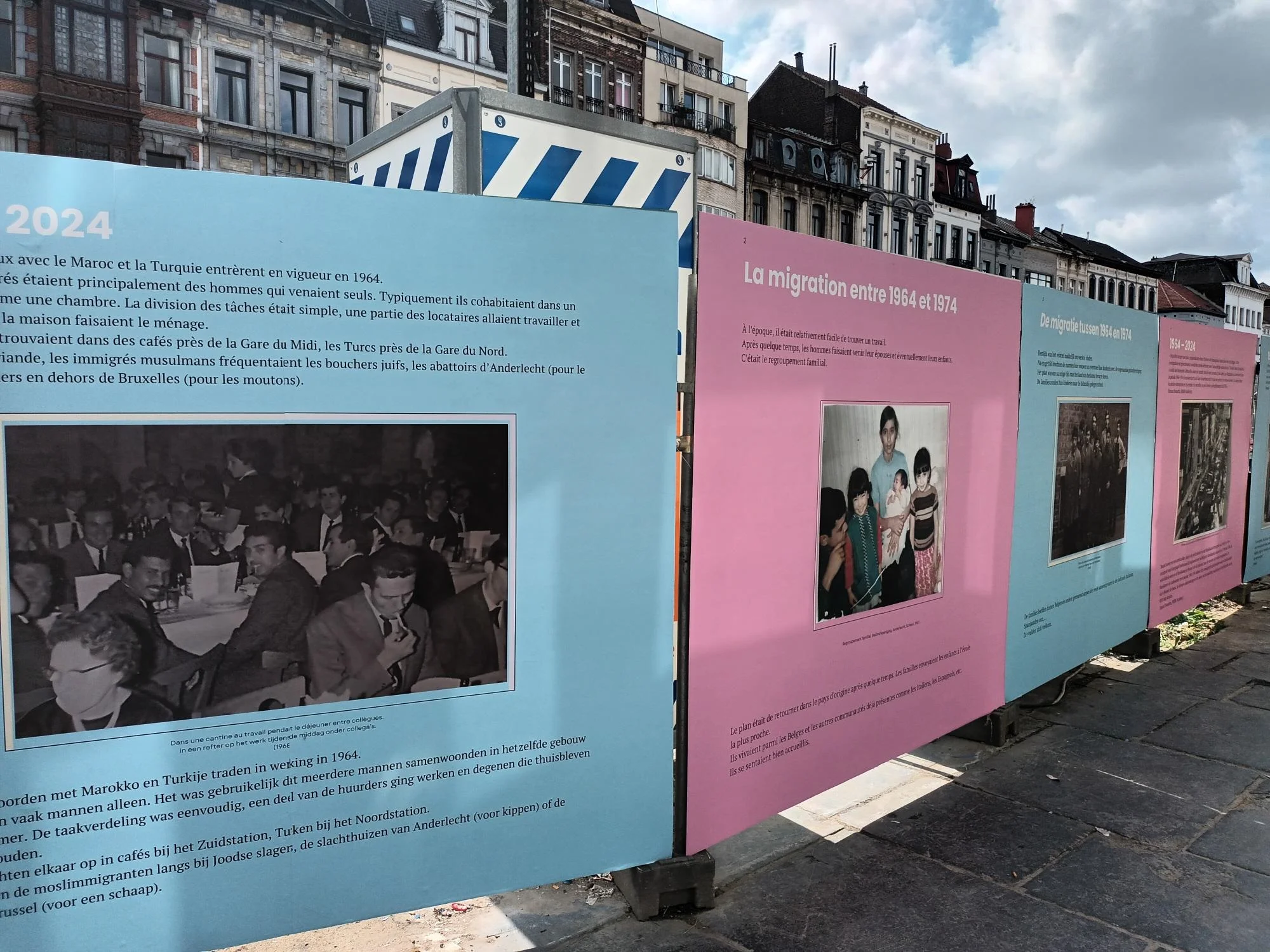
The traveling exhibition «Belgica Biladi: A Belgian-Moroccan History» has officially launched its first stop in Nador on Friday, August 15, and will remain there until August 24. Following this, the exhibition will move to Saïdia from September 1 to 15, and finally conclude in Al Hoceïma from September 22 to 30. This initiative features 37 photographic panels and an accompanying publication that offers a deep dive into the rich and complex history of migration between Belgium and Morocco over the past six decades.
The exhibition highlights the personal stories and shared experiences of those who have contributed to this migration narrative. These stories are not only about movement but also about identity, intergenerational connections, and cultural exchange. It aims to celebrate the lives of individuals whose journeys have shaped both Moroccan and Belgian societies.
A Tribute to Migration and Cultural Exchange
Initiated by the Council of the Moroccan Community Abroad (CCME), the exhibition coincides with the 60th anniversary of the 1964 labor agreement between Morocco and Belgium. This event serves as a tribute to the pioneers of this migration, their children, and their contributions to Belgian society across various fields such as literature, theater, cinema, entrepreneurship, civic engagement, media, and politics.
Ahmed Medhoune, the general commissioner of the exhibition and director of Community Services at the Free University of Brussels (ULB), emphasized the significance of the project. He mentioned that the exhibition is complemented by a collective publication and a series of eight radio programs, which extend the tribute to the migrants’ stories.
Celebrating Diversity and Challenging Stereotypes
Medhoune pointed out that approximately six to eight million Moroccans live abroad, spread across a hundred countries. In Belgium alone, around 600,000 Moroccans reside, with half of them living in Brussels. He noted that the migration story did not begin in 1964 but had roots long before, with Moroccan men contributing to global conflicts, much like Senegalese soldiers during World War I.
The exhibition seeks to challenge negative stereotypes and share these stories with compatriots who may not be familiar with them. Marouane Touhali, president of the Circle of Laureates of Belgium (CLB), highlighted the role of his association in organizing and promoting the exhibition, particularly in the three Moroccan cities.
Inclusive Approach and Community Engagement
This inclusive approach not only celebrates the contributions of migrants but also reminds people of their active participation in political struggles for rights, both in Belgium and Morocco. Medhoune cited efforts such as fighting discrimination and contributing to debates around the Moudawana, among other issues.
He also mentioned how the 2020 health crisis raised important questions about aging and burial, which the exhibition and its accompanying book aim to address. The book includes around 20 contributions, honoring the elders who have been overlooked throughout their lives.
Local Adaptation and Cultural Significance
In Morocco, the CCME ensured the exhibition was translated into Arabic and Amazigh (Tifinagh) to suit local linguistic contexts. The exhibition’s locations—along the corniche in Nador, in the Medina of Saïdia, and in Mohamed V Square in Al Hoceïma—were carefully chosen to reflect the cultural and historical significance of each city.
Sociologist Merouane Touali praised the exhibition’s visual identity, highlighting the choice of a photo depicting a grandmother and a young girl. This image symbolizes the feminization of Moroccan migration and the arrival of new generations, telling the entire story of Moroccan immigration.
Redefining Identity and Future Prospects
Medhoune observed that the mixing of generations and cultures reshuffles the cards when it comes to defining identities. He suggested that in the coming decades, new words may be needed to describe these complexities, emphasizing the need to recognize the infinite nature of identity.
He also praised the CCME partnership and acknowledged Driss El Yazami, the president of the CCME, for supporting initiatives aimed at reclaiming the migration narrative through memory work and forward-looking projects. Both speakers expressed hope that the exhibition will eventually be displayed in public spaces in other Moroccan cities, making it more accessible to a wider audience.