









A Unique Approach to Conservation in the Florida Everglades
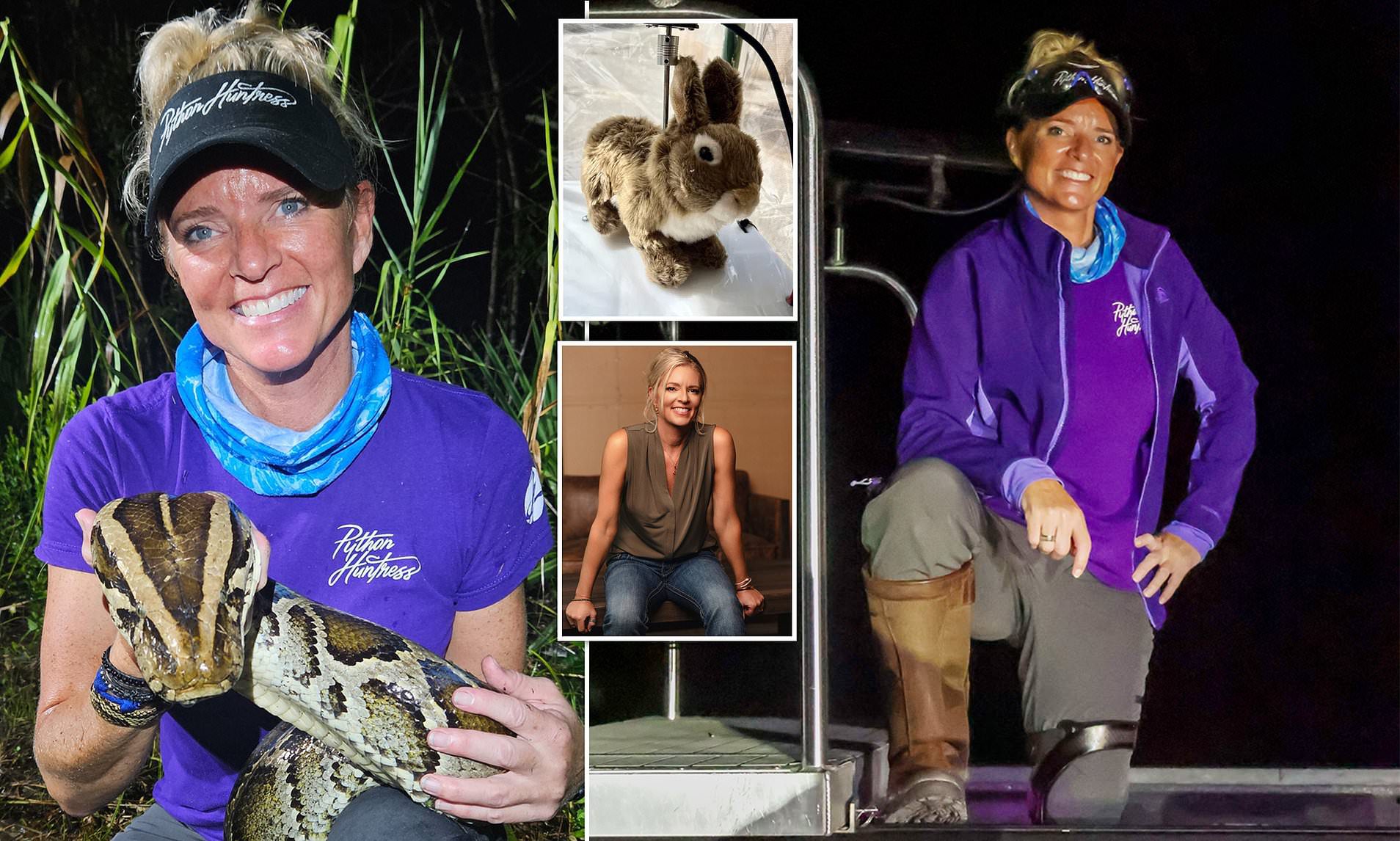
Beneath the dark canopy of the Florida Everglades, where only stars illuminate the sky, an unusual form of tourism has emerged. This is the high-stakes, high-end world of python hunting, and at its center is Amy Siewe, a former luxury real estate broker who has transformed her life into one dedicated to conservation.
Siewe’s journey began with a deep-seated fascination with snakes, which she turned into a mission to combat the ecological crisis caused by Burmese pythons. These invasive species, introduced through the exotic pet trade over the past three decades, have multiplied rapidly in South Florida. They prey on native wildlife, including raccoons, opossums, bobcats, and even deer, causing significant declines in these populations.
According to Siewe, “We find deer hooves in the stomachs of almost every python we catch that are over 16 feet. They are eating full grown deer. It’s horrific.” The impact of these pythons is not just limited to wildlife; it threatens the entire ecosystem of the Everglades.
To address this issue, scientists from the University of Florida have taken an innovative approach by deploying remote-controlled robotic bunnies to monitor python patterns. However, Siewe relies on her own skills and experience, leading elite eco-tourism hunts that capture these invasive snakes.
Her business offers guided hunts for $1,800 per group of up to four people, with additional charges for more participants. Clients are drawn not only by the thrill but also by the opportunity to contribute to Florida’s ecological future. “This guided hunt is both a thrill and a mission,” Siewe explains. “It’s amazing to catch a python, but it’s even more powerful knowing you’re saving native animals.”
During a night with Siewe, the team traveled through the Everglades aboard her custom ‘snake deck’ truck, equipped with flood lights and spotlights. The tour provided a rare glimpse into her operation, highlighting the vastness of the Everglades, which spans 1.5 million acres.
Siewe’s methods are honed from years of experience, and her hunting locations remain confidential. On one particular night, she stalked a 16-foot serpent, marking her 700th python capture. Her largest capture to date measured 17 feet, 3 inches, a testament to her skill and dedication.
Tourists like Jim Gillenwater from Indiana joined Siewe in the swamp, experiencing the thrill of the hunt firsthand. “When you’re in the middle of the Everglades in the summer months, and when we were wrestling the big snake, the bugs were all over us,” Gillenwater said. “You gotta put in the work and be able to deal with the variables to get the best trophy.”
Siewe previously worked for the state’s Python Elimination Program, which pays licensed hunters to remove pythons. Now, she hunts for herself, her tours, and collaborates with researchers to learn more about the behaviors and habits of the pythons.
“It’s not the python’s fault they’re here,” Siewe acknowledges. “They’re just being pythons. But they have to go. Our mammals are disappearing at an alarming rate.” She emphasizes the importance of each hunt, noting that “every single python we take out of the Everglades is saving hundreds of lives.”
Florida officials estimate there may be up to 500,000 pythons in the wild. While total eradication may be out of reach, Siewe believes every hunt is the best thing that can be done at the moment. “We might just be prolonging the extinction of our native animals,” she says, “but if we can do that long enough for scientists to develop better solutions, then it’s absolutely worth it.”
The Florida Everglades have long faced the python invasion, but fears of mass extinctions have become an ever-growing threat to the local animal populations. Ian Bartoszek, one of three authors of a study with the Conservancy of Southwest Florida, states, “The impact the Burmese python is having on native wildlife cannot be denied. This is a wildlife issue of our time for the Greater Everglades ecosystem.”
Researchers from the University of Florida released 40 of the fake toy fluffy rabbits, fit with motors, a smell designed to attract pythons, and tiny heaters to mimic the beasts prey in July. The goal is to monitor python patterns and movements in order to alert officials to their presence, before a snake wrangler is sent out to euthanize the snake.