


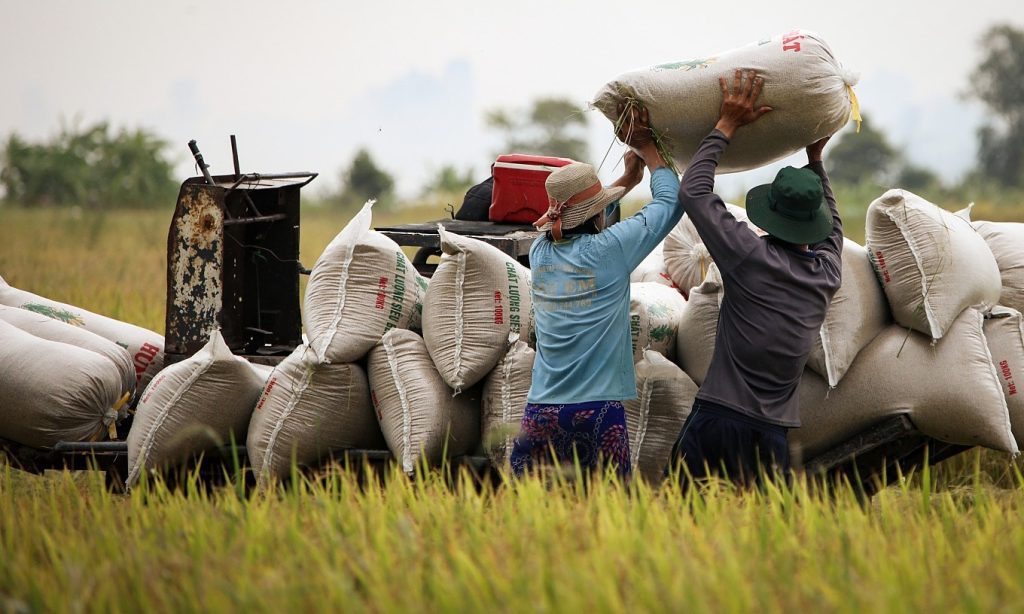
Impact of the Philippines’ Import Suspension on Vietnam’s Rice Industry
Vietnam’s 5% broken rice, which has remained below US$400 per ton for several months, is now facing additional challenges as the Philippines announces a two-month suspension of rice imports starting in September. This decision has sent ripples through the Vietnamese rice market, particularly in the Mekong Delta, known as the country’s “rice bowl” due to its vast rice cultivation area.
Traders in the region have begun reducing their purchases, driven by concerns over exporting to the Philippines. Huyen, a seasoned trader from An Giang Province, expressed cautious buying behavior, focusing on domestic sales while awaiting new signals from buyers. “I am only buying cautiously to sell domestically, as export shipments are on hold,” she said.
In Dong Thap Province, rice mills are working to fulfill existing orders to the Philippines, prioritizing old contracts while new purchases have significantly declined. Prices for Dai Thom 8 and OM18 rice have dropped by 4% in recent weeks, reaching VND11,000 (US$0.42) per kilogram.
A rice export company in Dong Thap, which chose to remain anonymous, revealed that the two-month import suspension has disrupted business plans. The halt coincides with the peak harvest season, leading to stalled contracts, increased inventories, and higher storage costs. Rising financial pressures, including high borrowing interest rates and a 5% value-added tax imposed from July, have raised fears of significant losses for the firm.
Nguyen Chi Thanh, director of the rice division at agriculture exporter Angimex, warned that prices for summer-autumn and autumn-winter seasons could drop sharply. He noted that finding new markets is challenging, and other importing countries may take advantage of the situation to negotiate lower prices.
Since 2019, obtaining phytosanitary certificates for the Philippines has been a lengthy process, hindering long-term contracts. Although online licensing began on July 7 this year, extensive paperwork and additional costs continue to squeeze profit margins.
The Philippines accounts for nearly 45% of Vietnam’s rice export revenue. The import suspension has led to stalled contracts, rising inventories, tightened liquidity, and downward pressure on domestic rice prices, according to Do Ha Nam, chairman of the Vietnam Food Association. The ministry noted that many August contracts have been delayed due to the lack of sanitary and phytosanitary certificates granted by the Philippines.
This has heightened inventory risks, depressed export prices, narrowed profit margins, and directly impacted farmers’ incomes. The ministry cautioned that large inventories and falling prices will increase credit pressures for businesses. It urged companies to maintain reserves and wait for market recovery to avoid panic selling, while encouraging coordination among ministries, agencies, and associations to mitigate risks and expand markets to the Middle East, Africa, and Northeast Asia.
The Philippines cited the need to protect domestic production amid sharply declining local rice prices as the reason for the import suspension. In response, the Vietnam Food Association has urged the trade ministry to engage with the Philippines to clarify affected rice types and resolve procedural issues to sustain trade, minimize losses, and protect farmers’ interests.
Vietnam and the Philippines are implementing a rice trade cooperation memorandum signed on January 30 last year, effective until the end of 2028. The rice industry is seeking support from ministries to ensure smooth production and exports.
The trade ministry has requested Prime Minister Pham Minh Chinh to direct the Ministry of Finance to expedite value-added tax refunds for rice exporters and plan national rice reserve purchases for this year to address unfavorable market fluctuations.
In the first seven months of the year, rice exports to the Philippines fell by 13.5% year-on-year, while other markets saw growth, such as Ghana (53.5%), Ivory Coast (96.6%), and Bangladesh (188 times). This shift highlights the urgent need for Vietnam to diversify its export markets and adapt to changing global conditions.