


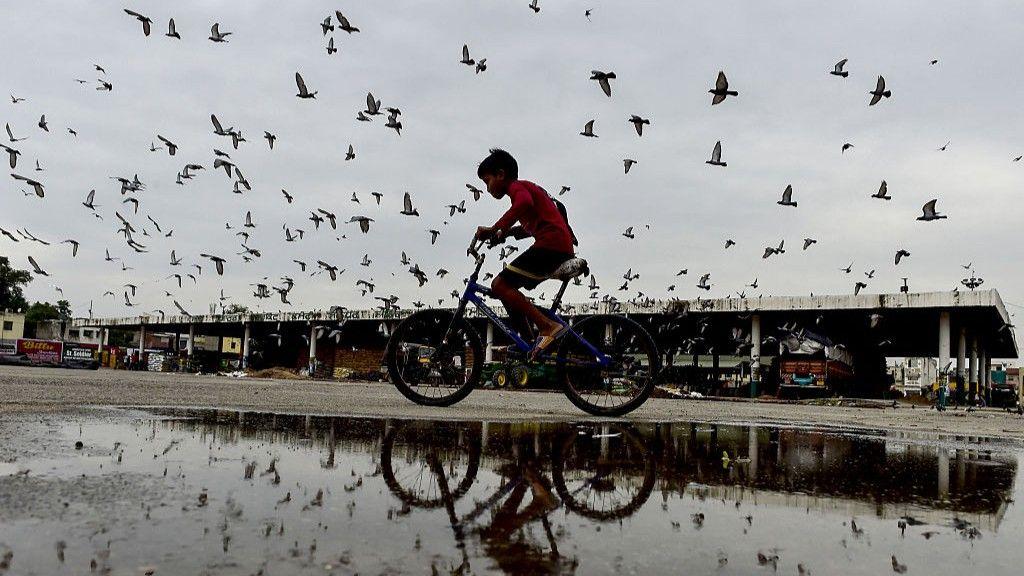
A Growing Conflict: Feeding Pigeons in Urban Spaces
A recent court ruling that has banned feeding pigeons in public spaces in Mumbai, a bustling city in western India, has sparked intense debate among civic authorities, public health advocates, and bird enthusiasts. This decision has become a focal point of contention, highlighting the clash between cultural traditions and modern public health concerns.
In the past month, hundreds of residents protested the closure of a long-standing pigeon feeding area known as a kabutarkhana. The term “kabutar” refers to pigeons in Hindi, and these spots have historically served as community gathering places where people come together to feed the birds. During one protest, demonstrators tore down tarps covering the area and threatened an indefinite hunger strike. Police detained approximately 15 individuals during another demonstration, according to media reports.
The ban was implemented due to concerns over the health risks associated with pigeon droppings. While this issue is not unique to Mumbai, similar restrictions exist in other cities around the world. In Venice, for instance, feeding pigeons in historic squares is prohibited. Singapore enforces strict penalties for such actions, while New York and London have established designated feeding zones. In India, cities like Pune, Thane, and Delhi have also introduced measures to regulate or discourage pigeon feeding.
This crackdown has stirred strong reactions from animal lovers and religious groups, who view pigeons as integral to India’s cultural identity. These birds are often depicted in films as symbols of urban life, particularly in cities like Mumbai and Delhi, where they are commonly seen perched on balconies and air-conditioners. Some of Mumbai’s kabutarkhanas are considered heritage sites, originally serving as charitable spaces where communities could donate grain.
Religious sentiments also play a significant role. The Jain community in Mumbai, which considers feeding pigeons a sacred act, has been vocal in its opposition to the ban. Similarly, many people across the country feel a deep emotional connection to pigeons, viewing them as symbols of peace and loyalty.
Syed Ismat, a Delhi resident, has been feeding pigeons for over four decades and sees them as part of his family. “They are innocent. Perhaps the most innocent of all creatures. All they ask for is a little kindness,” he said.
However, public health experts warn that prolonged exposure to pigeon droppings can lead to serious health issues, including respiratory and pulmonary illnesses. Studies indicate that these droppings contain multiple zoonotic pathogens capable of causing diseases such as pneumonia, fungal infections, and lung damage. According to the 2023 State of India’s Birds report, pigeon populations have surged by more than 150% since 2000, making the problem even more pressing.
Nirmal Kohli, a 75-year-old Delhi resident, experienced severe breathing difficulties after years of exposure to pigeon droppings. Her son, Amit Kohli, recounted how a CT scan revealed part of her lung had shrunk. In another tragic case, an 11-year-old boy in Delhi died from hypersensitivity pneumonitis, a condition linked to prolonged exposure to pigeon droppings and feathers.
Pulmonologist RS Pal emphasized the growing number of such cases, stating that even indirect exposure—such as droppings on window sills or balconies—can lead to serious health complications.
In response to these concerns, Mumbai’s civic body imposed the feeding ban and initiated efforts to dismantle feeding centers. Although some demolitions have been paused, the Bombay High Court ruled in favor of the ban, citing public health as a top priority.
Delhi’s mayor, Raja Iqbal Singh, echoed this sentiment, stating that the well-being of citizens must take precedence over sentimental attachments to birds. He acknowledged that feeding spots often become unsanitary, leading to foul smells, infections, and pest problems.
Despite these arguments, many animal lovers remain unconvinced. Mohammad Younus, who supplies grains to a feeding spot in Delhi, believes that all animals can spread diseases if not properly managed. “I’ve been surrounded by pigeons for 15 years. If something were to happen, it would have already happened to me,” he said.
Efforts are now underway to find a balanced solution. Ujjwal Agrain of Peta India suggests allowing feeding during specific morning and evening hours to ensure cleanliness and hygiene. The Bombay High Court has also formed an expert panel to explore alternative approaches, with Mumbai officials considering controlled feeding based on their recommendations.
For Syed Ismat, the key lies in reimagining how cities coexist with wildlife. “Maybe it’s time to rethink how we share our cities, not just with pigeons but with all forms of life,” he said.