





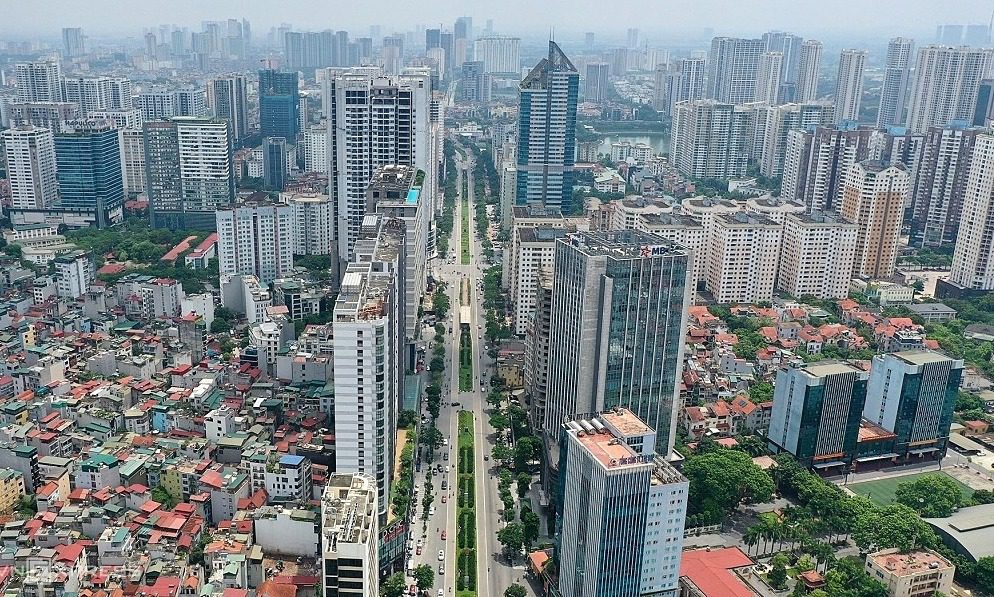
Rising Rents in Hanoi Force Residents to Seek Alternatives
Hoang Phuc and his wife are among many residents in Hanoi who are finding it increasingly difficult to afford their current living arrangements. After being informed that the rent for their apartment will increase by 15% once their lease expires, they have decided to move again. This marks the second time in a year that the couple has had to relocate due to rising rental costs.
Phuc, originally from Thai Nguyen Province, recalls that last year he and his wife lived in a 55-square-meter, two-bedroom apartment in western Hanoi for VND9.5 million (US$360) per month. When their lease ended earlier this year, the landlord added furniture and increased the rent to VND11.5 million. Instead of paying the higher rate, the couple opted to move into a one-bedroom unit for VND9 million. However, six months later, the landlord sold the apartment, and the new owner informed them that the rent would rise by 15% at the end of their lease due to “rising property prices.”
“We are considering moving further away so we can have more space at a reasonable rent,” Phuc said.
Similarly, Thu Uyen, a resident of Hai Phong City, was taken aback when the rent for her two-year-old apartment in Thanh Xuan Ward, Hanoi, increased by 15%. She had been paying VND15 million a month for a three-bedroom place. At the start of August, the landlord raised the rent to VND17 million, citing the installation of new fire safety equipment. The landlord also warned Uyen that she would need to move out if she didn’t agree to the new terms, as there was high demand for the property.
Other apartments in the building followed a similar trend, with some landlords adding furniture and increasing the rent by as much as VND3 million.
Rental Market Trends in Hanoi
According to the Vietnam Association of Realtors (VARS), there are no commercial apartments available for under VND10 million a month in the central districts of Hanoi. A one-bedroom unit typically costs between VND10-15 million, while a two-bedroom unit ranges from VND15-20 million. In outlying districts, average rents now range from VND6.5-15 million a month, up from VND4-8 million five years ago.
Data from property listing platform Batdongsan shows that average rents have risen by 10-15% compared to a year ago, with some areas experiencing even higher increases. For instance, rents at Imperia Smart City have gone up by more than 20%, while Indochina Plaza Hanoi has seen an 18% increase. Three-bedroom units on Nguyen Tuan Street now cost VND18-19 million a month, a 5% increase since the start of the year. Similar apartments on Duy Tan Street go for VND19-20 million, up 10% from previous levels.
Factors Driving the Rental Price Surge
Pham Duc Toan, CEO of EZ Property, attributes the rising rents to the relentless increase in apartment purchase prices. He explains that the rental market remains attractive for many investors, despite the challenges.
Over the past year, prices at many housing projects have jumped by 40-50%, prompting landlords to raise rents. Analysts at real estate firm Avison Young point to increased demand from people shifting from buying housing to renting, as well as from workers coming to the growing number of industrial parks. Limited supply is making it difficult for many tenants to leave Hanoi despite higher costs.
Nguyen Van Dinh, chairman of VARS, highlights the challenges faced by young families, where housing costs can take up 35-50% of their income, leaving little room for savings. Many people are opting for cheaper housing, downsizing, or even moving out of major cities altogether.
A recent poll by VnExpress of over 7,800 readers found nearly 1,100 planning to leave Hanoi for their hometowns due to high housing prices and rentals. Dinh notes that the trend of moving to the suburbs and provinces is becoming more common, as rents in these areas are 20-30% lower than in the city. However, challenges such as underdeveloped public transport and higher commuting costs remain.
Calls for Affordable Housing Solutions
Experts are urging the development of low-cost, long-term rental housing alongside social housing for young workers, civil servants, and employees in key industries. VARS suggests a dormitory model for urban workers, similar to Singapore’s approach. Under the public rental scheme, recent graduates without the means to buy a property can rent public apartments at 40-50% below market rates. Through the build-to-order program, they can also purchase subsidized BTO apartments at low interest rates.


