


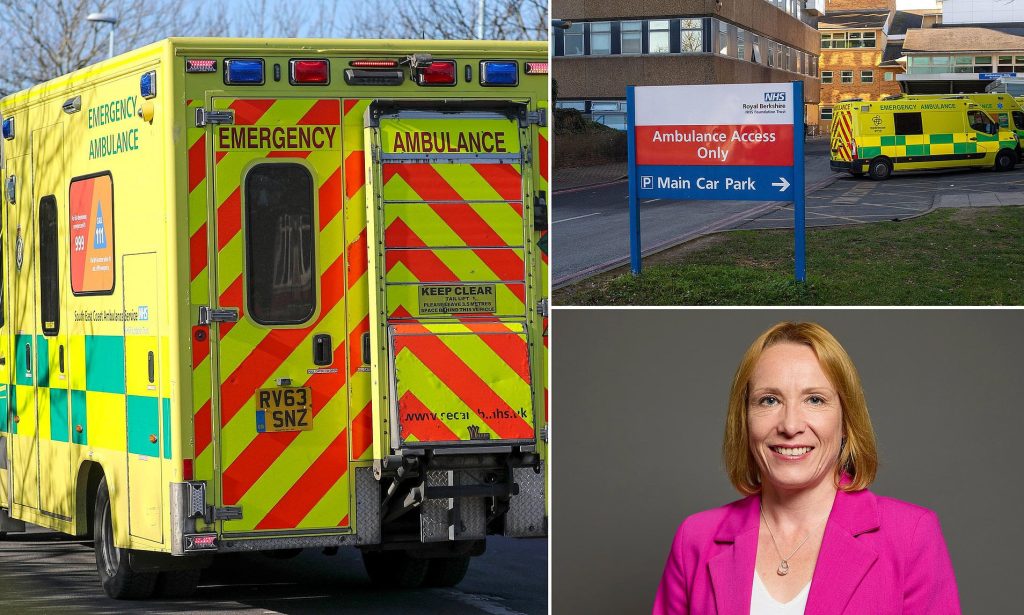
Rising Trends in Non-Ambulance A&E Visits
Recent data reveals a significant increase in patients choosing to bypass ambulance services and head to Accident and Emergency (A&E) departments on their own. This trend has been attributed to long response times and the frequent sight of emergency vehicles waiting outside hospitals, which have led many individuals to seek alternative means of transport, even for urgent medical situations.
According to NHS England data from 2023/24, 19.5 million attendances at A&E were made by individuals who arrived using walking, cycling, public transport, taxis, or private vehicles—accounting for 79% of all cases. New analysis from a subset of 30 NHS trusts further highlights a growing trend where the most critically ill patients are opting for non-ambulance transport.
In 2024, there were 2.7 million non-ambulance A&E arrivals, marking an increase of 340,000 or 14% since 2019. Among these, 266,460 patients were classified as needing immediate or very urgent care upon arrival—a 50% rise over the same period. Helen Morgan, a health and social care spokesperson for the Liberal Democrats, emphasized that this shift reflects a crisis of confidence in ambulance services, with people no longer trusting them even in life-threatening scenarios.
Dr. Katherine Henderson, former president of the Royal College of Emergency Medicine, highlighted her own concerns about ambulance response times, stating she would consider using a taxi or a personal vehicle for a loved one if she feared an ambulance would not arrive promptly. Dennis Reed, director of Silver Voices, noted that older individuals have lost faith in the reliability of ambulance services, often opting for self-driven solutions when they need urgent care.
The average response time for the most critical 999 calls was 7 minutes 56 seconds in July, though one in ten callers waited more than 14 minutes 12 seconds. The target of 7 minutes has not been met for four consecutive years. For category two calls, such as heart attacks and strokes, the average response time was 28 minutes 40 seconds, while category three calls, including severe pain, averaged 1 hour 40 minutes.
Some NHS trusts have experienced dramatic increases in non-ambulance A&E visits. Sandwell and West Birmingham saw a 320% rise in such cases since 2019, with numbers jumping from 3,900 to 16,500. Mid and South Essex recorded the highest number of non-ambulance attendances last year at 322,000, up from 263,000 over the same period.
The Liberal Democrats also requested data on non-ambulance A&E visits among those aged over 65. Last year, there were 459,000 such visits, a 22% increase from 2019’s 375,000. North Cumbria had the steepest rise, with a 97% increase to 22,305 visits. Of these, 56,700 were classified as requiring immediate or very urgent care.
To address the issue, the Liberal Democrats propose a £50 million-a-year emergency fund to reverse the closure of community ambulance stations and launch a campaign to retain, recruit, and train paramedics and other ambulance staff. Helen Morgan stressed the importance of ensuring that ambulance services are reliable and accessible, so no one feels compelled to take themselves to A&E in a life-or-death situation.
Daniel Elkeles, chief executive of NHS Providers, noted that while there may be various reasons why people choose to go to hospital themselves, the NHS is always available for emergencies. He pointed out that ambulances are responding to more patients than ever before, with staff attending over 650,000 incidents and answering more than 843,500 999 calls in a single month.
Anna Parry, managing director of the Association of Ambulance Chief Executives, emphasized that NHS ambulance services are busier than ever, with staff working tirelessly to provide timely care. She highlighted ongoing investments in the training and development of paramedics and clinical staff to meet rising demand.
A Department of Health and Social Care spokesperson acknowledged the challenges inherited from the previous system but noted improvements in response times and reduced handover delays. They mentioned a £450 million investment in urgent and emergency care services, including new ambulances, to ensure the NHS can respond effectively when needed.