


Rising Rent Costs and Housing Affordability in the UK
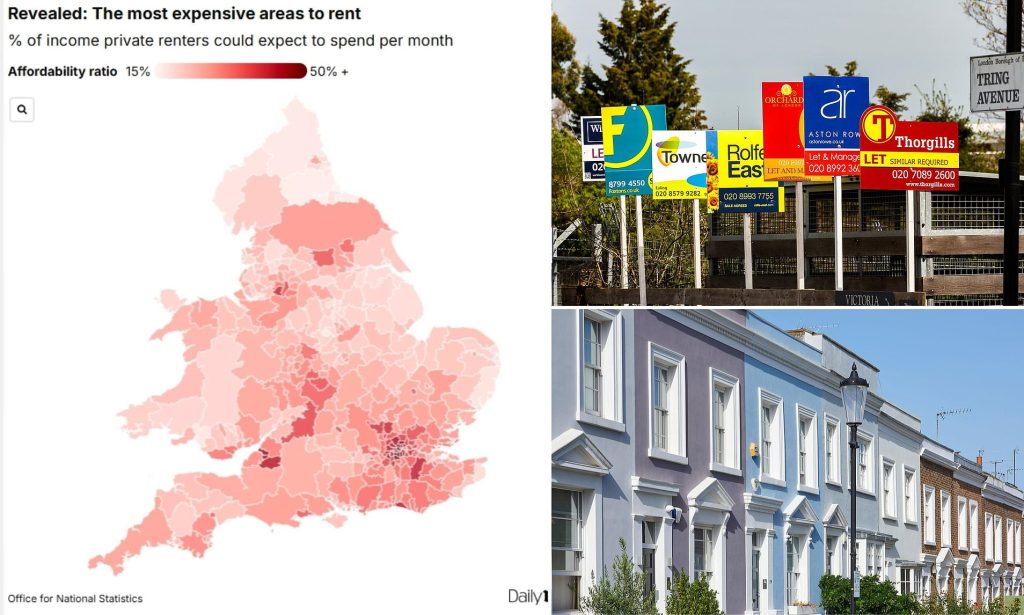
The rising cost of renting in the UK has become a major concern for many individuals, with renters now spending more than a third of their income on housing. According to recent data, renters across England are paying up to 36.3% of their wages on rent alone, marking a significant increase from the previous year. This figure surpasses the 30% threshold considered affordable by the Office for National Statistics (ONS), highlighting the growing financial strain on tenants.
London remains the most expensive city in England, with average monthly rents reaching £1,957. This translates to roughly 41.6% of a typical renter’s income, making it extremely difficult for many to afford housing. In some areas, such as Kensington and Chelsea, renters are spending as much as 74.3% of their gross earnings on rent. Other London boroughs like Westminster, Wandsworth, and Camden also show alarming affordability issues, with rent consuming over 50% of income.
This trend is not limited to London. Large cities such as Bristol, Bath, and Brighton are also experiencing high rental costs. In Bristol, renters pay 44.6% of their income on rent, while in Bath and North East Somerset, this figure reaches 42.7%. Similarly, in Brighton, the percentage stands at 42.6%. Commuter towns like Sevenoaks and Watford have also seen rent prices rise above the 30% affordability threshold.
The national average monthly rent in England is £1,232, compared to an average household income of £3,396. This stark difference highlights the growing challenge faced by renters. However, the situation is slightly better in Wales and Northern Ireland, where rents remain below the 30% threshold. In Wales, the percentage of income spent on rent decreased slightly from 26.3% in 2023 to 25.9% in 2024, while in Northern Ireland, it remained relatively stable at around 25.3%.
Affordability improved in several regions of England, including the North East, North West, East Midlands, and South East. The North East was found to be the most affordable region, with average rents at £641 per month, amounting to 19.8% of income.
Experts warn that the situation is worsening. Sarah Coles, head of personal finance for Hargreaves Lansdown, noted that renters are facing increasing pressure on their incomes. Landlords are selling properties due to concerns over higher costs and regulations, leading to fewer available homes and rising rents. Despite wage increases, these have been outpaced by the growth in private rental prices.
Joseph Elliott, lead analyst at the Joseph Rowntree Foundation, called for urgent government action to address unaffordable rents, frozen housing support, and a shortage of social housing. He emphasized that high rents are contributing to poverty and homelessness.
In response, Labour’s proposed Renters’ Rights Bill aims to prevent landlords from increasing rent within six months of a tenant moving out. However, the bill has faced scrutiny after a minister, Rushanara Ali, was accused of hypocrisy for raising rent on a property she owns shortly after tenants moved out.
The rising cost of living is also affecting students. A significant number of 18-year-old applicants for the 2024-25 academic year plan to stay at home, with nearly a third choosing this option. This trend has more than doubled since 2007, driven by the need to save money and maintain family support. Surveys indicate that saving money and being close to family are the primary reasons for this decision.
Ucas chief executive Jo Saxton highlighted that some students stay at home due to proximity to their chosen university or family responsibilities. However, she stressed the need for more support to ensure that financial constraints do not limit young people’s ambitions.