


Expansion of Drone Operations in Russia
Recent satellite imagery has revealed that Russia has significantly expanded its drone operations, with new launch sites and storage facilities being established across the country. This development suggests a growing investment in drone technology, which has become a key component of Russia’s military strategy.
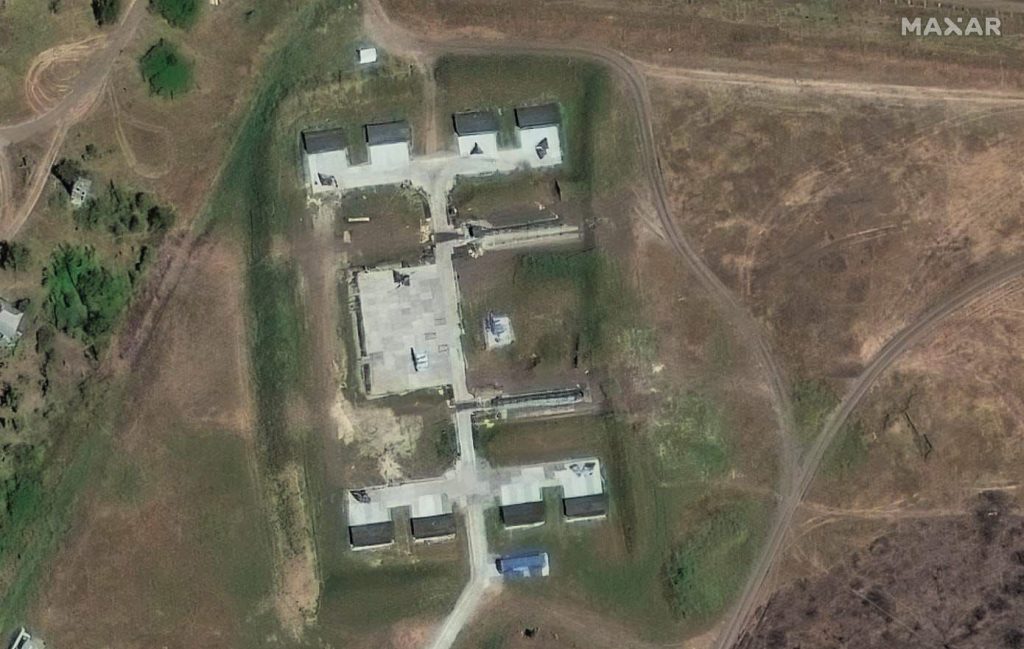
The images, captured by Maxar Technologies and analyzed by Business Insider, show infrastructure at three key bases used for staging attacks. These include apparent launch rails, runways, and hardened shelters, as well as what appears to be Shahed-style drones. The Geran-2, a one-way attack drone modeled after the Iranian-designed Shahed-136, has been heavily utilized in recent strikes against Ukrainian cities.
Key Bases and Infrastructure Development
Three primary bases have been identified as critical to Russia’s drone operations: Primorsko-Akhtarsk, Navlya, and Tsimbulova. Brady Africk, an open-source intelligence analyst, has closely tracked these developments. He noted that construction at the Primorsko-Akhtarsk air base, located in the Krasnodar Krai region, began in November 2024. This site is known for its hardened storage shelters and has been targeted by Ukrainian forces, including a reported drone strike by the SBU in August.
In the Bryansk region, construction work at the Navlya base started in July. This site includes launch positions and drone storage areas, similar to other locations. In the Oryol region, the Tsimbulova base saw construction beginning in September 2024. This site features a long road stretch for launching drones from vehicles, with Russian media recently showing footage of Shahed-style drones launching from pickup trucks.
Africk explained that these smaller launch sites are harder to detect and target compared to full-fledged airbases. They provide both launch infrastructure and storage areas, making it challenging for Ukraine to counteract drone launches effectively. By the time Ukraine becomes aware of an attack, the focus shifts to intercepting drones in flight rather than targeting the launch sites.
The Role of the Shahed-136 Drones
The Iranian-designed Shahed-136 is a one-way attack drone, also known as a loitering munition. It can travel hundreds of miles, hover over a target area, and then dive down to explode on impact. Russia began using these drones to attack Ukraine in 2022 and later established a domestic production facility in Yelabuga, Tatarstan. This plant produces an estimated 5,000 drones each month, allowing Russia to scale up production without relying on Iran.
Western assessments suggest that Russia may soon be capable of launching 2,000 drones in a single night. This increased capacity has led to massive drone attacks against Ukraine, often involving hundreds of Shahed-style drones.
Drone Launch Trends and Recent Attacks
According to Britain’s defense ministry, Russia launched approximately 6,200 one-way attack drones at Ukraine in July, setting a new monthly record. However, the scale of attacks appeared to decrease in August. Kyle Glen, an investigator at the UK-based Centre for Information Resilience, noted that as of early August, Russia had launched nearly 1,700 drones—compared to around 4,500 in July and 3,500 in June.
Glen suggested that the reduction in attacks might not be due to a lack of capacity but rather a strategic self-restraint. This could be linked to the upcoming meeting between Russian President Vladimir Putin and former U.S. President Donald Trump in Alaska. Despite this, a significant attack occurred on Monday night, with Russia launching 270 drones from various directions, including Primorsko-Akhtarsk. This marked the largest attack of the month, highlighting the continued threat posed by Russia’s expanding drone capabilities.