


A Small Town’s Ambition to Reduce EU Dependence on Chinese Rare Earths
Bitterfeld, a small town in Germany, is quietly positioning itself as a potential hub for the European Union’s efforts to reduce reliance on Chinese rare earth elements. Known for its picturesque orchards and yacht-filled harbor, the town also has a more industrial past. Once home to a lignite mine and one of Germany’s oldest chemical facilities, Bitterfeld now faces the challenge of transitioning into a center for rare earth recycling.
The strategic importance of rare earth elements cannot be overstated. These materials are essential for manufacturing permanent magnets used in consumer electronics, renewable energy systems, and defense technologies. However, Europe currently imports nearly all of its rare earths from China, creating a critical dependency that the EU aims to address.
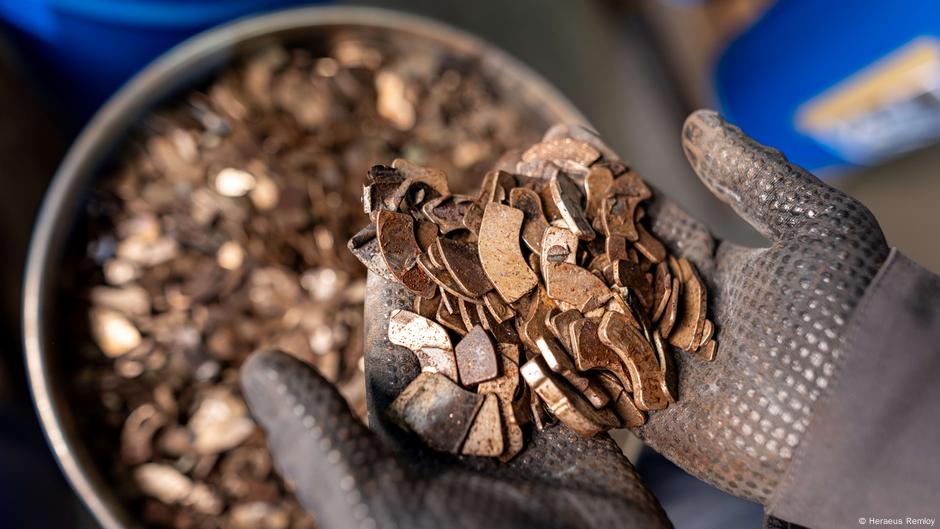
In May 2024, Heraeus, a family-run German tech group, launched what was touted as “the largest rare earth magnet recycling plant in Europe” in Bitterfeld. The facility aimed to produce around 600 tons of rare earth magnetic powder annually, with plans to double this output in the near future. Despite these ambitious goals, the plant has struggled to break even, with Heraeus Remloy’s co-head, David Christian Bender, noting that the site is far from full capacity.
This struggle highlights the broader challenges facing European rare earth recycling initiatives. Four key industries in Germany—automotive, mechanical and plant engineering, energy, and defense—are heavily reliant on rare earth imports. Neodymium, in particular, is a critical component in electric motors, wind turbines, MRI scanners, and military applications such as precision-guided weapons and radar systems. The EU imports 85% of its light rare earth elements, including neodymium, and 100% of its heavy rare earth elements from China.
In April 2024, China imposed severe restrictions on its exports of several heavy rare earth metals, causing significant disruptions in Europe. Some production lines in Germany came to a standstill, underscoring the risks of over-reliance on a single supplier.
To combat this, the EU introduced the Critical Raw Materials Act in 2024, aiming to mine at least 10% of required raw materials by 2030, process 40%, and recycle 25%. While these targets are seen as ambitious, experts argue that faster action and greater investment are needed. The long and costly mining-to-magnet production chain is often criticized for its environmental impact, leading to the push for cleaner alternatives like short-loop recycling.
Short-loop recycling involves vacuum melting, which skips the dirtiest and most energy-intensive steps of traditional recycling. This method is considered a more sustainable option, but it faces challenges in terms of cost and scalability. Several European companies are competing to lead in REE recycling, yet finding customers willing to pay a premium remains difficult.
Jan Giese, a senior manager at TRADIUM, points to high prices for scrap material, higher European production costs, and limited recycling capacities as major obstacles. The price of neodymium oxide has been declining since March 2022, further complicating profitability for recyclers. So far, less than 1% of rare earths consumed in the EU are recycled, according to Rüya Perincek of the EU Commission.
The EU is planning to launch a special platform next year to connect buyers and suppliers of strategic raw materials, aiming to diversify sourcing. However, without stronger policy measures, the transition to a more self-sufficient rare earth supply chain may remain challenging.
Jürgen Hardt, foreign policy spokesman for Germany’s CDU/CSU parliamentary bloc, suggests that recycling quotas could be part of the solution. He emphasizes the need for a coordinated political effort, including potential tax credits for domestically produced or reclaimed magnets. Such measures, he argues, should be implemented within the EU to ensure consistency.
Efforts to improve e-waste management are also gaining traction. Nearly 50% of e-waste in the EU remains uncollected, and less than 40% is recycled. The Commission plans to revise the WEEE Directive to enhance collection, treatment, and market incentives. Pascal Leroy of the WEEE Forum advocates for dedicated waste codes for permanent magnets to ensure they are traced and recycled effectively.
Heraeus Remloy’s Bender calls for mandatory quotas and financial incentives to boost the use of recycled European magnets, especially in the automotive industry. He warns that without immediate action, the EU may not meet its 2030 targets.
As Bitterfeld continues to navigate the complexities of rare earth recycling, its journey reflects the broader challenges and opportunities facing Europe in its quest for technological independence.