









A Journey Through Stage Four Bowel Cancer
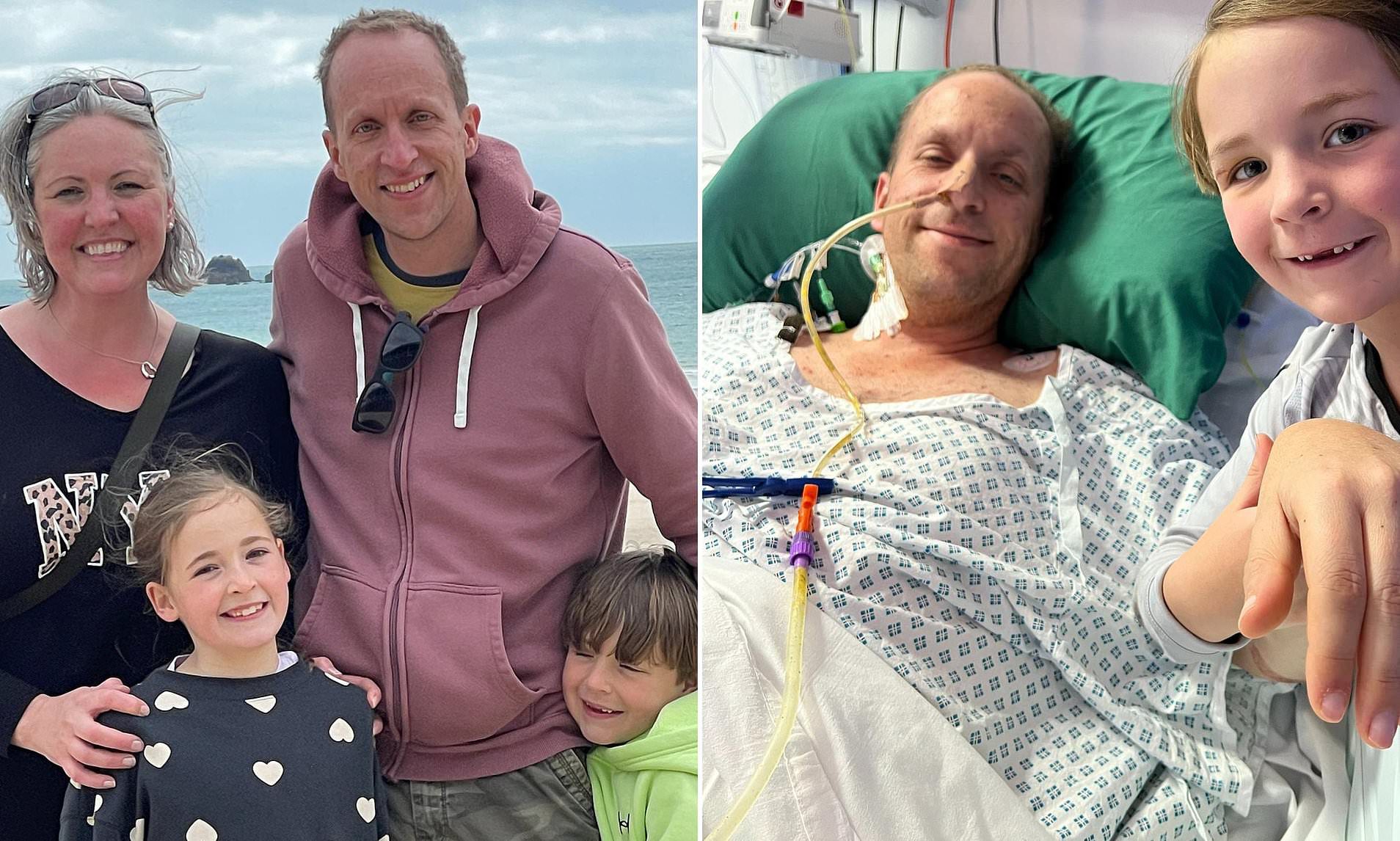
The first sign that something was wrong for Matt Eamer came just days after a family barbecue, celebrating his son’s second birthday. The then 39-year-old father-of-two from Redhill, Surrey, initially dismissed the sudden ‘spiky’ stomach pain as food poisoning. He thought he had cooked a dodgy sausage and assumed it would pass. However, the pain quickly escalated, leading to a rushed trip to A&E where he was sent home with anti-nausea medication. Still feeling dreadful, his wife Sarah, a doula, took him to East Surrey Hospital, where scans revealed a ‘big blockage’ in his large intestine.
Surgeons removed two-thirds of his bowel in an emergency operation. A few days later, they confirmed it was cancer. The diagnosis was stage four bowel cancer, meaning the disease had already spread to his liver and the lining of his abdomen. Further tests revealed a rare BRAF mutation, which drives tumours to grow at an alarming rate.
Matt recalls the moment when the doctor called to say, “the plan for your diagnosis has changed… we’re talking months not years from a survival point of view.” It was September 2020, and the news hit hard. On his 40th birthday, he was told standard chemotherapy had failed, and surgeons found the cancer had advanced further. It was a pivotal moment, one that felt like a dramatic scene from a movie. His wife, Sarah, collapsed to the floor in shock.
Matt began fortnightly Cetuximab infusions combined with four daily Encorafenib pills—new immunotherapy drugs approved just months earlier. Designed to buy only ‘three to six months,’ they had a remarkable effect. Within six months, scans showed no trace of cancer. Five years on, he is still clear and continues treatment. Hitting five years with stage four is a rarity, and he admits it forces you to think about how you spend your time.
In December 2024, he underwent a 14-hour surgery to remove cancerous tissue in his ribcage, followed by heated HIPEC chemotherapy. Again, scans showed ‘things clear.’ Matt, who runs his own design agency, continues working and raising his two children. He believes that younger people are able to deal with treatments better and live longer, better lives even if it is stage four.
He adds that the ‘bucket and spade things,’ the little moments, have become more significant. He spends more time looking at his kids’ faces, taking them to a show or swimming in the sea—these are heightened experiences. It means his ability to be present and focus upon what matters is heightened.
To mark five years since his diagnosis, Matt will join Sir Chris Hoy’s charity cycle in Glasgow on September 7, raising funds for Bowel Cancer UK. He sees it as a milestone in a meaningful, positive way.
Understanding Bowel Cancer
Bowel cancer, also known as colorectal cancer, is one of the most common cancers in both Britain and the United States. In the UK, around 43,000 people are diagnosed every year, while in the US the figure is more than 150,000. It is the third most common cancer worldwide and the second leading cause of cancer deaths. While incidence is declining in older age groups due to better screening and awareness, rates in younger people are rising sharply, a trend baffling doctors.
In England, cases among those aged 25 to 49 have surged by around 3.6 per cent per year, one of the steepest increases in Europe. In America, rates in under-50s have been rising by about 2.4 per cent annually over the past decade. Outcomes depend heavily on how early the disease is caught. In the UK, one-year survival is around 97 per cent if picked up through screening, but just 49 per cent if discovered in an emergency admission, as was the case for Matt. In the US, five-year survival is 92 per cent at stage one but only 13 per cent at stage four.
Most people with a diagnosis as advanced as Matt’s do not reach the five-year mark, making his story unusual. Risk factors include family history, inflammatory bowel disease, obesity, alcohol, smoking, and diets low in fibre and high in red or processed meats. Researchers are also examining the role of ultra-processed foods, though evidence remains inconclusive. Some studies suggest gut bacteria toxins such as colibactin, found in food poisoning, may be a possible trigger for early-onset cases.
Screening programmes remain vital. In the US, guidelines now recommend testing from age 45, while in the UK stool tests are currently offered from 56, with pilot schemes lowering the age to 50. Symptoms to watch for include persistent changes in bowel habits, blood in stools, unexplained weight loss, abdominal pain or bloating, and lumps in the abdomen. Doctors stress that catching the disease early saves lives. Patients diagnosed at stage one are several times more likely to survive long term than those at stage four.
But as Matt’s case shows, advances in treatment—from new targeted drugs to more effective surgery—are beginning to change what is possible, even in the most serious cases. For him, the experience has redefined life. “The reality isn’t bucket-list dolphins—it’s the bucket and spade things,” he said.