








China’s Defense Industry: A Dual-Use Powerhouse
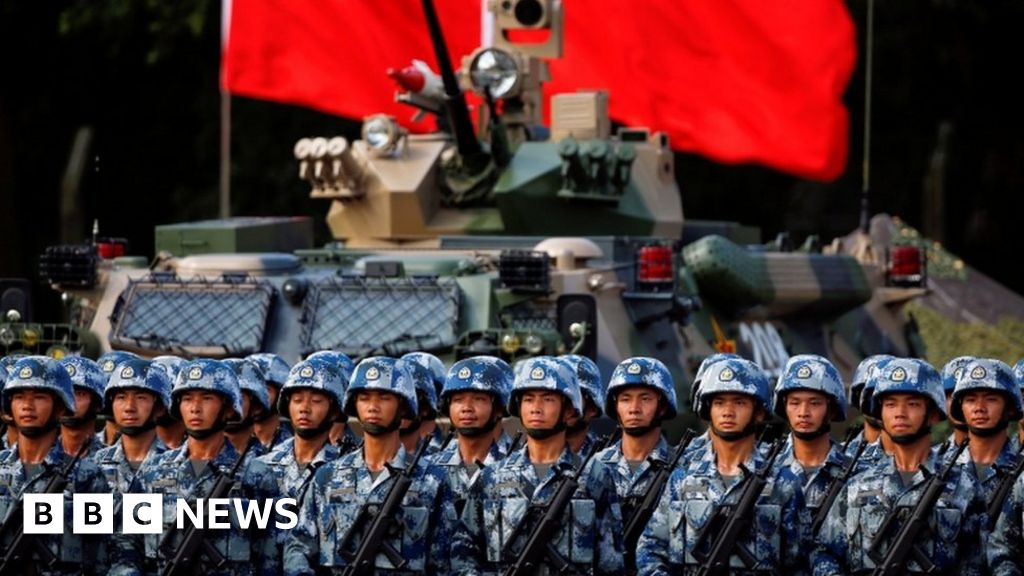
China is undergoing a significant transformation in its military capabilities, driven by an extensive and integrated defense industry. This effort is not only focused on modernizing the armed forces but also on ensuring that the nation can sustain prolonged conflicts through its robust industrial base. The integration of civilian and military manufacturing has become a cornerstone of this strategy, enabling China to rapidly scale up production during times of crisis.
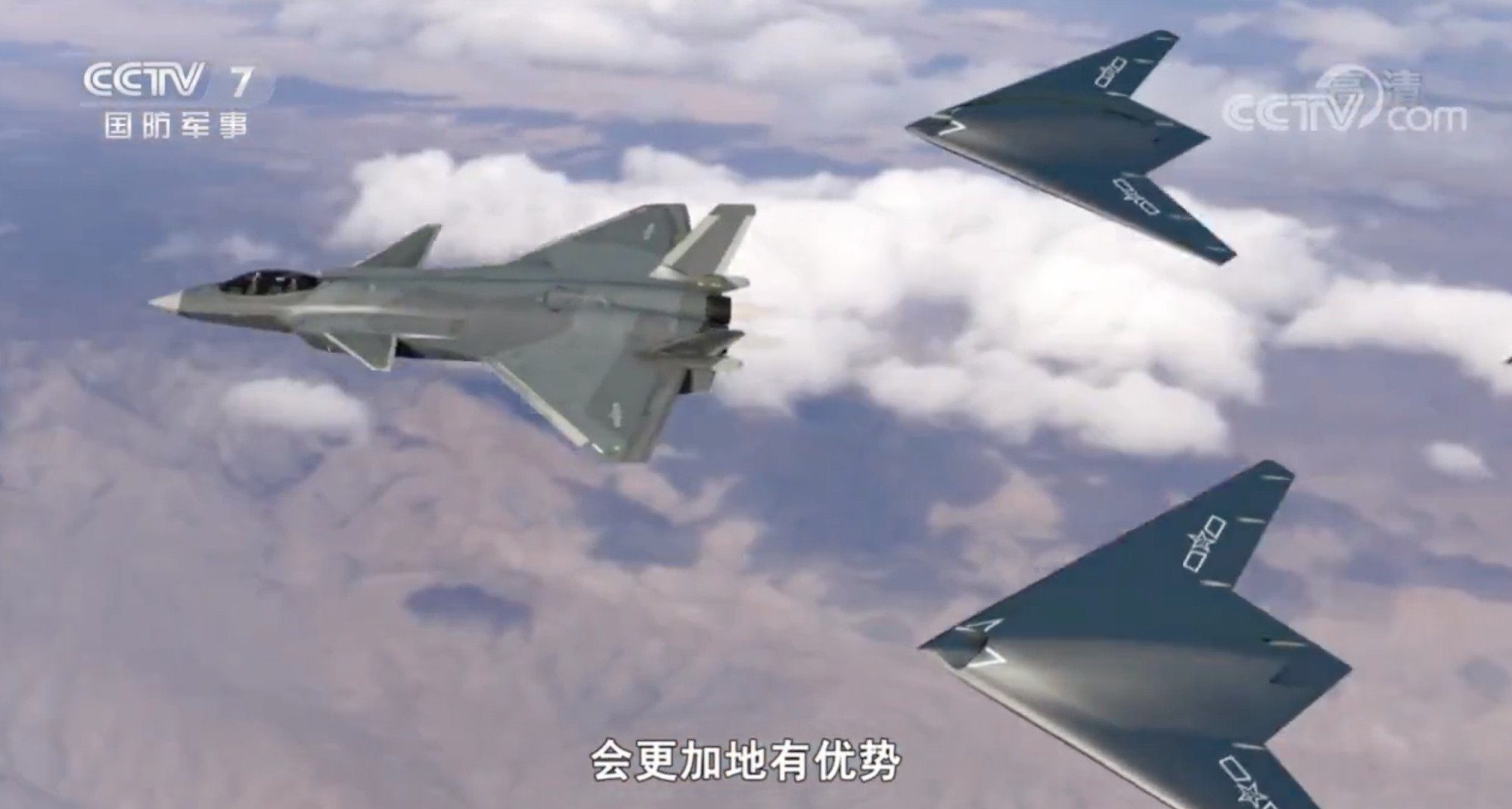
In Shenyang, one of China’s key industrial cities, a massive new aviation complex is being developed. This facility, which will cover an area equivalent to 600 football fields, is part of a broader initiative to create a “world-class aerospace city.” While specific details about the production lines remain undisclosed, the scale of the project highlights the strategic importance of aviation in China’s military plans. The Shenyang Aircraft Corporation, which oversees the site, is responsible for producing critical aircraft such as the J-15 carrier-based fighter and the advanced J-35 stealth fighter. These developments underscore China’s commitment to maintaining a cutting-edge air force.
Industrial Capacity and Economic Strength
China’s defense industry is supported by a vast and diverse manufacturing sector. According to data from the Stockholm International Peace Research Institute (SIPRI), at least four of China’s state-owned arms companies ranked among the top 25 globally in 2019 based on arms sales. These include Aviation Industry Corporation of China (AVIC), China Electronics Technology Group Corporation (CETC), and others. This industrial strength is further reinforced by China’s position as the world’s largest shipbuilder, with its top five shipyards accounting for over 62% of the global order book.
The U.S. Navy estimates that China’s shipbuilding capacity is approximately 230 times larger than that of the United States. This dominance is evident in the construction of commercial vessels, where Chinese shipbuilders have surpassed the entire U.S. industry since World War II. Additionally, China’s navy is the largest in the world, with over 370 ships and submarines, including more than 140 major surface combatants.
Technological Advancements and Production Expansion
China’s defense industry is not only expanding in scale but also in technological sophistication. Companies like AVIC are investing heavily in research and development, with subsidiaries reporting significant increases in revenue. For example, the Xian Aircraft Industrial Corporation, which produces the Y-20 transport aircraft, recorded 43.2 billion yuan in revenue in 2024, reflecting strong growth. Similarly, the Chengdu Aircraft Industry Group, known for the J-20 stealth fighter, reported a 6.1% increase in revenue, signaling a shift toward high-autonomy manufacturing and intelligent cost control.
The integration of digital technologies into defense systems is another key trend. According to Timothy Heath of the Rand Corporation, China’s defense industry has incorporated advanced information technologies, leading to innovations such as hypersonic missiles and satellite programs. This technological edge is complemented by the dual-use nature of many production facilities, allowing them to switch between military and civilian production as needed.
Military-Civil Fusion Strategy
A central component of China’s defense strategy is the military-civil fusion (MCF) initiative, which aims to integrate civilian and military industrial bases. This approach enables the mutual transfer of technologies and resources, enhancing both national defense and economic development. Since its elevation to a national strategy in 2015, thousands of private companies have been encouraged to participate in defense procurement, supporting the goal of achieving a “world-class” military by 2049.
This fusion is particularly evident in the production of aircraft, where factories are designed to operate in both military and civilian modes. As noted by Taiwanese analyst Lu Li-Shih, this flexibility allows China to maintain a steady supply of military equipment while also contributing to the broader economy.
Comparative Challenges with the U.S.
China’s defense industrial capacity contrasts sharply with recent challenges faced by the U.S. military. According to reports, the U.S. defense industry has struggled with delays and budget constraints, affecting the development of key projects such as the F-47 sixth-generation fighter jet and the next generation of attack submarines. In contrast, China’s ability to produce weapons at a faster pace and with greater efficiency has raised concerns among analysts.
Fu Qianshao, a former Chinese air force analyst, highlighted the importance of a comprehensive and self-sufficient industrial system. He pointed out that China’s near-monopoly on rare metals critical for missile production gives it a strategic advantage. Additionally, the country’s strong supply chain infrastructure ensures that even basic items like artillery shells can be produced independently.
Implications for Regional Security
China’s growing defense capabilities have significant implications for regional security, particularly in the context of potential conflicts with Taiwan. Think tank reports and analysts suggest that China’s industrial base provides a potential advantage in sustaining military operations. Recent conflicts, such as the war in Ukraine, have demonstrated the importance of maintaining a robust stockpile of munitions and weapons systems.
In simulations of a U.S.-China conflict in the Taiwan Strait, the U.S. typically expends large quantities of long-range missiles within a short period. This highlights the need for a strong defense industry capable of replenishing supplies quickly. China’s ability to produce missiles and drones in large numbers is seen as a critical factor in sustaining combat power.
As China continues to invest in its defense industry, the balance of power in the Indo-Pacific region is likely to shift. The integration of civilian and military capacities, combined with technological advancements and a strong industrial base, positions China as a formidable player on the global stage.