









The Hidden Treasure in American Mining Waste
The United States has long been a major consumer of critical minerals essential for modern technology, from electric vehicles to advanced military systems. However, a groundbreaking study by researchers from the Colorado School of Mines has revealed that these vital resources are being wasted in vast quantities. This discovery could potentially reshape the country’s economic and technological landscape.
The study highlights that mining operations in the U.S. have been discarding significant amounts of valuable minerals such as cobalt, lithium, and gallium. These materials are crucial for manufacturing electric car batteries, solar panels, electronics, and military equipment. Despite their importance, these elements are often overlooked because mines focus on more profitable metals like gold, copper, and zinc.
If these discarded minerals were properly recovered, it could drastically reduce the U.S.’s reliance on foreign imports and create new economic opportunities. According to the research, American mines waste enough lithium annually to power 10 million electric car batteries. Additionally, they discard enough manganese to support the production of 99 million electric vehicles.
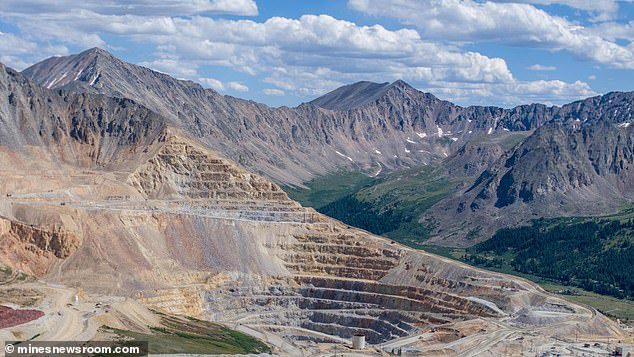
This hidden treasure is found in what is known as ‘tailings’—the leftover rock and material after the primary mineral has been extracted. These tailings often pose environmental risks if not managed correctly. However, the study published in the journal Science shows that these waste piles contain valuable elements such as neodymium and yttrium, which can be used in a variety of applications including EVs, wind turbines, radars, laser targeting systems, and missiles.
Lead researcher Elizabeth Holley emphasized the significance of this discovery, stating that it represents a “new view of low-hanging fruit.” She noted that even a one percent recovery rate of certain critical minerals could make a substantial impact, reducing or eliminating the need for imports.
The findings apply to 54 active mines across the U.S., including the Red Dog mine in Alaska, which holds large quantities of germanium, and the Stillwater and East Boulder mines in Montana, which could provide significant supplies of nickel for batteries. Researchers created a database detailing the amount of material produced each year at these mines and combined it with data from the U.S. Geological Survey (USGS) and other sources.
Using a mathematical model, they estimated the annual volume of valuable minerals being discarded as waste. While there are considerable resources available near American mines, the team acknowledged that extracting them would require significant effort and investment.
Holley pointed out that recovering these minerals from the surrounding rock is a complex and costly process. She compared it to “getting salt out of bread dough,” highlighting the need for further research, development, and policy changes to make the recovery economically viable.
Once this process is established, domestic mineral recovery could lead to job creation in mining, processing, and related industries such as electric vehicle production. It could also lower costs for manufacturers by providing cheaper, local access to critical minerals.
Currently, the U.S. imports most of its lithium, cobalt, and other essential minerals from countries like China, Australia, and the Democratic Republic of the Congo. This dependency poses both economic and geopolitical risks. By tapping into the untapped potential of mining waste, the U.S. could strengthen its position in the global market and reduce its reliance on foreign suppliers.
The implications of this study are far-reaching, offering a new perspective on resource management and sustainability. As the demand for critical minerals continues to grow, the ability to recover and utilize these materials will become increasingly important for the future of American industry and technology.