


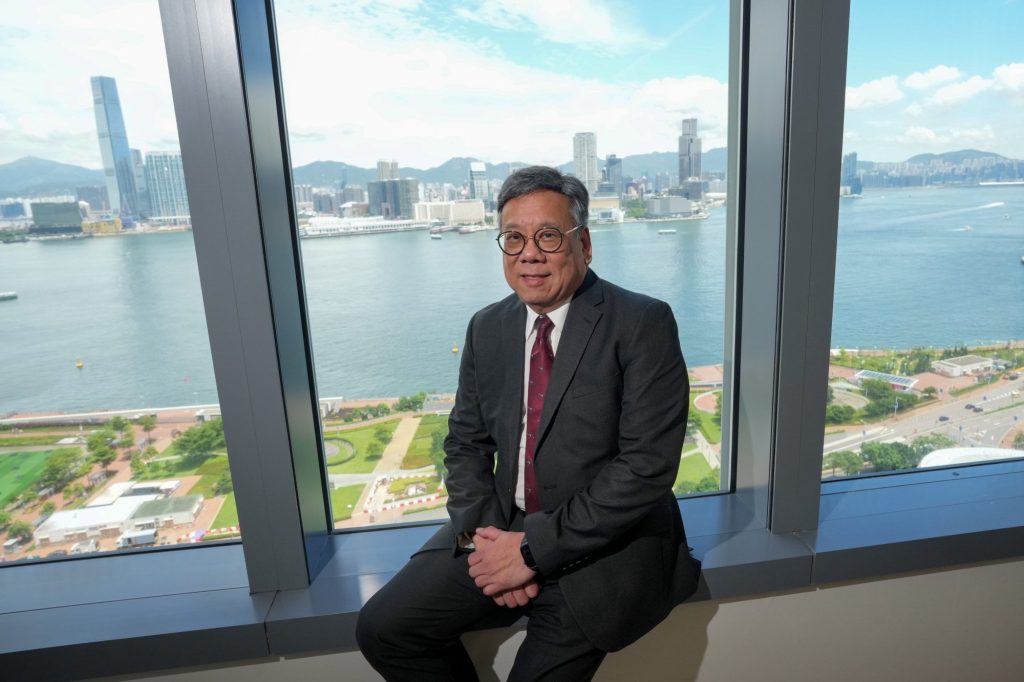
Hong Kong’s Economic Chief Emphasizes Partnership with Singapore
Hong Kong’s Secretary for Commerce and Economic Development, Algernon Yau Ying-wah, is set to visit Singapore next week as part of a broader initiative to strengthen bilateral trade relations. The trip coincides with the 30th anniversary of Hong Kong’s economic and trade office in the city-state, marking an important milestone in their long-standing partnership.
Yau described Singapore as “a friend rather than a rival,” challenging the perception that the two Asian financial hubs are engaged in a zero-sum competition. During an exclusive interview, he emphasized the importance of mutual cooperation and collaboration between the two regions. He noted that while competition exists, it should be viewed as a catalyst for growth rather than a source of conflict.
“We see Singapore as a friend rather than a rival, because I think everybody is trying to paint a picture [that] Hong Kong and Singapore are rivals, competitors … [and that] Singapore is going to take over. I don’t think that is necessary,” Yau said.
The visit is part of a larger strategy by the Hong Kong government to engage proactively with international partners. Over the past year, officials have led delegations to various regions, including the Middle East and Association of Southeast Asian Nations (ASEAN) member countries. This approach aims to foster stronger economic ties and explore new opportunities for collaboration.
Yau highlighted that both cities have unique strengths that complement each other. While Hong Kong serves as a gateway to mainland China and the Greater Bay Area, Singapore has established itself as a leader in areas such as Islamic finance. He acknowledged that this coexistence of strengths creates a healthy competitive environment.
“Because they have that experience for a long time, and we are building it up. So actually, we are competing with them,” Yau said. However, he stressed that copying each other’s systems is not feasible due to the distinct needs and characteristics of each region.
For example, Yau pointed to the public housing system as a case where both cities have learned from each other but adapted their approaches to suit local conditions. He mentioned that when he was younger, Singapore officials visited Hong Kong to study its public housing model. Today, Singapore has developed its own system tailored to its specific requirements.
Yau also addressed concerns about the “one country, two systems” principle, which governs Hong Kong. He argued that foreigners who understand the city’s dynamics recognize the benefits of this framework. He noted that many visitors to Hong Kong form positive impressions upon experiencing the city firsthand.
“Seeing is believing. So when they come over, they see Hong Kong is such a peaceful, beautiful place and easy to do business,” Yau said. He emphasized the need to continue promoting Hong Kong’s strengths through outreach efforts, including visits by officials and economic development councils.
Looking ahead, Yau outlined plans to expand Hong Kong’s global outreach beyond the ASEAN region. Future targets include emerging markets in Eastern Europe, such as Hungary, and Central Asian countries like Kazakhstan, Uzbekistan, and Georgia. He also mentioned the potential for deeper engagement with Latin American and African economies.
The visit to Singapore underscores Hong Kong’s commitment to maintaining strong trade and economic relationships with key partners. By emphasizing cooperation over competition, Yau aims to reinforce Hong Kong’s position as a dynamic and resilient global financial hub.